Jug with two medallions with Minerva — History & Facts
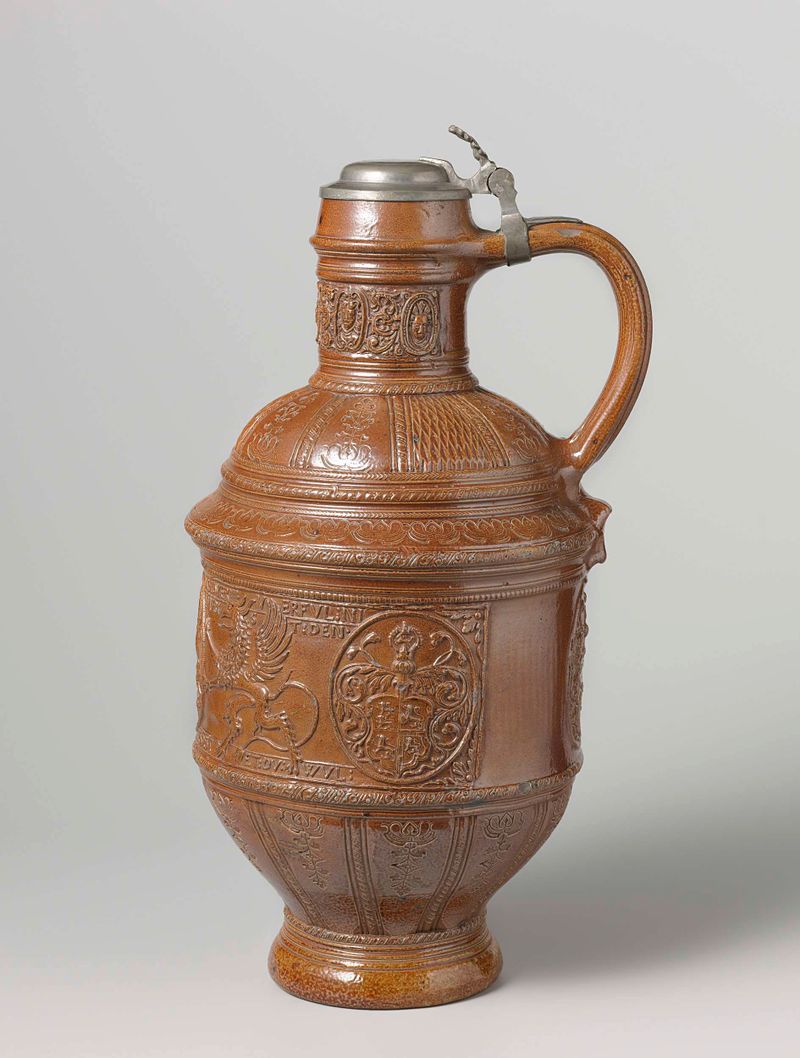
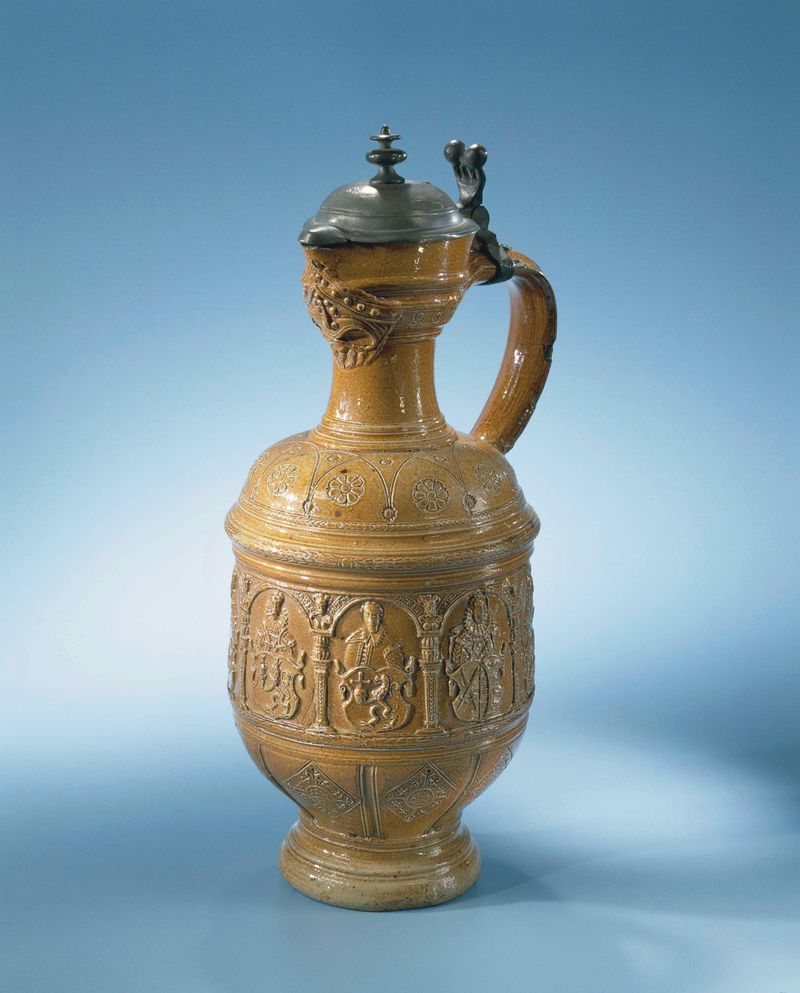
Could beauty survive in a century of chaos? In a time marked by turbulence, this artwork captures a moment of innocence and elegance that feels both timeless and fragile. The jug stands as a defiant testament to artistry, inviting us to reflect on the permanence of beauty amidst impermanence. Look closely at the intricacies of the jug’s surface, adorned with two medallions depicting Minerva. Notice how the muted colors of the ceramic contrast with the rich gold accents, drawing your gaze to the serene expressions of the figures.
The gentle curve of the jug’s handle guides the eye upward, while the delicate decoration serves as a reminder of the skill and dedication of its creator. Yet beyond its aesthetic allure lies a deeper commentary. The juxtaposition of Minerva, a symbol of wisdom and warfare, against the vessel itself speaks to the balance between conflict and peace. The medallions suggest a narrative of protection and insight, embodying the idea that even in the chaos of the 16th century, knowledge and beauty could coexist.
The jug’s craft hints at the desire for order and grace during turbulent times. Jan Baldems Mennicken created this work between 1550 and 1599, likely in the context of the Protestant Reformation and its upheaval of European art and society. Amidst shifting allegiances and new artistic movements, he focused on the decorative arts, contributing to a legacy that would ultimately celebrate both form and function. The jug not only reflects Mennicken’s skill but also the era’s complex interplay of tradition and innovation.