Kadriorg — History & Facts
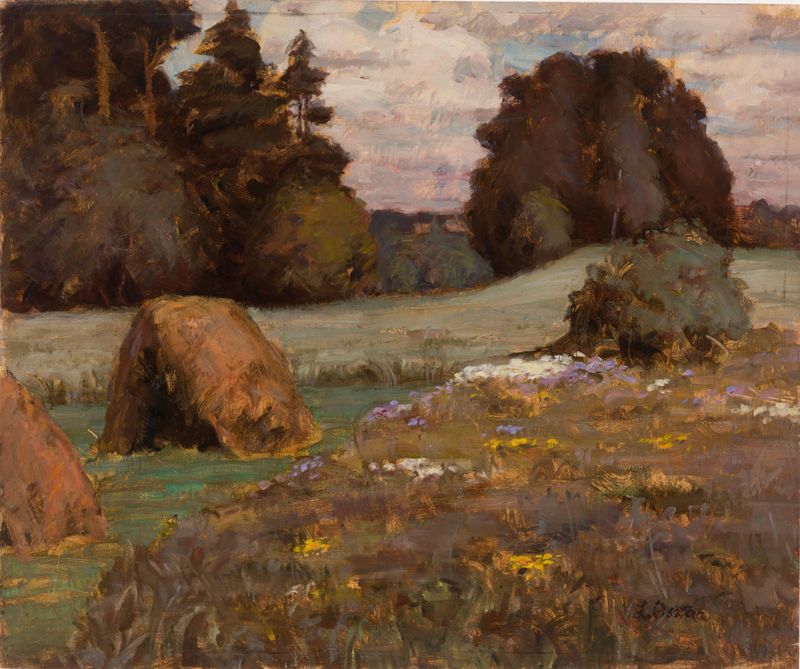
In Kadriorg, the interplay of shadow and light reveals that beauty often conceals deeper sorrows. The ethereal yet haunting quality of the landscape prompts the viewer to reflect on the transient nature of life, as splendid vistas can hold the weight of hidden narratives. Look to the center of the canvas where the sun-drenched facade of the palace catches your eye, its ornate details shimmering against a backdrop of muted greens and browns. Notice how the artist skillfully employs the contrast between light and shadow, with darker hues enveloping the edges, creating a frame that both invites and restricts the viewer's gaze.
The palette is rich yet somber, suggesting a world caught in a moment of stillness that is both beautiful and melancholic. The stark shadows hint at secrets lurking beneath the surface, whispering of the histories intertwined with this place. Each brushstroke resonates with the tension between splendor and decay, as though the artist sought to immortalize a fleeting moment in time—one that is layered with both hope and despair. The trees, tall and somber, evoke a sense of solitude, reminding us that amidst beauty, loneliness can persist. Ludvig Oskar painted Kadriorg in 1940, during a tumultuous period marked by the looming shadows of war in Europe.
At this time, he was navigating the complexities of identity and nationalism, capturing the essence of Estonia’s cultural heritage while confronting the profound uncertainties of his own existence. The work embodies a poignant reflection on both personal and collective histories during a time of profound transformation.