Kandelaar van zilver — History & Facts
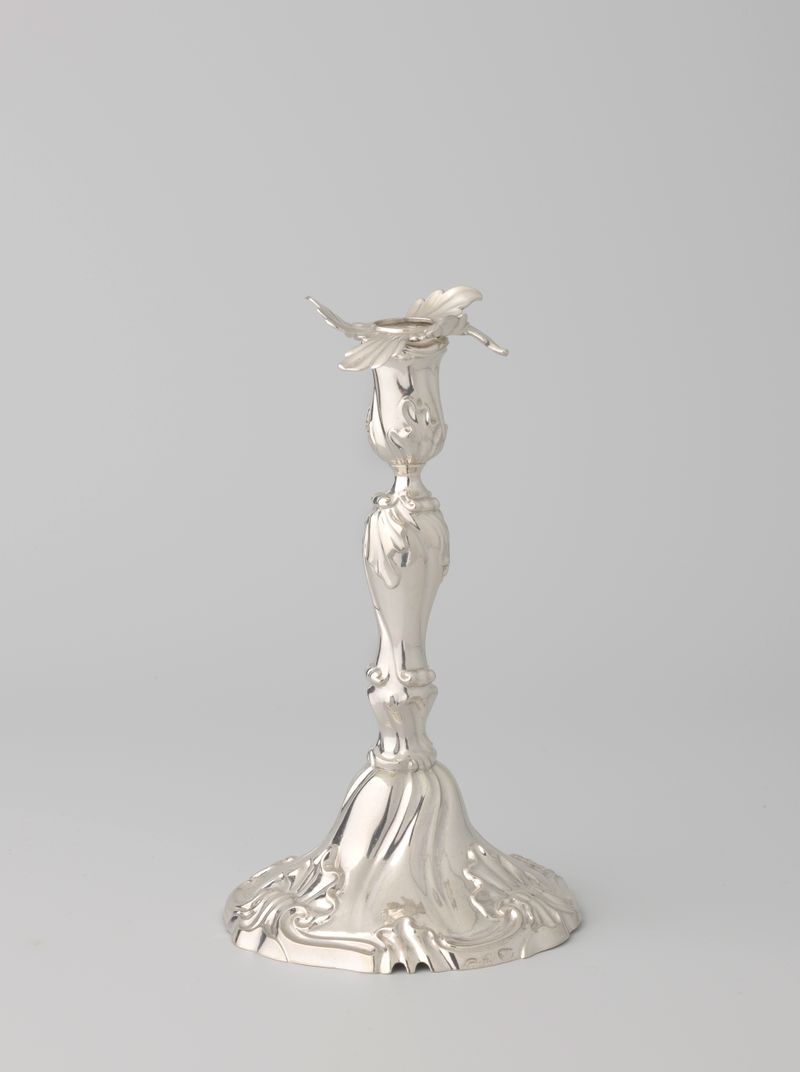
In a world often clouded by despair, an artwork can emerge as a beacon of hope, whispering stories of resilience and beauty into the void. Look closely at the exquisite details of the silver candlestick, where delicate engravings dance along its surface, catching the light with each glimmer. Notice how the meticulously crafted curves and sharp lines create a harmonious balance, drawing the eye upward in a graceful ascent. The play of shadows adds depth, transforming what might seem a simple object into a vessel of memory and longing, inviting contemplation of the moments it has illuminated. The candlestick not only serves as a functional item but also embodies a deeper narrative of fleeting time and human connection.
Each curve hints at the stories shared in the flickering candlelight—intimate conversations, whispered hopes, and cherished memories. The polished silver, gleaming with potential, stands in stark contrast to the inevitable decay of time, reminding us that even as moments fade, the essence of hope remains, captured in the artistry of the everyday. Created in 1770, this piece reflects Cornelius Wilhelmus Rensing's mastery during a period marked by a transition from baroque extravagance to a more refined, neoclassical approach in art. Working in the Netherlands, Rensing was influenced by the rising appreciation for decorative arts, where functionality met exquisite design.
This candlestick is not just an object; it represents a cultural shift, embodying both the elegance of its time and the enduring spirit of artistry.