
Karlsplatz in Wien — History & Facts
Could beauty survive in a century of chaos? In Erwin Pendl's Karlsplatz in Wien, the viewer is invited to question the resilience of art and nature amidst the tumult of human experience. Look to the foreground, where the majestic Karlskirche stands resolutely, its baroque dome catching the soft, golden light of a fading day. Notice how the delicate brushwork captures the intricate details of the church's façade, creating a powerful contrast against the serene, undulating reflections in the nearby pond. The palette, dominated by warm earth tones and hints of sky blue, evokes a sense of nostalgia, drawing the eye deeper into the harmonious blend of architecture and nature. In this composition, the stillness of the water mirrors not just the beauty of the scene but also the underlying tensions of betrayal and neglect.
The vibrant life around the church offers a stark juxtaposition to the potential for decay that lurks in the shadow of its grandeur. This duality invites contemplation of the forces, both natural and human, that shape our understanding of beauty, making the viewer acutely aware of their transient nature. During the time this piece was created, Pendl was navigating the complex aftermath of World War II, a period marked by both artistic rebirth and deep societal scars. Working in Vienna, he was part of a generation grappling with the legacies of conflict and a yearning to reconstruct cultural identity through art.
The absence of a specific date hints at the timelessness of his message, transcending the chaos that surrounded him, and urging audiences to find hope in beauty despite the betrayal of history.
More Artworks by Erwin Pendl
Browse all →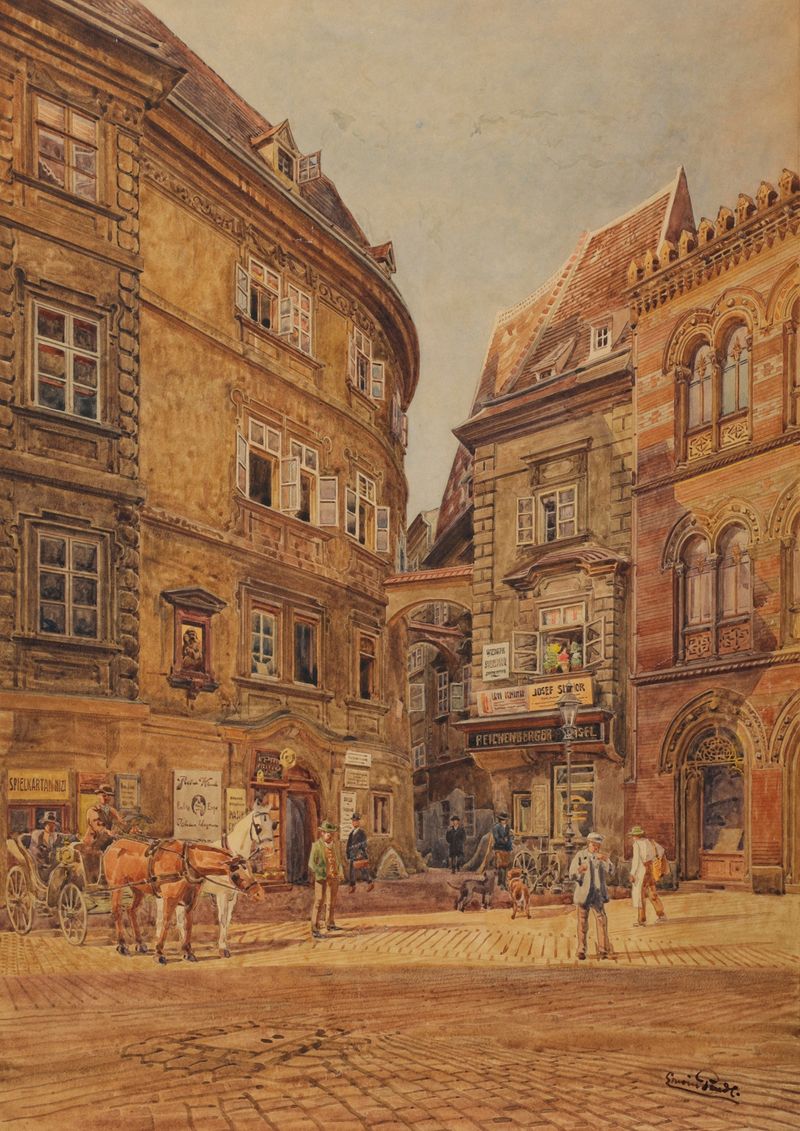
Griechenbeisl und Griechenkirche
Erwin Pendl

Burgring in Vienna, tramways, horse-drawn carriages and staffage
Erwin Pendl
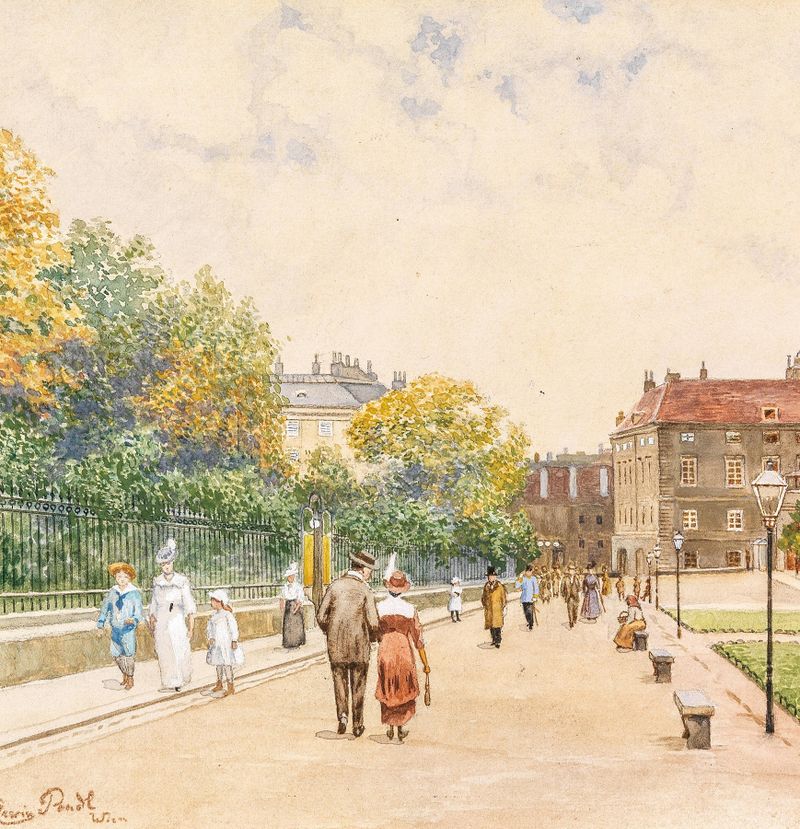
Beim Volksgarten
Erwin Pendl
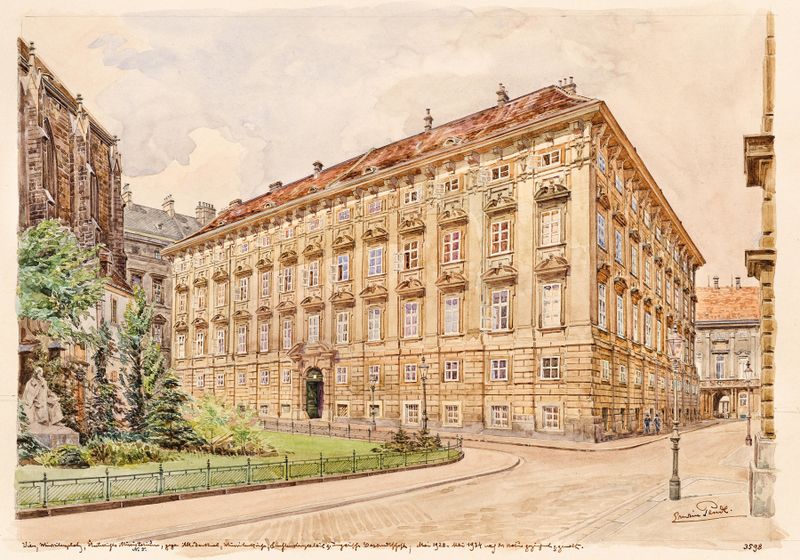
Das Unterrichtsministerium am Minoritenplatz (The Ministry of Education on Minoritenplatz)
Erwin Pendl

Herrengasse and Mollard-Clary palace with a view of Michaelerplatz in Vienna
Erwin Pendl
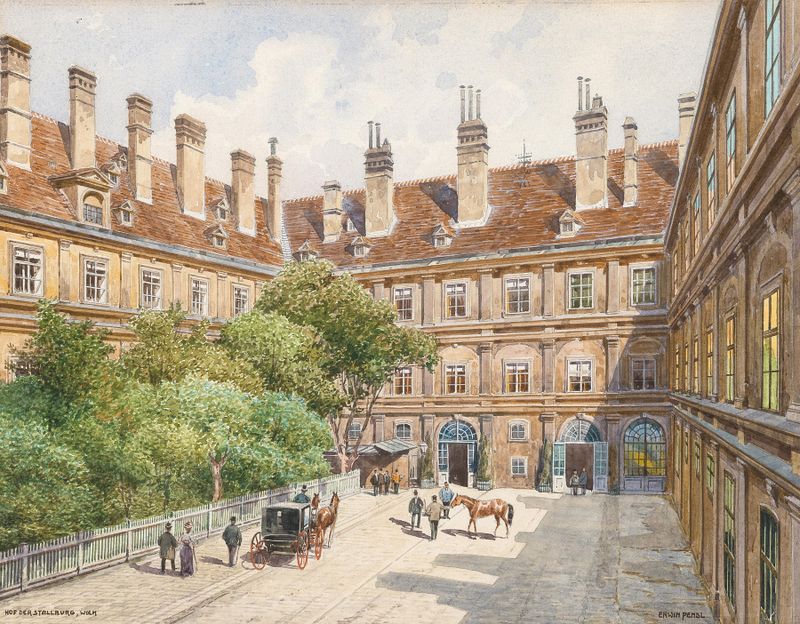
Hof der Stallburg, Vienna
Erwin Pendl

Pöchlarn
Erwin Pendl
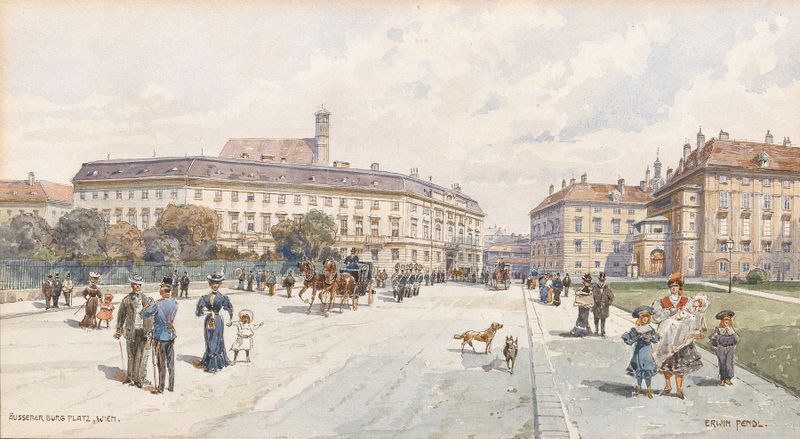
Äusserer Burgplatz, Vienna
Erwin Pendl
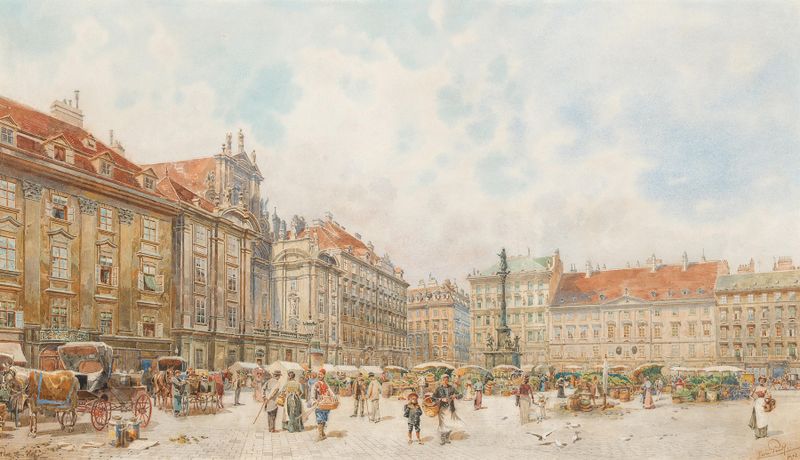
Am Hof square with market stalls and staffage
Erwin Pendl

Hinter der Votivkirche
Erwin Pendl
More Architecture Art
Browse all →
The statue of Liberty
Frédéric Auguste Bartholdi

View of Houses in Delft, Known as ‘The Little Street’
Johannes Vermeer

View of Houses in Delft, Known as ‘The Little Street’
Johannes Vermeer

The Cathedral in Rouen. The portal, Grey Weather
Claude Monet

The yellow house
Vincent van Gogh

The Church in Auvers-sur-Oise, View from the Chevet
Vincent van Gogh