
Kastanienhain — History & Facts
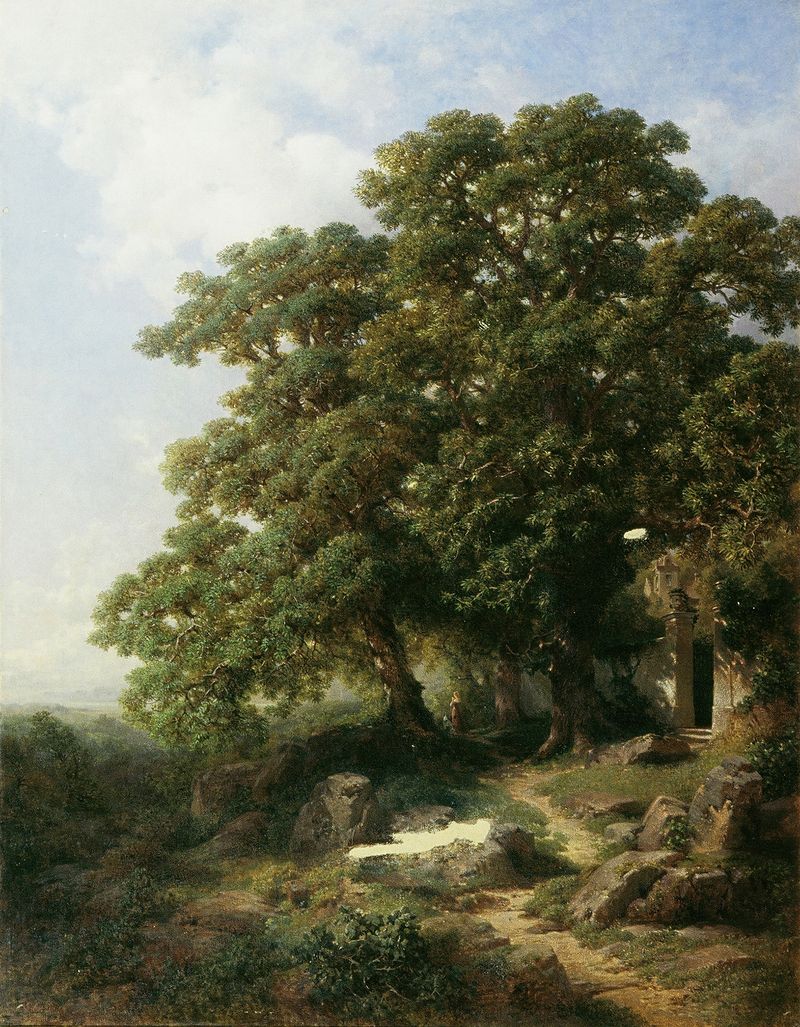
Did the painter know this moment would outlive them? In Kastanienhain, the essence of transformation unravels within the embrace of nature, beckoning us to pause and reflect on the cycles of life. Look to the left at the vibrant chestnut trees, their lush foliage a celebration of summer’s full bloom. Notice how the brushwork captures the texture of the leaves, each stroke infused with a sense of vitality. The dappled sunlight filters through, casting playful patterns on the ground, inviting the viewer to step into this tranquil grove.
The palette, rich in greens and golden hues, evokes warmth and serenity, drawing the eye deeper into this sanctuary of life. Beneath the surface of this idyllic scene lies an invitation to explore themes of transience and renewal. The juxtaposition of light and shadow highlights the fleeting nature of beauty, as if each element exists in a delicate balance, hinting at the inevitability of change. The gentle rustle of the leaves whispers secrets of seasons past and future, reminding us that every moment is a step in an endless journey of transformation. In 1870, while creating this work, Gottfried Seelos was deeply embedded in the German Romantic movement, reflecting a growing fascination with nature and its emotional resonance.
Living in Munich during a time of social and political shifts, he sought to capture the sublime beauty of the natural world as a contrast to industrialization. This painting represents not only a personal vision but also a broader artistic dialogue about the relationship between humanity and nature.
More Artworks by Gottfried Seelos
Browse all →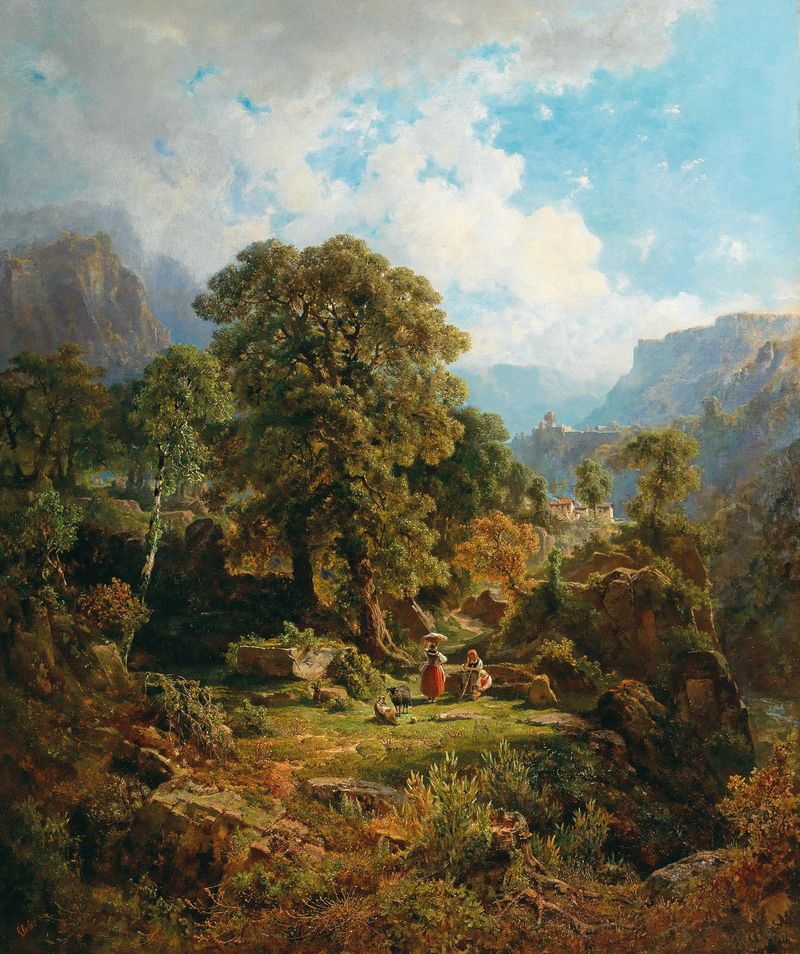
A landscape in the Fassa Valley, South Tyrol
Gottfried Seelos

A landscape near Sebetov Castle
Gottfried Seelos

Schlern mit Rosengarten von Rampeun aus gesehen
Gottfried Seelos
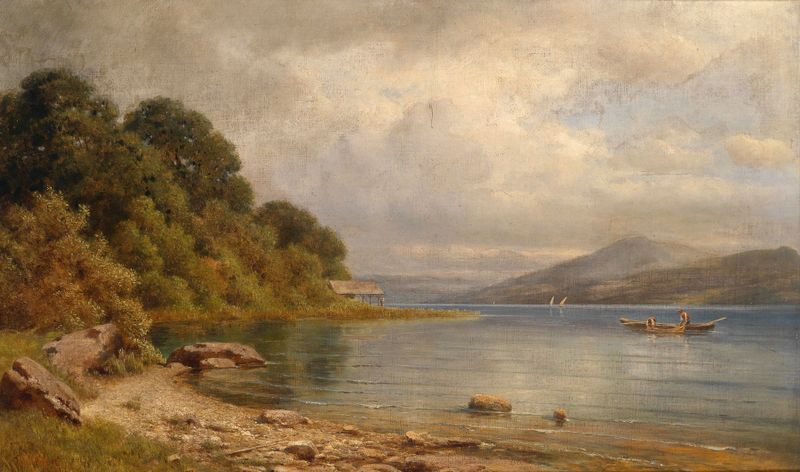
Wörthersee bei Velden
Gottfried Seelos
Kastanien in Südtirol
Gottfried Seelos

Landscape in the South Tyrol and figure staffage with Mendel mountain in the background
Gottfried Seelos

A blooming landscape, presumably in the Adige valley (Etschtal) near Bolzano
Gottfried Seelos

A southern coastline, surrounded by a mountain range
Gottfried Seelos
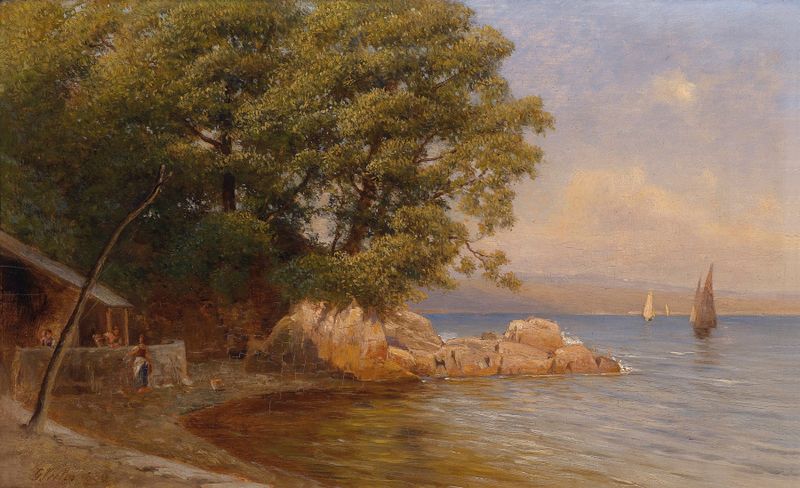
An der Küste
Gottfried Seelos

Brandung vor der Küste der Insel Melada
Gottfried Seelos





