Kinderjurk gemaakt van drie zakdoeken met een roze fond met een paarswitte ruit en een paars fond met een streepje in paars, groen en wit — History & Facts
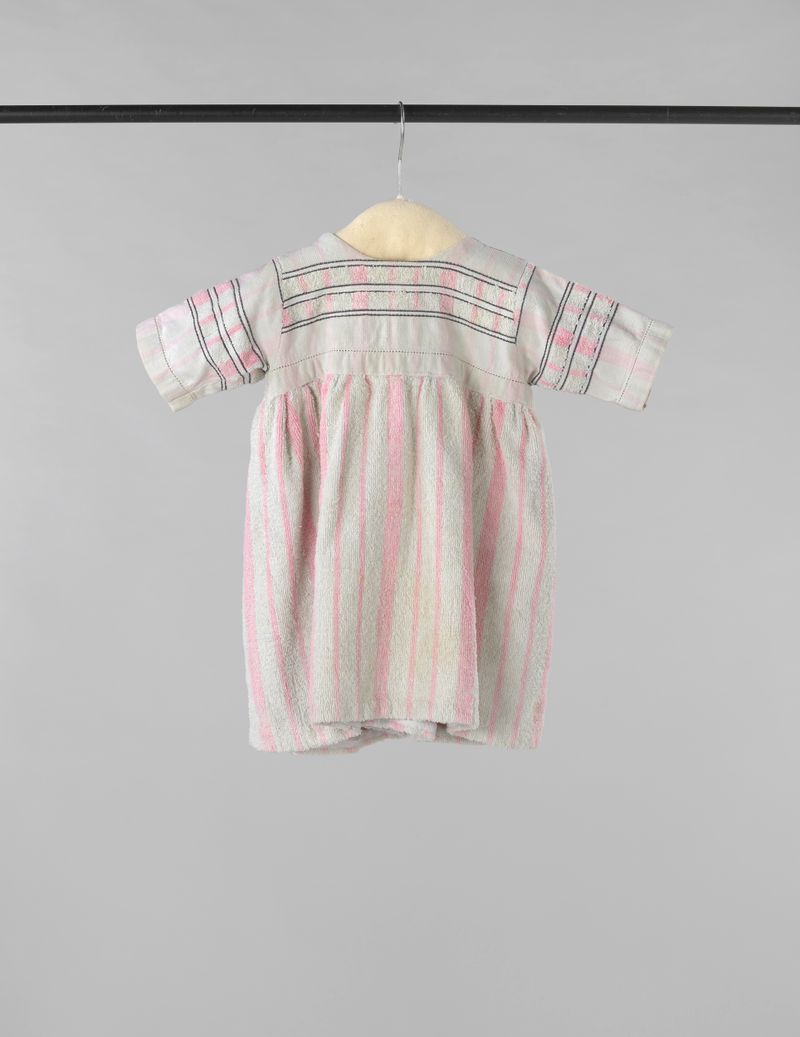
Could a single brushstroke hold eternity? This linen child’s dress, woven from simple fabrics, embodies serenity in its harmonious patterns and gentle colors, offering a glimpse into a world where artistry meets childhood innocence. Look closely at the delicate interplay of pink and purple hues that create a vibrant yet soothing backdrop. Notice how the intricate white checks dance playfully across the surface, guiding your gaze with a rhythm that echoes the delicate stitches of its seams. The subtle stripes in green, purple, and white weave through the fabric like whispers, inviting reflection on the complexities of childhood in a post-war era. Delving deeper, one can sense a poignant narrative beneath its surface—a juxtaposition of simplicity and history.
The use of everyday materials speaks to resilience, while the choice of colors evokes a sense of calm amidst chaos. Each element of the dress carries an emotional weight, reflecting both the beauty of childhood and the fragility of the world it occupies. Here, innocence is preserved even as the shadows of conflict linger. Created in the aftermath of World War II, this artwork reflects the life of Harmina Catharina Baruch-Ponstijn, who painted it in the Netherlands in 1946.
At this time, Europe was grappling with the scars of war, and artists were seeking new beginnings, often channeling hope and renewal through their work. The artist's choice to focus on children’s garments symbolizes a desire for peace and innocence, marking a poignant moment in the history of art and society.