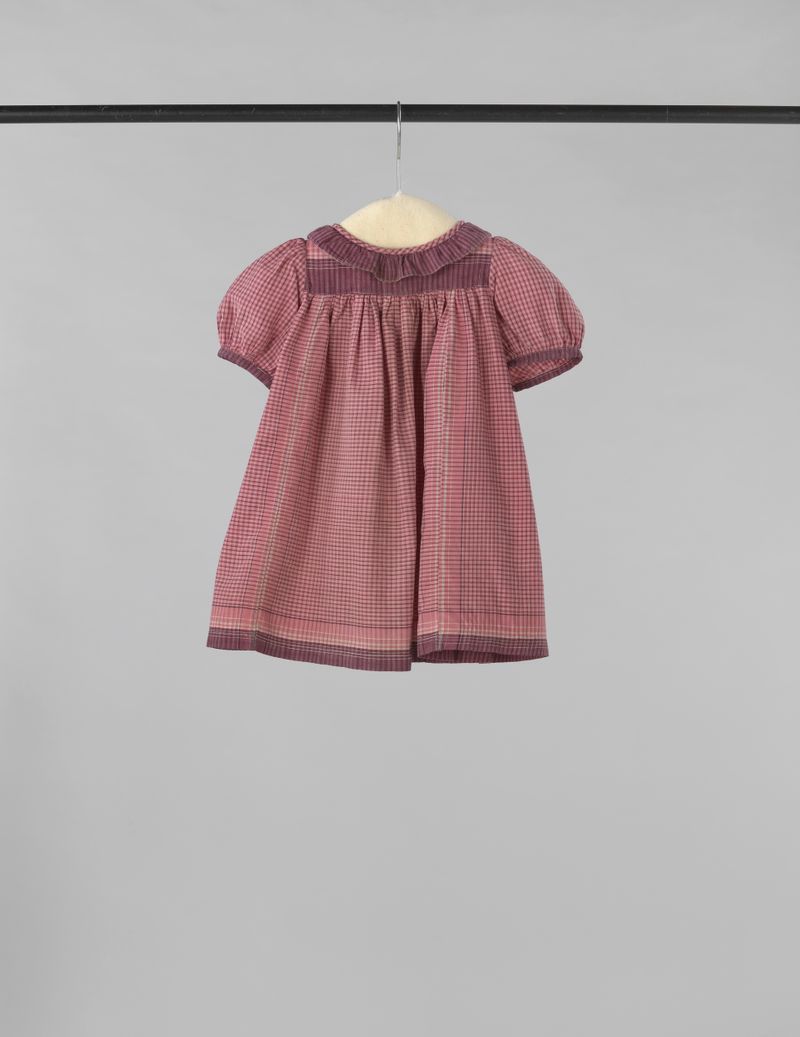
Kinderjurk met korte mouw, gemaakt van een wit-roze gestreepte badstoffen handdoek, op het lijf afgezet met zwarte siernaden — History & Facts
Could a single brushstroke hold eternity? In the delicate interplay of fabric and form, the emotional weight of this piece reveals a world shaped by both intimacy and violence. Look to the center of the canvas, where the vibrant white-pink stripes of the fabric come alive, capturing the essence of childhood innocence. The careful placement of black decorative seams creates a striking contrast, drawing the eye to the contours of the garment. Notice how the brushwork brings texture to the surface, inviting you to almost reach out and touch the soft, inviting material.
The colors are a resonant echo of playfulness, yet they hint at an underlying complexity that begs for exploration. As you absorb the details, consider the duality woven into the fabric: the playful innocence of youth juxtaposed with the harsh realities of life lurking just beneath the surface. The vibrant hues evoke joyful memories, yet the black seams suggest a tension, a fragility that speaks to the vulnerability inherent in growing up. This tension between softness and severity reflects the fragile line between safety and danger, evoking a visceral understanding of the violence that can infiltrate even the most cherished moments of childhood. In 1948, Harmina Catharina Baruch-Ponstijn was creating this work in a period marked by post-war recovery and a search for identity in the Netherlands.
As artists wrestled with the shadows of conflict and the longing for peace, she infused her craft with the complexities of her time, utilizing textile as both a literal and metaphorical medium to explore themes of resilience and fragility. This piece stands as a testament to that profound moment in history.