
Kirchenruine. — History & Facts
What if beauty was never meant to be finished? In the ruins of a church, delicate echoes of faith linger amongst crumbling stone, inviting contemplation on permanence and decay. Look closely at the intricate arches that spiral upward, their silhouettes etched against the soft light. Notice how the varying shades of gray and ochre intertwine, creating a mosaic of shadow and illumination that reflects not just the passage of time but the emotional weight of forgotten prayers. The brushstrokes are both masterful and reverent, revealing a deep respect for the architecture and its lost stories. Within the desolate beauty lies a poignant contrast: the vibrancy of life that once filled the sacred space versus the haunting silence that now prevails.
Here, nature’s encroachment is evident, as tendrils of ivy reclaim the stone, symbolizing resilience in contrast to human fragility. Each crack and crevice tells a layered story of abandonment and reverence, urging the viewer to reflect on the cycles of existence. During the period she created this work, Stainer-Knittel was deeply engaged in the exploration of natural landscapes and architectural forms, often emphasizing their interplay. Though the exact date of this piece remains unspecified, it reflects a time when artists were beginning to embrace the juxtaposition of nature's reclamation of man-made structures.
It was a moment of fascination with ruins, where the past and present coalesce, resonating with a longing for what was once whole.
More Artworks by Anna Stainer-Knittel
Browse all →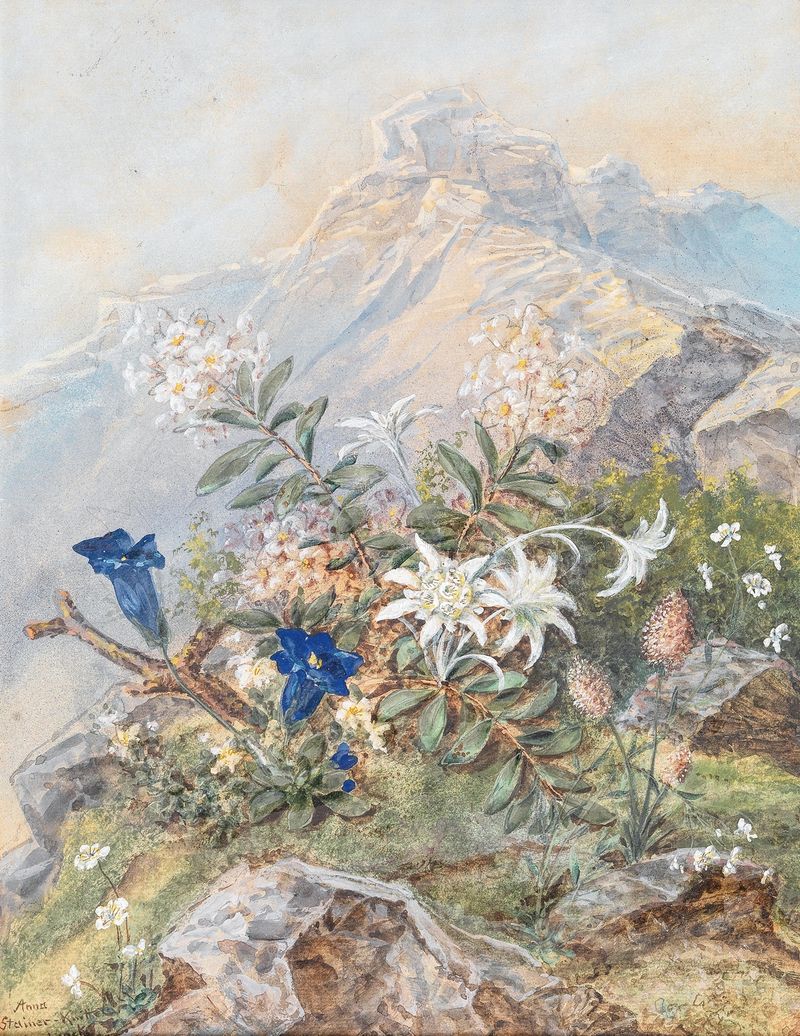
More Architecture Art
Browse all →
The statue of Liberty
Frédéric Auguste Bartholdi

View of Houses in Delft, Known as ‘The Little Street’
Johannes Vermeer

View of Houses in Delft, Known as ‘The Little Street’
Johannes Vermeer

The Cathedral in Rouen. The portal, Grey Weather
Claude Monet

The yellow house
Vincent van Gogh

The Church in Auvers-sur-Oise, View from the Chevet
Vincent van Gogh