Kitchen Still Life — History & Facts
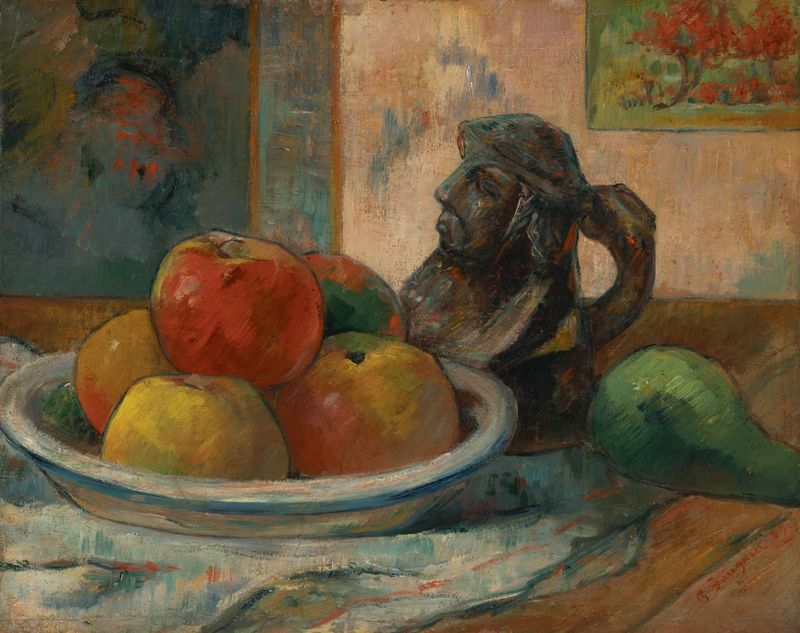
In the stillness of this kitchen, unspoken truths linger among the objects, each holding stories waiting to be unveiled. The absence of human presence amplifies the intimacy, urging the viewer to engage in a dialogue with the inanimate. Look to the right at the gleaming copper pot, its polished surface reflecting the soft light that filters through a nearby window. Notice how the muted earth tones of the vegetables and the stark whiteness of the cloth create a harmonious contrast that feels both inviting and solemn.
Each item is arranged with deliberate care, as if the artist has curated a moment frozen in time, beckoning us to admire not only the objects but the serenity they evoke. Delve deeper and observe the way shadows stretch and twist, highlighting the tension between light and darkness. The juxtaposition of vibrant, ripe fruits against the weathered wooden table speaks to the cycle of life and decay, while the untouched, empty space around them hints at absence and longing. This still life is not merely an arrangement; it is a reflection of quiet contemplation, a pause that invites introspection. In the early 1640s, while residing in Italy, the artist painted this piece amidst the broader context of Baroque art, where dramatic light and shadow played pivotal roles.
As he navigated his own personal struggles, including the pressures of the art market, Kitchen Still Life emerged as a testament to the beauty found in simplicity and silence, capturing a moment that transcends time.