Konigsee — History & Facts
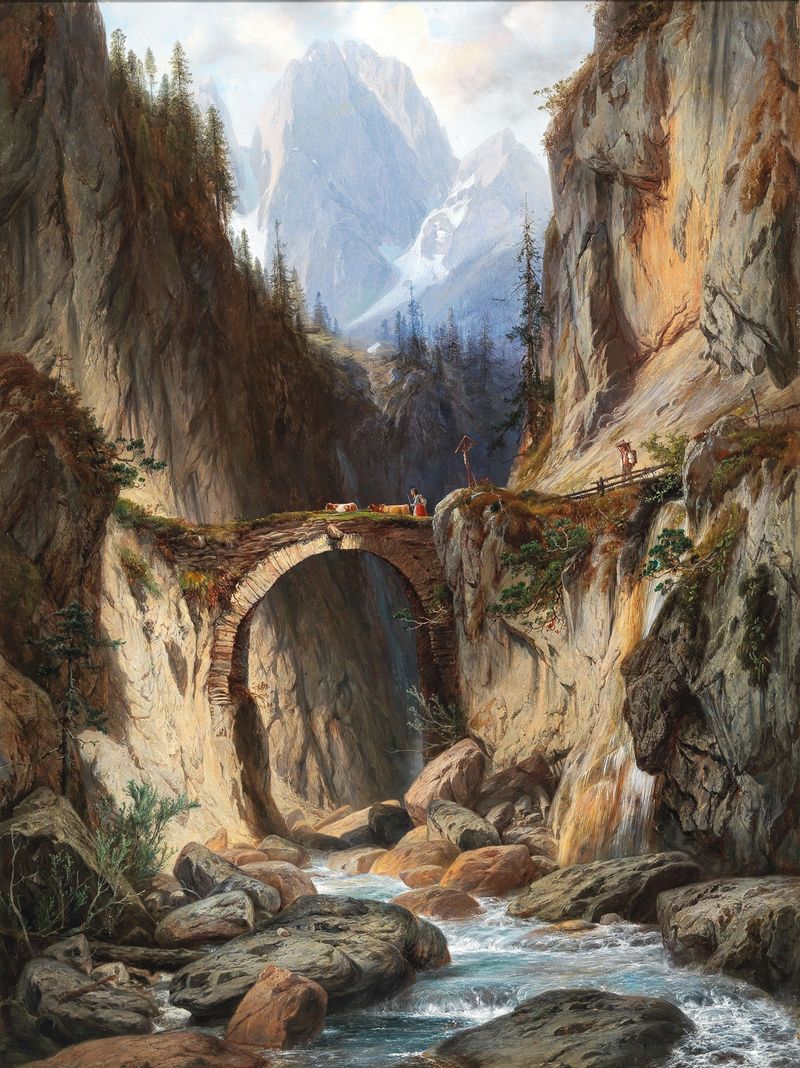
When did color learn to lie? In Konigsee, the serene landscape blurs the line between reality and illusion, enticing the viewer to question the authenticity of what they see. Look to the left at the tranquil lake, its surface a mirror reflecting the towering mountains cloaked in a veil of mist. The artist employs a rich palette of blues and greens, creating a depth that draws the eye into the scene, inviting exploration of the peaceful shoreline. Notice how the light dances across the water, illuminating pockets of color while casting shadows that suggest movement in the otherwise still environment.
Each brushstroke brings forth an atmosphere that feels both familiar and dreamlike, inviting you to linger in this ethereal moment. As you delve deeper, observe the contrast between the lush vegetation and the starkness of the rocky peaks. This juxtaposition speaks to the duality of nature, where beauty and danger coexist. The delicate flowers dotting the foreground serve as a reminder of fragility, while the imposing mountains loom above, hinting at the sublime power of the natural world.
This tension invites contemplation about our own place within the landscape, evoking feelings of both peace and unease. In 1873, Willibald Wex painted this piece during a time when the Romantic movement was waning and Impressionism was on the rise. Living in Germany, he sought to capture the essence of untouched beauty in nature while grappling with the changing tides of artistic expression. As artists began to embrace light and color in new ways, Wex’s work remained a testament to the emotional resonance of landscapes, bridging the gap between two influential artistic movements.