Küste bei Amalfi — History & Facts
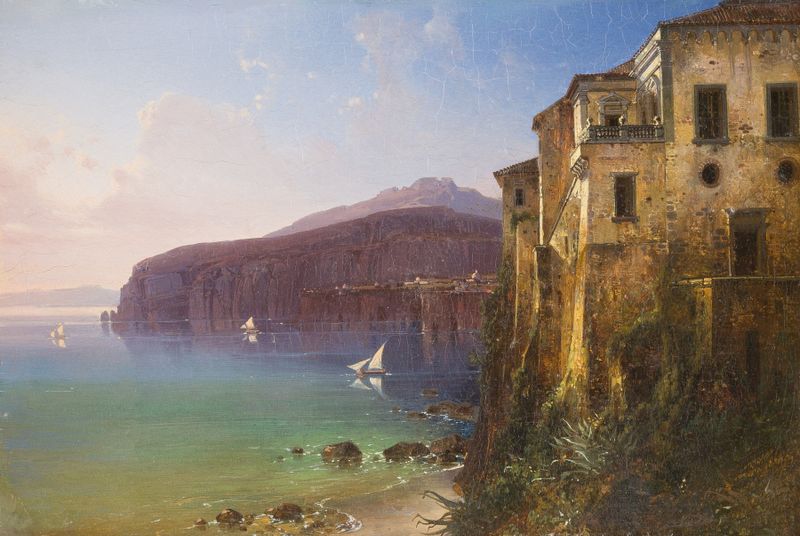
In the interplay of land and sea, a delicate balance reveals the essence of existence. Look to the horizon in Küste bei Amalfi, where azure waters gently kiss the sun-drenched cliffs. The vibrant hues of emerald greens and soft ochres draw you in, inviting a connection with the serene landscape. Notice how the light dances across the surface of the water, shimmering like scattered diamonds, while the sharp contours of the coastline stand resolute against the fluidity of the sea.
The meticulous brushwork captures the essence of both movement and stillness, a harmony that speaks to the heart. Beneath the alluring facade lies a deeper contemplation of nature’s dualities. The juxtaposition of the rough, craggy cliffs against the tranquil sea encapsulates the struggle between permanence and transience. Small boats dot the water, their presence a reminder of human vulnerability amidst the vastness of nature.
Each element within the painting contributes to a narrative of exploration and balance, capturing a moment that is both fleeting and eternal. In 1830, during a time of profound artistic exploration in Europe, the artist crafted this piece while residing in Germany. As the Romantic movement flourished, Schirmer sought to encapsulate the beauty of nature alongside human experience. His travels along the Italian coast ignited a passion for capturing landscapes that merged reality with emotion, paving the way for a deeper appreciation of the sublime in the natural world.