La Banlieue de Paris aux environs des fortifications — History & Facts
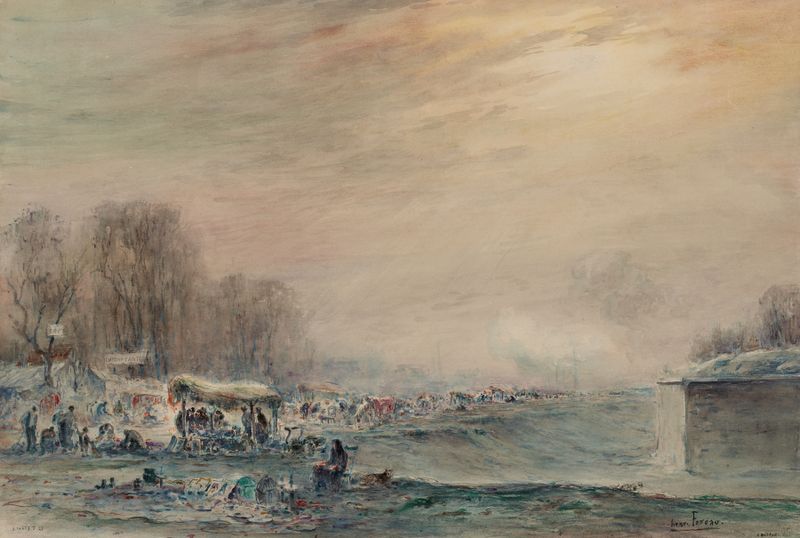
In a time when the mundane often eclipses the extraordinary, the power of visual expression invites us to glimpse faith's quiet persistence. Focus first on the horizon, where the gentle strokes of muted greens and browns harmonize, depicting a modest landscape enveloping the fortified edges of Paris. The fortifications rise stoically, their angular shadows softened by the delicate play of light that ushers in a sense of serenity. Notice how the composition invites your gaze to wander—each detail, from the distant figures meandering along paths to the soft clouds drifting above, conveys a world at peace, yet poised on the brink of change. Beneath the surface, there lies a juxtaposition of security and vulnerability.
The fortifications symbolize both protection and a barrier, hinting at the tensions of urban life. The trees and fields surrounding them, nurturing yet fragile, embody a sense of faith in nature's resilience amid encroaching modernity. This relationship between the man-made and the natural implores the viewer to reflect on the balance between progress and preservation. In 1923, Foreau created this piece during a period marked by post-war recovery and societal shifts in France.
The art scene was evolving, influenced by movements like Impressionism and Fauvism, while the country was grappling with its identity amidst the scars of war. Foreau's dedication to capturing the nuances of everyday life amidst these changes reflects not only his artistic vision but also a deep-seated faith in the enduring beauty of the world around him.