La chapelle-sous-Crécy (Le Moulin) — History & Facts
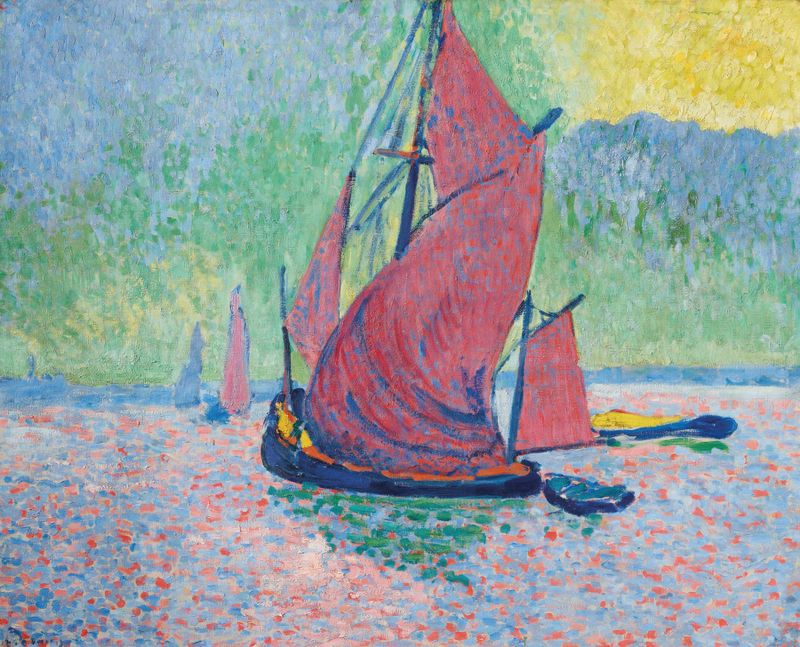
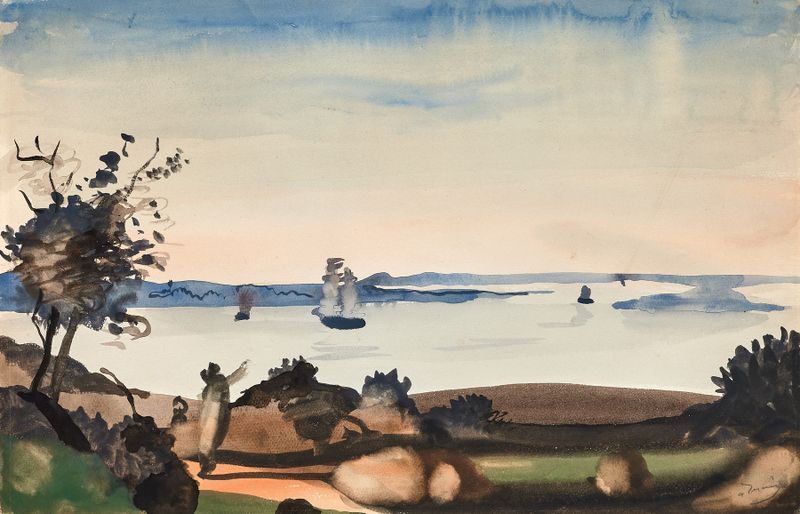
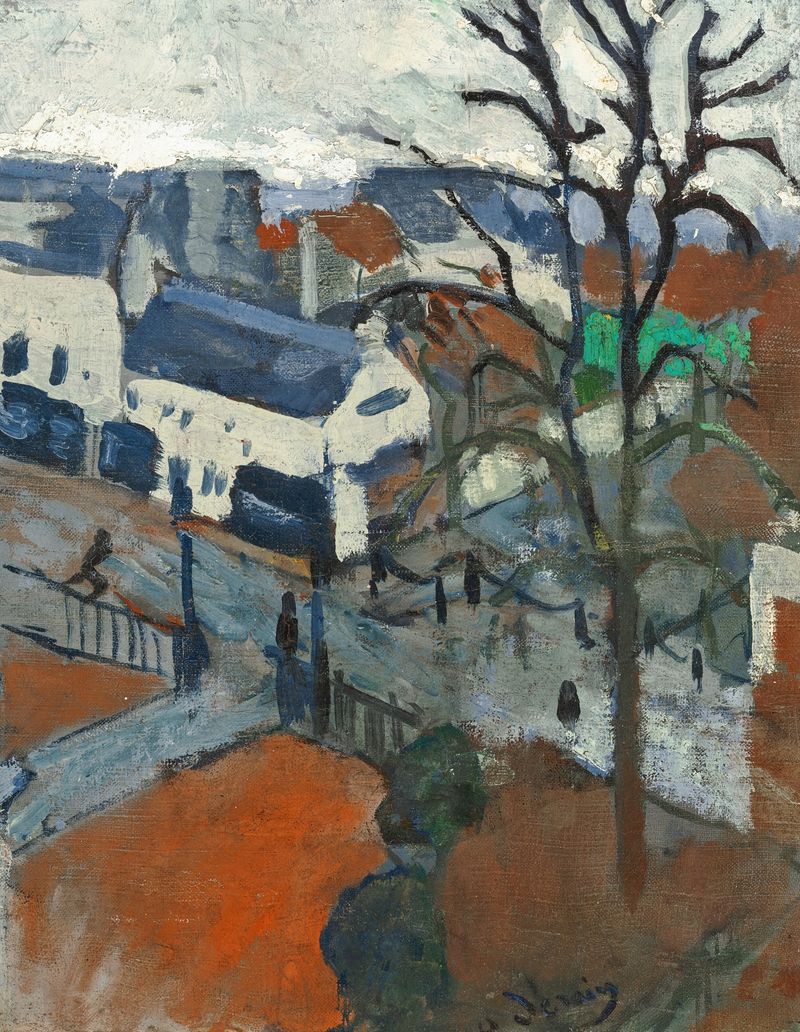
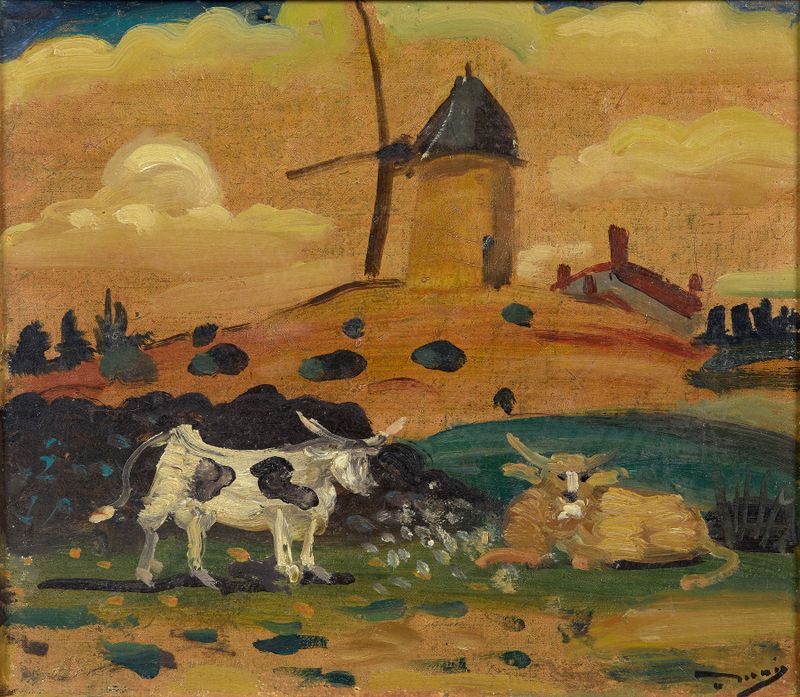
Could a single brushstroke hold eternity? In La chapelle-sous-Crécy (Le Moulin), the essence of time and place seems to linger within the vibrant colors and bold strokes, inviting the viewer to contemplate the transcendence of the ordinary. Look to the left at the striking chapel, its form abstract yet recognizable, emerging from a flurry of luminous hues. Notice how the sunlight breaks through the clouds, illuminating the scene with a warm golden glow that dances upon the water. The dynamic brushwork, a hallmark of the artist's Fauvist style, creates a lively interplay between the stillness of the architecture and the motion of the surrounding nature, beckoning the viewer into a world where color reigns supreme. Delve deeper into the painting's contrasts; the solidity of the chapel stands in stark relief against the fluidity of the sky.
Here lies a tension between permanence and impermanence, where the church symbolizes stability amidst the ephemeral beauty of the natural world. The swirling blues and greens evoke a sense of movement, as if the landscape itself breathes, reminding us of life's transient moments amid the allure of the eternal. In 1910, André Derain painted this work while living in the vibrant art scene of Fauvism, marked by a bold embrace of color and abstraction. During this period, he sought to explore the emotional power of color, distancing himself from the constraints of realism.
The world was on the brink of modernity, with the tensions of early 20th-century Europe shaping new artistic visions. This piece encapsulates that spirit, transforming the mundane into the magnificent.