
La colonnade du Louvre prise du jardin de l’hôtel du comte d’Angiviller — History & Facts
In the stillness of an artist's pursuit, obsession takes form, transforming a fleeting moment into timeless expression, capturing the essence of architecture and nature entwined. Look to the center, where the majestic colonnade stands tall, each column meticulously rendered, creating a rhythmic interplay of light and shadow. Notice how the vibrant greens of the garden in the foreground contrast sharply with the cool grays of the stone, inviting the viewer to step closer. The careful composition draws the eye along the path that leads ultimately to the iconic structure, while the delicate brushstrokes evoke a sense of tranquility. As you explore the details, consider the emotional weight of the scene.
The juxtaposition of the strong, rigid columns against the softness of the garden allows for a dialogue between permanence and transience. The meticulously painted foliage whispers of life and growth, while the colonnade, a testament to human achievement, stands as a reminder of history’s weight. This duality speaks to the artist's obsession with capturing not just a physical space, but the deeper layers of emotion tied to place. Louis-Pierre Baltard created this work between 1795 and 1805 during a period of artistic transition in France, marked by the aftermath of the Revolution and the rise of Neoclassicism.
Living in a time when art was increasingly influenced by political and philosophical changes, he focused on representing the beauty of architecture and nature, reflecting both personal dedication and the burgeoning appreciation for the classical ideals of order and harmony.
More Artworks by Louis-Pierre Baltard
Browse all →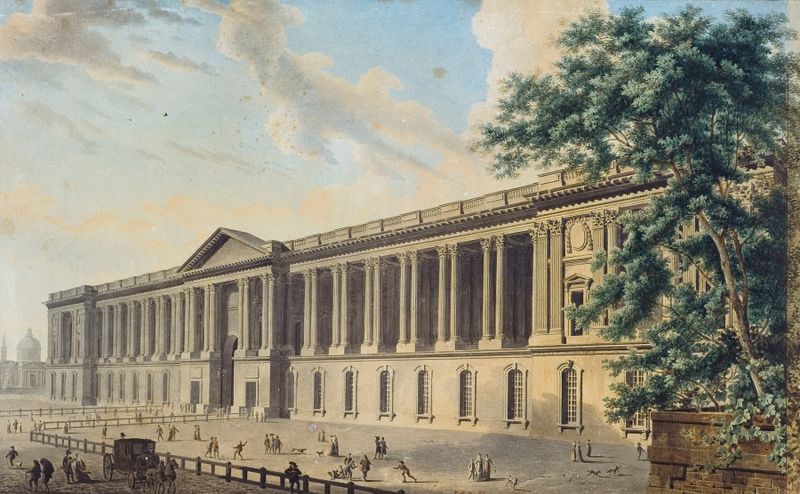
More Architecture Art
Browse all →
The statue of Liberty
Frédéric Auguste Bartholdi

View of Houses in Delft, Known as ‘The Little Street’
Johannes Vermeer

View of Houses in Delft, Known as ‘The Little Street’
Johannes Vermeer

The Cathedral in Rouen. The portal, Grey Weather
Claude Monet

The yellow house
Vincent van Gogh

The Church in Auvers-sur-Oise, View from the Chevet
Vincent van Gogh