La Fauche Des Foins À Montfoucault — History & Facts
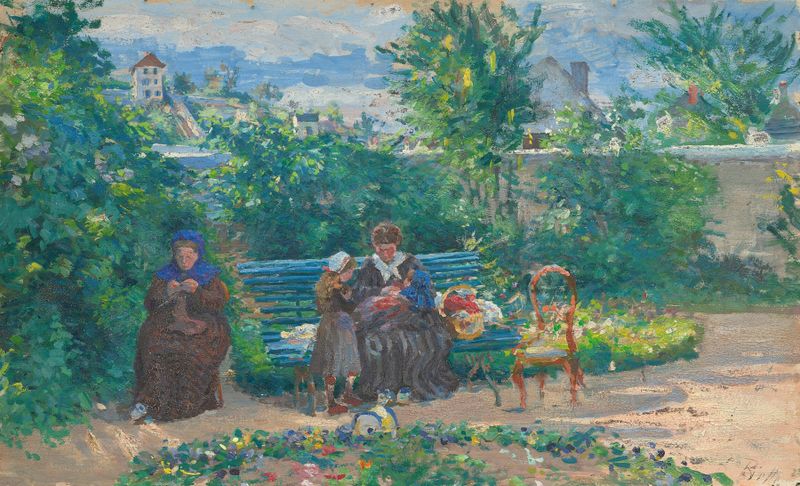
Is this a mirror — or a memory? The hues and light in La Fauche Des Foins À Montfoucault invite us to ponder the boundaries between the two, blurring the lines between the present moment and a nostalgic reverie. Look to the golden fields sprawling across the canvas, where subtle strokes capture the gentle sway of tall grass under a warm summer sun. Notice how the vibrant greens and rich yellows intertwine, creating a dance of color that seems to pulse with life. The figures in the distance, small yet significant, draw your eye as they labor with scythes, embodying both toil and unity amidst nature's beauty, while the sky bears a soft gradient that suggests the fading day. Embedded in the painting is an emotional tension between labor and serenity.
The juxtaposition of the workers’ hard efforts against the tranquil landscape speaks to the duality of human existence—our relentless pursuit of productivity intertwined with the peaceful rhythms of nature. The play of light illuminates not just the field, but also the fleeting nature of time, evoking a sense of nostalgia for the labor once common to rural life. In 1876, Ludovic Piette was painting in France during a period marked by a growing interest in realism and the depiction of everyday life. This work emerged as part of his exploration of agricultural themes, reflecting the socio-economic transformations of the time, as industrialization began to reshape the landscape and lives of rural communities.
His focus on color and light captures not only the essence of the scene but also the profound connection between humanity and the natural world.