
La meule — History & Facts
Within a simple landscape, loneliness permeates every stroke, whispering the weight of solitude in forgotten places. Look to the foreground where a solitary haystack rises against an expansive sky. The muted earth tones convey a sense of desolation, while soft brushstrokes create a textured surface that invites touch. Notice how the light softly envelops the hay, casting elongated shadows that stretch like memories fading into the horizon.
The composition draws the eye upward, leading to a vast canvas of blue that feels both expansive and isolating. In the distance, the hazy outlines of trees stand like sentinels, witnesses to the passage of time and the quiet existence of the landscape. The contrast between the vibrant sky and the muted foreground speaks to the tension between hope and despair, inviting reflection on the transient nature of life. Each layer of paint conveys not just a scene but an echo of solitude, where the weight of existence hangs palpable in the air. Created during a period when the artist was deeply influenced by the natural world around him, this work reflects the prevailing themes of realism in the 19th century.
Veyrassat, likely painting in the late 1800s, was part of the movement that sought to capture everyday life with honesty. As industrialization transformed the landscape, his focus on rural scenes became a poignant commentary on the loneliness that accompanies rapid change.
More Artworks by Jules-Jacques Veyrassat
Browse all →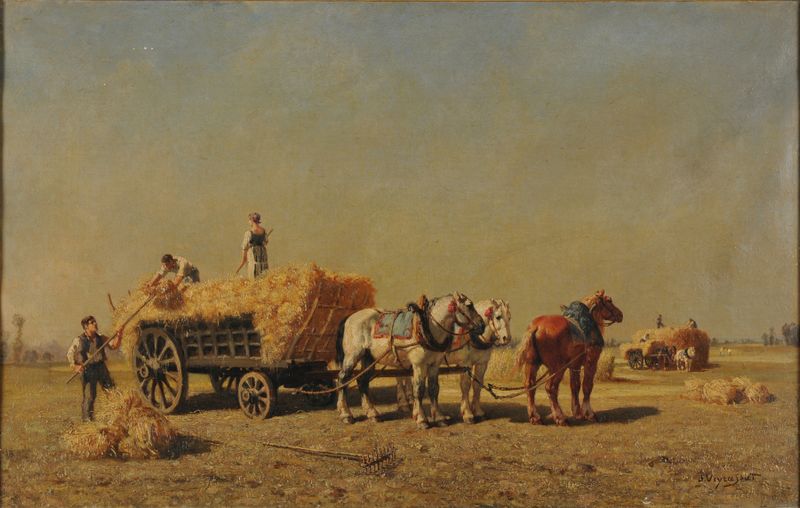
La moisson
Jules-Jacques Veyrassat
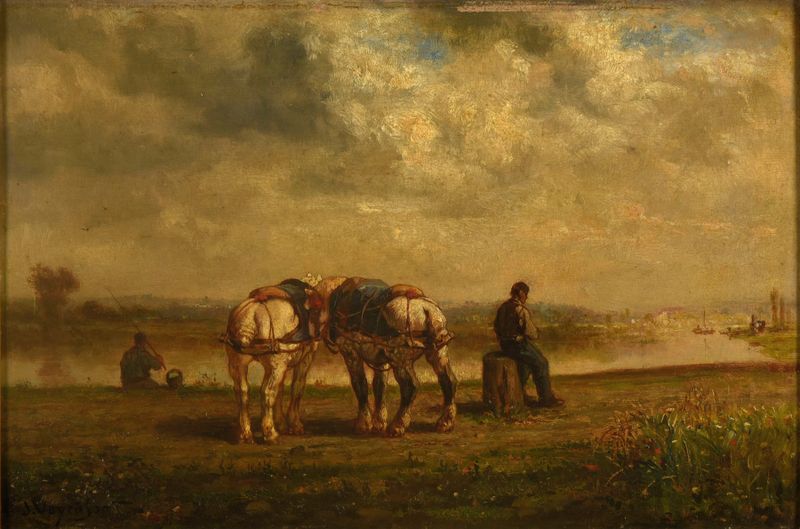
Chevaux de halage
Jules-Jacques Veyrassat
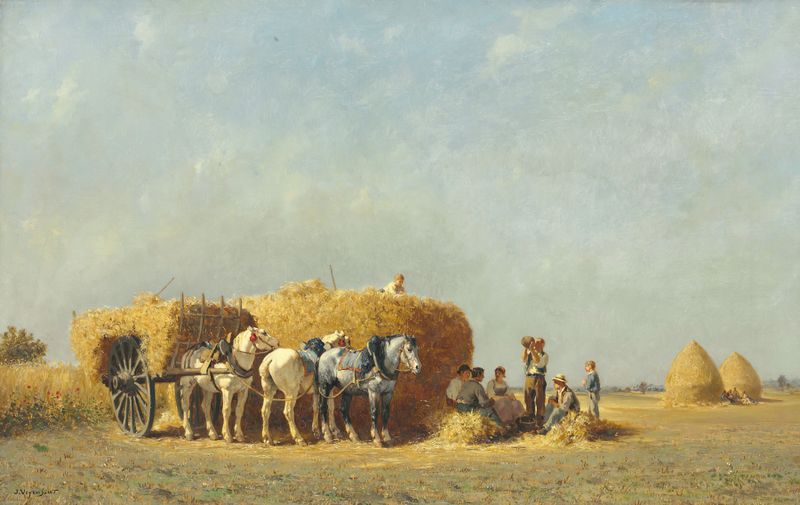
The Noonday Meal
Jules-Jacques Veyrassat
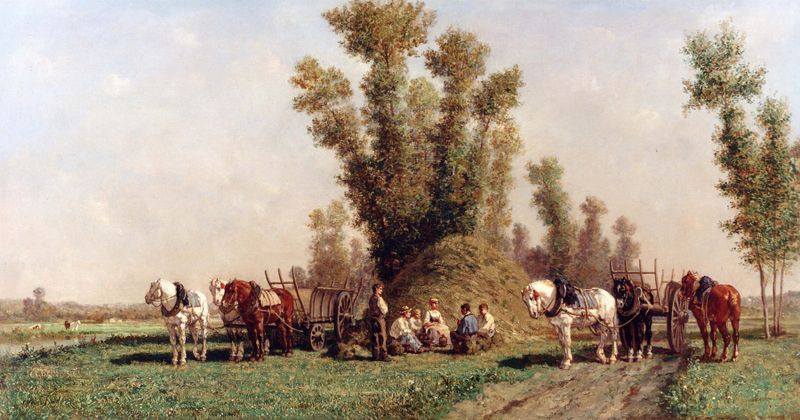
Haymakers Resting
Jules-Jacques Veyrassat
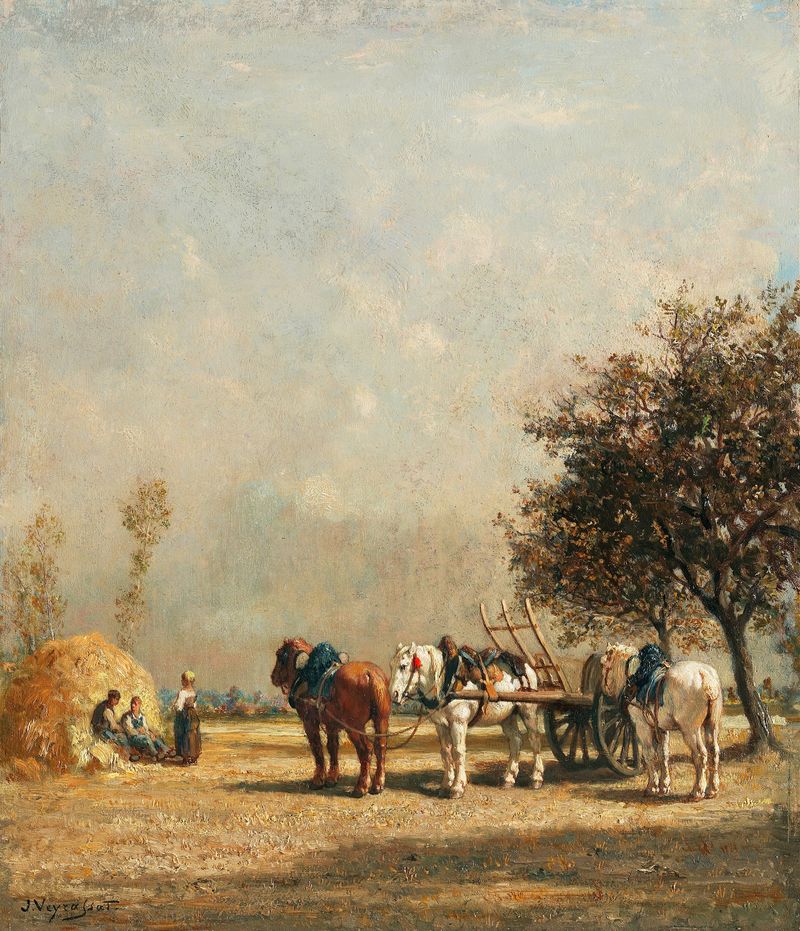
HAY WAIN JULES
Jules-Jacques Veyrassat

Chevaux sous un pommier
Jules-Jacques Veyrassat
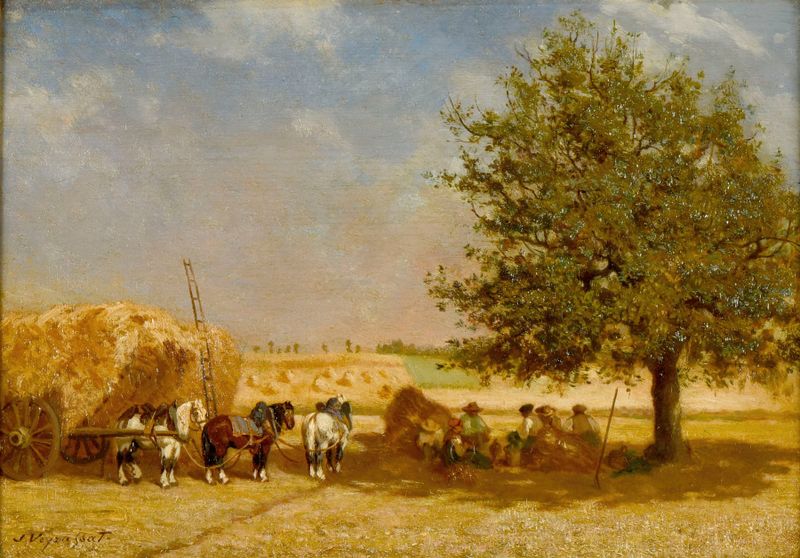
Les moissonneurs
Jules-Jacques Veyrassat
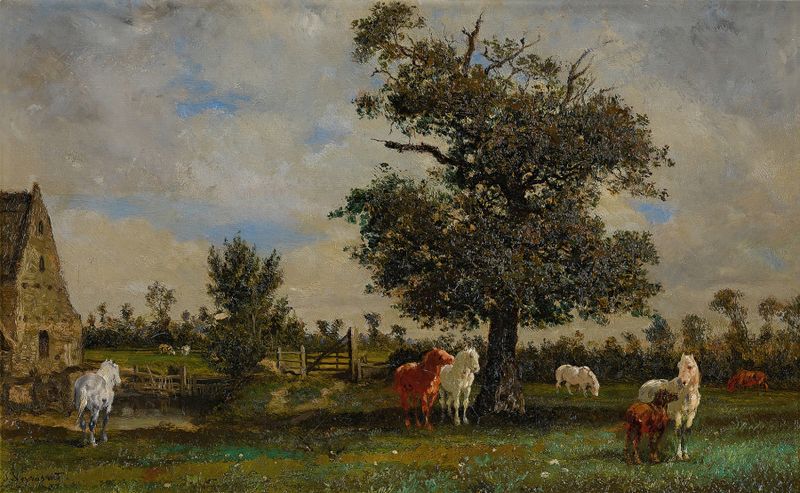
Chevaux Sous Un Pommier
Jules-Jacques Veyrassat
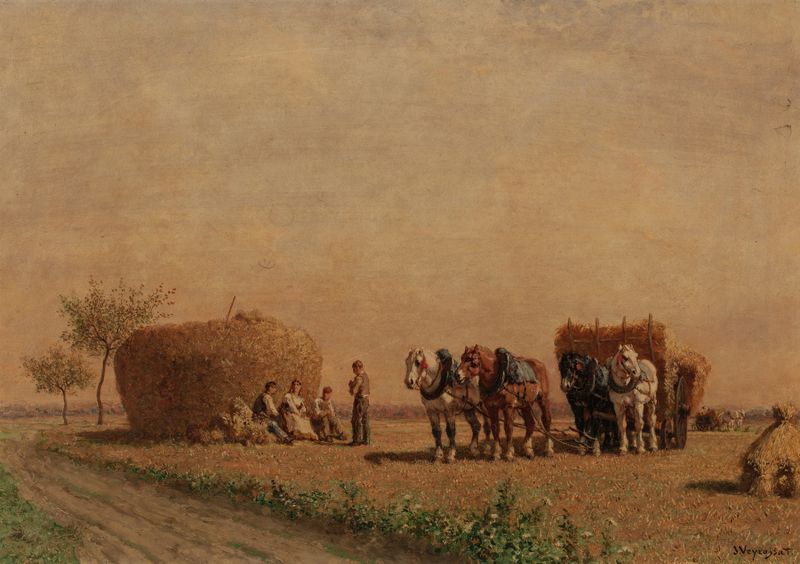
Resting Haymakers
Jules-Jacques Veyrassat





