
La neige à Port-Marly — History & Facts
In the stillness captured on the canvas, a fleeting moment is immortalized, revealing the hidden beauty of transience and the weight of memory. Look to the left at the delicate silhouettes of bare trees, their branches etched against a soft, muted sky. The palette is composed of cool blues and gentle grays, interspersed with hints of white that mimic falling snow. Notice how the artist skillfully layers brushstrokes, creating a textured surface that invites the viewer to wander through the landscape.
The soft light disperses, casting a serene glow upon the snow-covered ground, drawing our eyes to the winding path that disappears into the distance. As you observe, consider the contrast between the vibrant life that once thrived in these woods and the quiet stillness of winter. The footprints in the snow speak of human presence, yet they also evoke a profound solitude. This dichotomy reflects a deeper truth about the cycles of life and nature—the inevitable passage of time, where each pause holds the weight of both nostalgia and hope for renewal. In 1902, Maufra painted this piece during a time of artistic exploration and innovation.
Working in Port-Marly, a picturesque location outside Paris, he was influenced by the Impressionists, yet sought to infuse his landscapes with a sense of personal introspection. This period marked a shift towards a more emotional connection with the natural world, allowing him to convey the essence of fleeting moments through his art.
More Artworks by Maxime Maufra
Browse all →
Le pont de l’Isle-Adam ou le Vieux pont
Maxime Maufra

Féérie nocturne: Exposition Universelle Paris 1900
Maxime Maufra
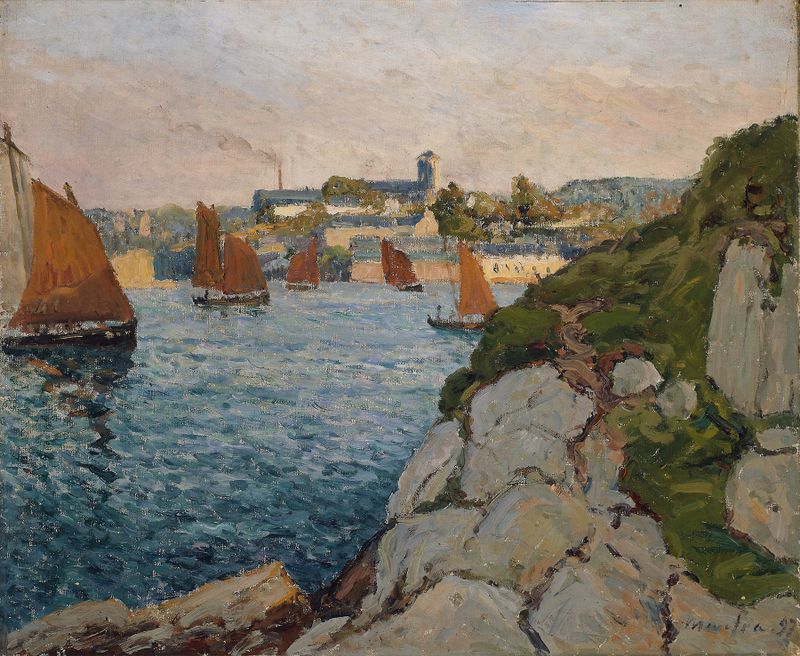
Douarnenez in Sunshine
Maxime Maufra
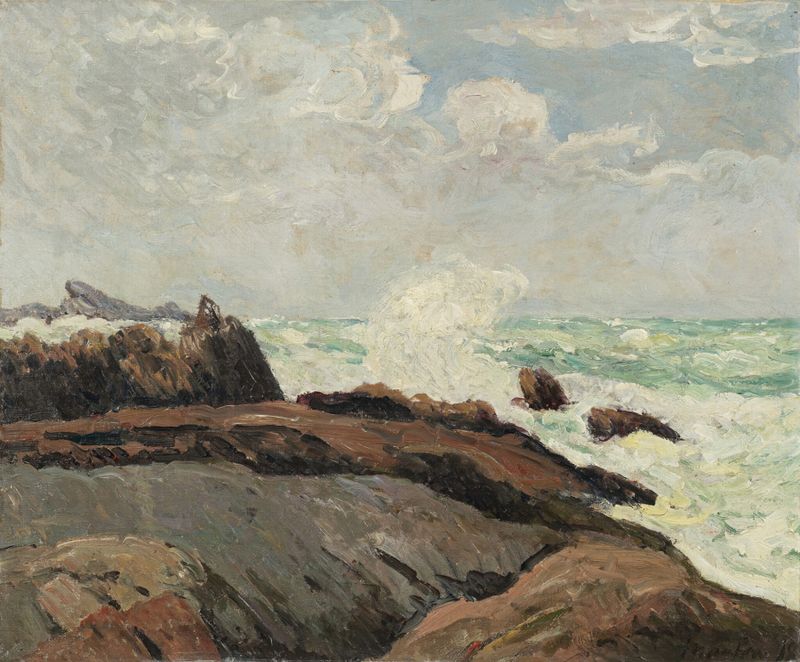
Mer forte à Saint-Guénolé Penmarc’h
Maxime Maufra

Marée Basse À La Plage De Port-Blanc, Presqu’île De Quiberon
Maxime Maufra
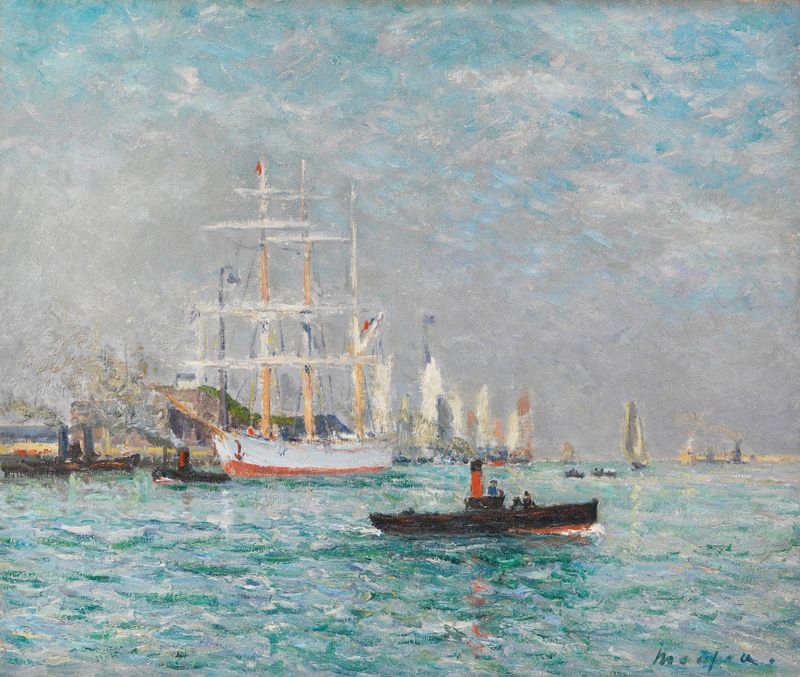
Entré d’un trois-mats, Le Havre
Maxime Maufra

Les rochers du château de Dinan, Morgat, Novembre 1903
Maxime Maufra
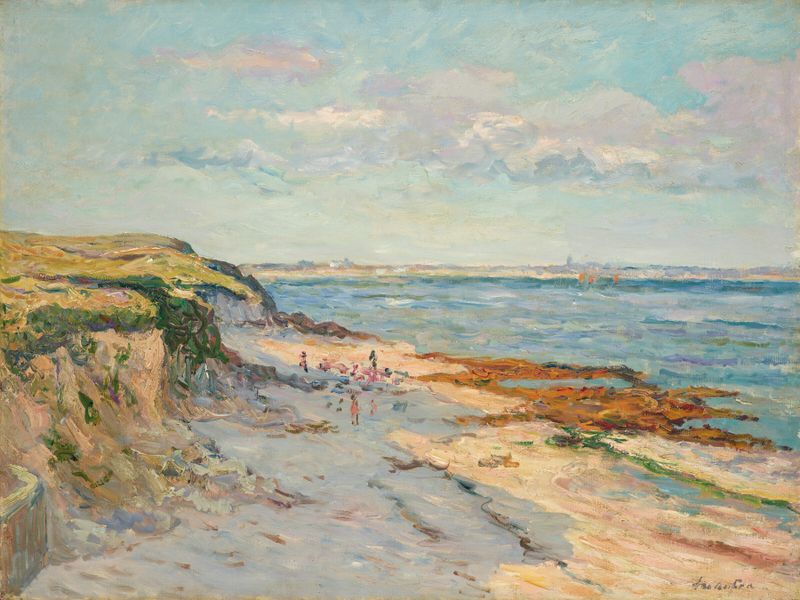
La Plage de Kerhostin, Morbihan
Maxime Maufra
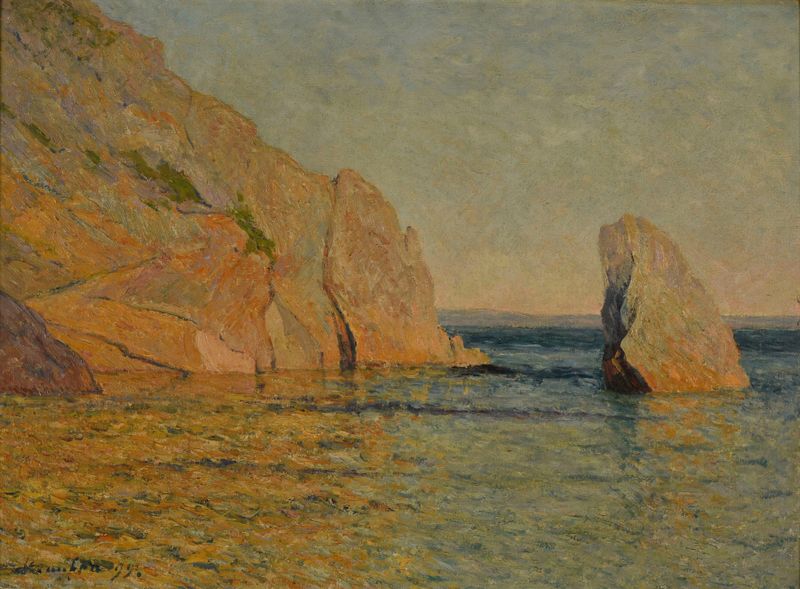
Rochers au soleil couchant
Maxime Maufra
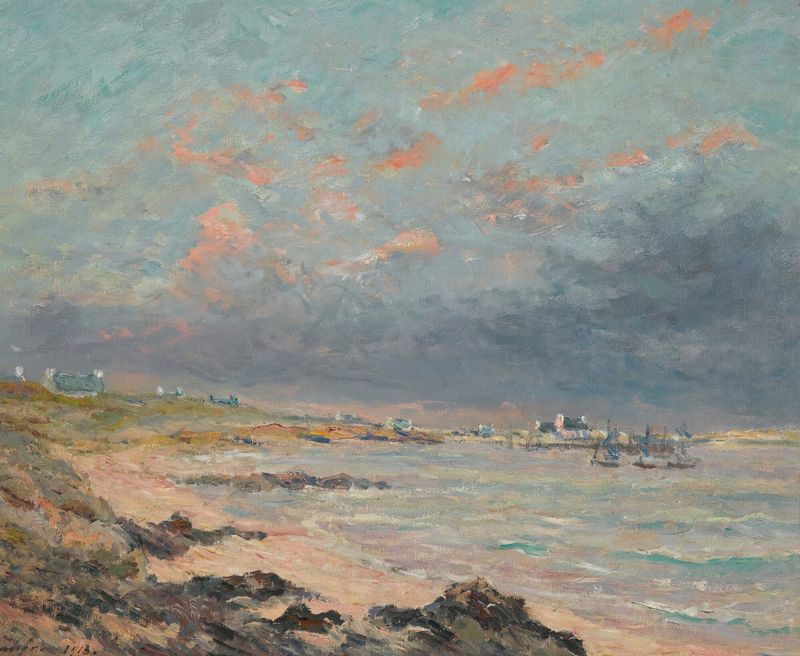
Soir D’orage À Kerhostin
Maxime Maufra





