
La place Pigalle — History & Facts
In the stillness of the canvas, there lies a symphony of rebirth, beckoning viewers to explore its nuanced layers. Look to the left, where vibrant bursts of red and yellow in the flowers punctuate the green foliage, drawing the eye into a world where life flourishes amidst urbanity. The architecture behind is rendered with tender detail, its warm tones reflecting the soft glow of dusk. Notice how the light bathes the scene, casting elongated shadows that gently caress the cobblestones, suggesting movement and the fleeting nature of time.
Each brushstroke masterfully captures the essence of a tranquil moment, inviting contemplation and connection. Delve deeper into the scene, where the juxtaposition of life and stillness creates a rich emotional tapestry. The blooming flowers symbolize hope and rejuvenation, a stark contrast to the looming structures that surround them. This interplay reveals the tension between nature and the encroaching urban landscape, hinting at a struggle for identity in an ever-changing world.
The absence of figures amplifies the sense of solitude, allowing the viewer to reflect on their own presence within this dynamic space. In 1903, the artist created this work during a period of transition in Paris, where the old met the new amid rapid industrialization. It was a time when Firmin-Girard sought to capture the essence of the ephemeral beauty found in everyday life. His approach, rooted in Impressionism, offered a fresh perspective on the city, revealing the underlying vibrancy amid the transformations of a modern world.
More Artworks by Marie-François Firmin-Girard
Browse all →
Le Canal Saint-Martin
Marie-François Firmin-Girard

Le quai aux fleurs et l’hôtel de ville
Marie-François Firmin-Girard

Autumn market at les Halles
Marie-François Firmin-Girard

Le remorqueur
Marie-François Firmin-Girard
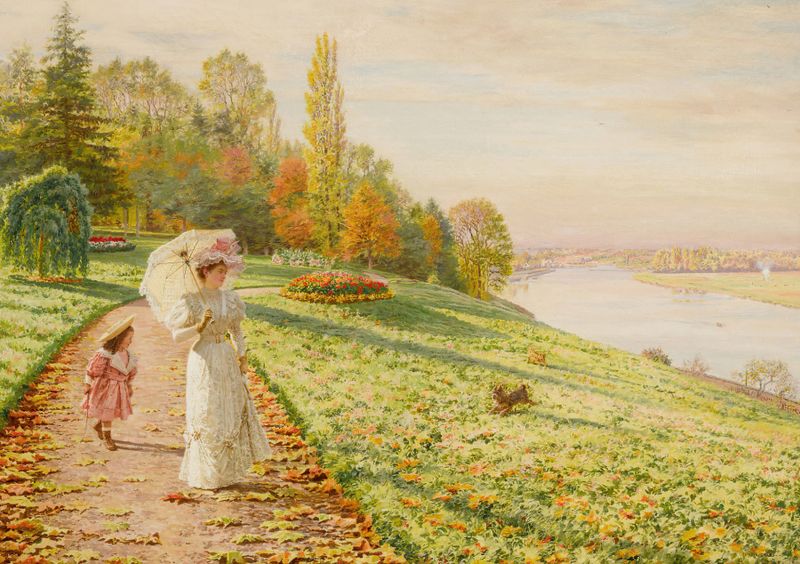
Promenade d’automne
Marie-François Firmin-Girard

The Glass Blowers In Incheville Près Eu
Marie-François Firmin-Girard

Hay cart by the city
Marie-François Firmin-Girard

Le quai aux fleurs et la tour de l’horlage
Marie-François Firmin-Girard





