
La Route de Gaud — History & Facts
In La Route de Gaud, the gentle undulations of the road beckon, leading us toward an unseen horizon, inviting reflection on the bittersweet nature of our journey. Look to the left, where the rich, earthy tones of the path contrast starkly with the vibrant greens of the foliage. Notice how the sunlight dapples through the leaves, casting a warm glow that softens the edges of the scene. The deliberate brushstrokes create a textured depth, guiding your gaze along the winding route, as if Maufra is urging you to travel deeper into the landscape of emotions.
The horizon, painted with a hazy blend of blues and yellows, hints at a promise, while also invoking a sense of uncertainty. Betrayal lurks within the beauty—there is a tension between the path’s inviting curves and the shadowy areas that suggest neglect or abandonment. The serenity of the scene contrasts with an underlying anxiety, a reminder that every journey is fraught with challenges and the potential for heartache. The silence of the road speaks volumes, as if it holds secrets of those who have walked it before, leaving echoes of past decisions that haunt the present. In 1893, Maufra worked during a time of transition in French art, embracing Impressionist ideas while pushing towards a more personal, evocative expression.
He painted La Route de Gaud in Brittany, amidst a burgeoning movement that valued emotional depth and connection to nature. At this moment in his career, Maufra was finding his unique voice, exploring themes of beauty intertwined with the complexity of human experience.
More Artworks by Maxime Maufra
Browse all →
Le pont de l’Isle-Adam ou le Vieux pont
Maxime Maufra

Féérie nocturne: Exposition Universelle Paris 1900
Maxime Maufra
Douarnenez in Sunshine
Maxime Maufra
Mer forte à Saint-Guénolé Penmarc’h
Maxime Maufra

Marée Basse À La Plage De Port-Blanc, Presqu’île De Quiberon
Maxime Maufra
Entré d’un trois-mats, Le Havre
Maxime Maufra

Les rochers du château de Dinan, Morgat, Novembre 1903
Maxime Maufra
La Plage de Kerhostin, Morbihan
Maxime Maufra
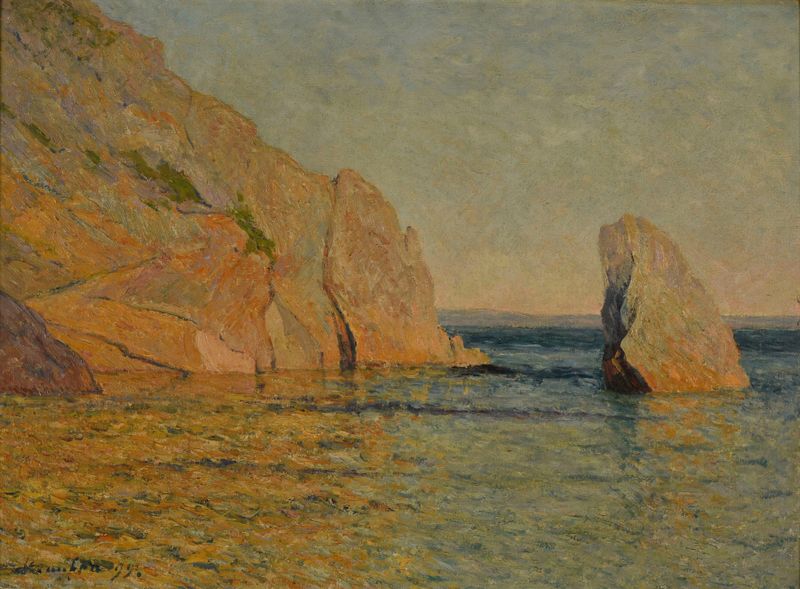
Rochers au soleil couchant
Maxime Maufra
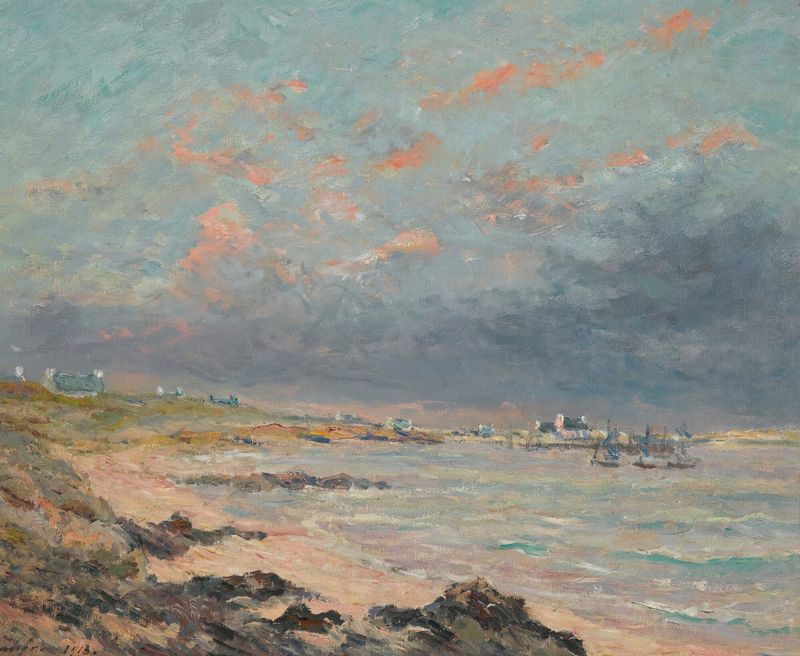
Soir D’orage À Kerhostin
Maxime Maufra





