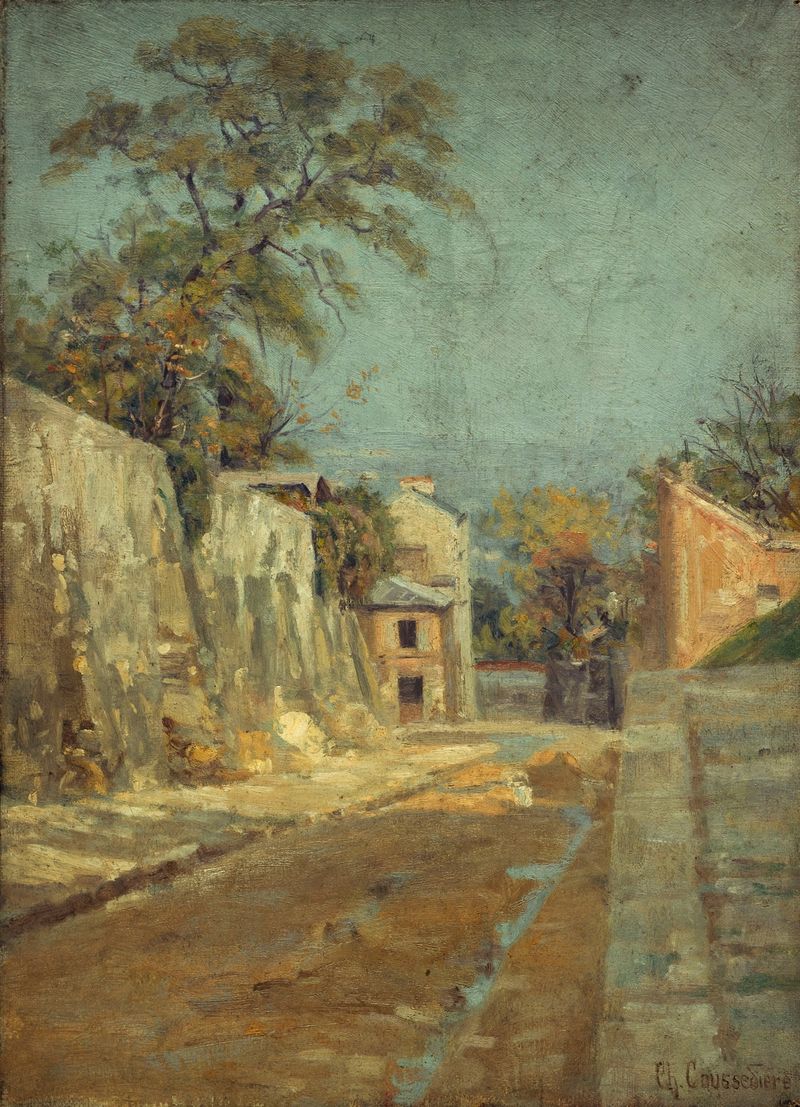
La Rue Norvins à Montmartre — History & Facts
In the shadows of Montmartre, beauty and violence coexist in an intricate dance, each brushstroke echoing a silent truth. Look to the left of La Rue Norvins à Montmartre, where the cobblestones twist beneath the weight of muted colors. The muted palette of ochres and subtle blues invites the viewer to wander through narrow, winding streets. Shadows stretch across the scene, hinting at a narrative veiled in secrecy.
The soft glow of the street lamps competes with the glowing windows of nearby buildings, drawing attention to the sense of life and decay that permeates the air. The composition is rich with contrasts — the tranquility of evening life against the lurking tensions of a world on the brink. Notice how the figures are positioned: some engage in conversation, while others retreat into their own solitude. This arrangement hints at unspoken stories and hidden violence, as though every passerby carries their own burdens, unacknowledged in the vibrant tapestry of urban life.
The vibrant yet muted colors reflect not just the physical space, but also the emotional landscape of a community grappling with the darker elements of its reality. In 1899, when this piece was created, the artist found himself in the heart of a rapidly changing Paris. The city was alive with artistic innovation, yet also rife with societal tension as modernity clashed with traditional values. Coussedière was part of a movement that sought to capture the essence of everyday life, revealing the complexities of human emotion amid the tumultuous backdrop of a bustling metropolis.