
La Tour Eiffel, vue du jardin Delessert — History & Facts
In the gentle embrace of twilight, hope flickers like a distant star, waiting to be recognized in the chaos of existence. Look to the left where the ethereal outline of the Eiffel Tower rises majestically against the dusky sky. The composition draws you in with a soft, muted palette, delicate greens and blues intertwining to evoke a sense of tranquility. Notice how the brushstrokes blend seamlessly, creating a dreamlike quality that invites contemplation.
The garden in the foreground serves as a lush sanctuary, grounding the viewer in the present while the iconic structure looms in the background, symbolizing the promise of modernity. The juxtaposition of nature and architecture speaks to a tension between the organic and the man-made—life flourishing amidst the shadows of human ambition. The soft shadows hint at fleeting moments, while the gentle light spilling over the garden suggests a hopeful future. Each flower and leaf seems to whisper stories of resilience, as if the garden itself holds the dreams of those who wander through it, longing for connection. In 1903, Gumery was in Paris, a city brimming with artistic innovation and social transformation.
His work reflects the burgeoning optimism of the era, as the Eiffel Tower, a recently completed marvel, became a beacon of hope and progress. This painting captures not just a scene, but an emotion—a testament to the spirit of a time defined by both wonder and aspiration.
More Artworks by Adolphe-Ernest Gumery
Browse all →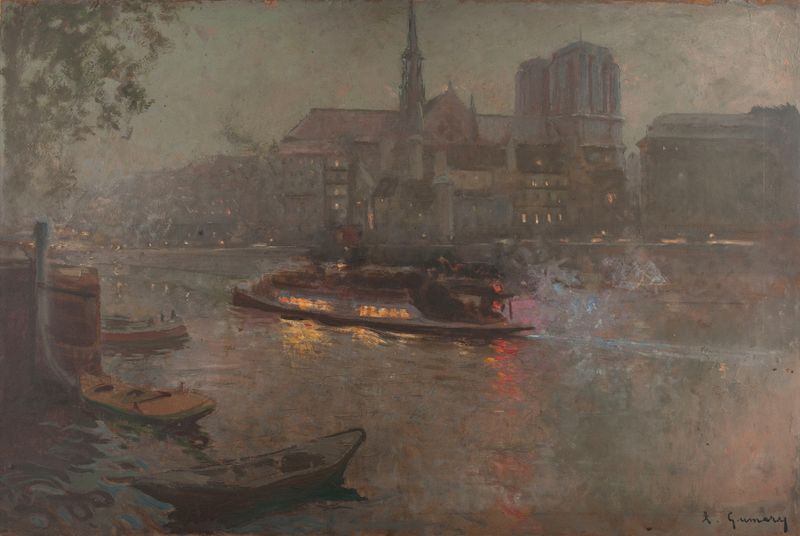
More Architecture Art
Browse all →
The statue of Liberty
Frédéric Auguste Bartholdi

View of Houses in Delft, Known as ‘The Little Street’
Johannes Vermeer

View of Houses in Delft, Known as ‘The Little Street’
Johannes Vermeer

The Cathedral in Rouen. The portal, Grey Weather
Claude Monet

The yellow house
Vincent van Gogh

The Church in Auvers-sur-Oise, View from the Chevet
Vincent van Gogh