
Lake Chiemsee in the Evening — History & Facts
When did color learn to lie? In Lake Chiemsee in the Evening, hues whisper secrets that both illuminate and obscure, a delicate dance of twilight over water. Look to the left at the deep cerulean sky, where it gradually melts into softer shades of lavender and gold. The tranquil lake mirrors this celestial tapestry, creating a seamless blend of colors that invites the viewer to lose themselves. Notice how the artist’s brushwork captures the gentle ripples of the water, a testament to both technique and an ethereal atmosphere that shifts with the light. Yet beyond this idyllic scene lies a tension between tranquility and the encroaching night.
The contrasting warmth of the distant horizon against the cool tones of the lake evokes a sense of fleeting beauty, a reminder of the day's impermanence. Small details, like the subtle reflections of the tree line on the surface, suggest a world both serene and enigmatic, hinting at life's unpredictability beneath the calm facade. In 1870, Robert Russ painted this piece while living in Germany during a time of artistic transition. The Impressionist movement was gaining momentum, prompting artists to explore light and color in new ways.
Russ, influenced by these developments, sought to capture the emotive power of nature, marking a significant moment in his career as he began to delve deeper into the relationship between landscape and emotion.
More Artworks by Robert Russ
Browse all →
Helgoland
Robert Russ
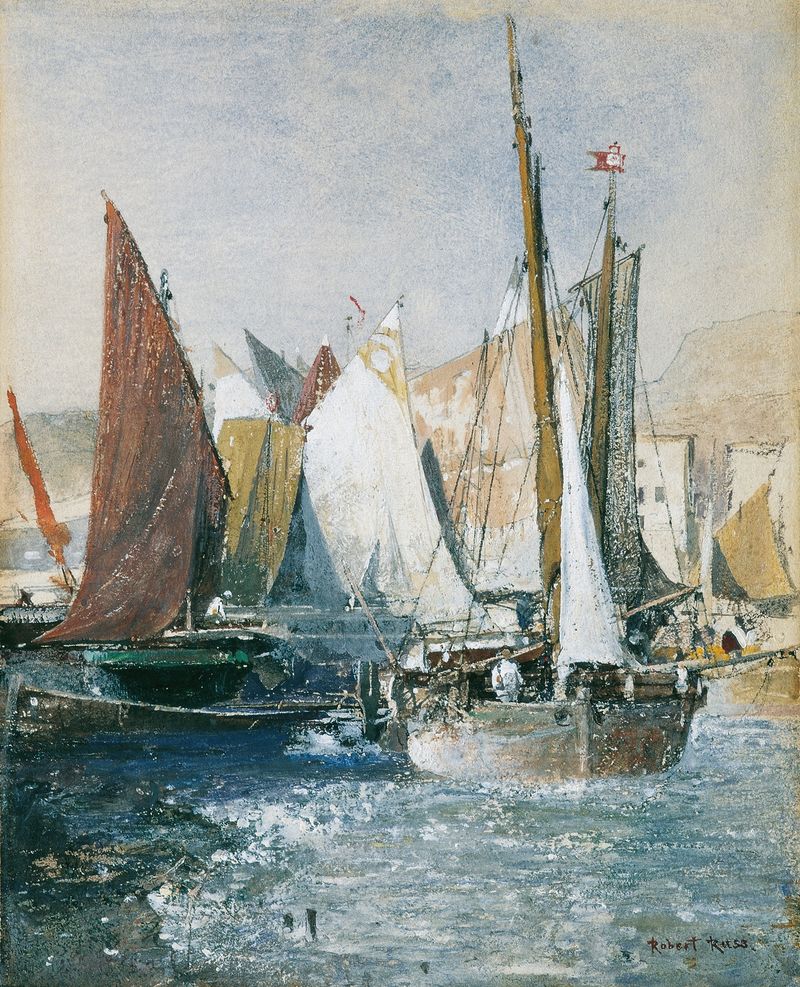
Segelboote
Robert Russ
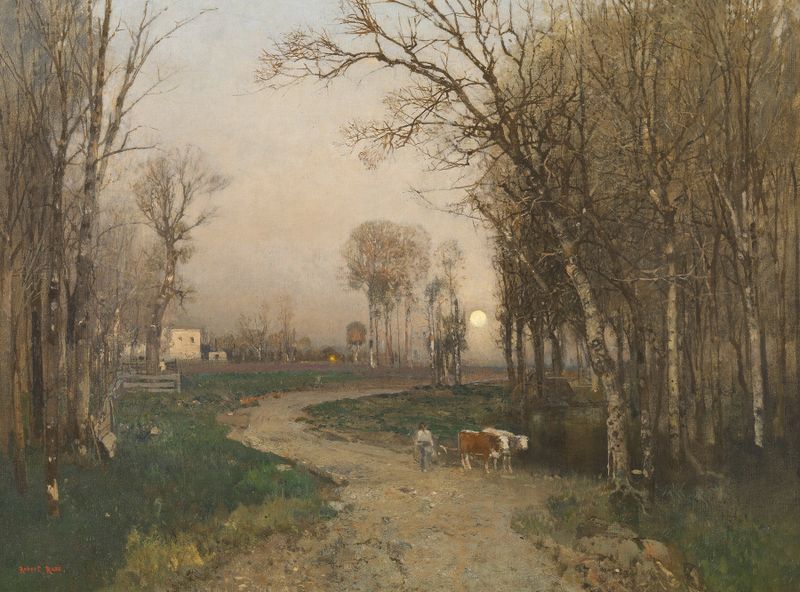
Penzinger Au
Robert Russ

Aus Dürnstein
Robert Russ

Lake Garda, Arco
Robert Russ

Partie aus dem Val Lagarina
Robert Russ

The Harbour of Riva on Lake Garda
Robert Russ

Punta San Vigilio, Lago di Garda
Robert Russ
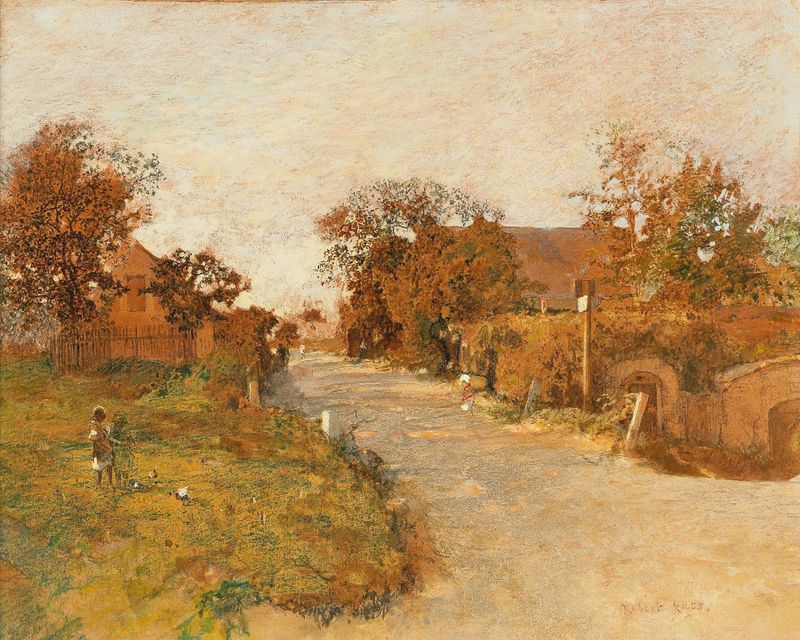
Tierstudie – Motiv aus Feldsberg
Robert Russ

Hof der Fürstenburg in Burgeis
Robert Russ





