Landscape — History & Facts
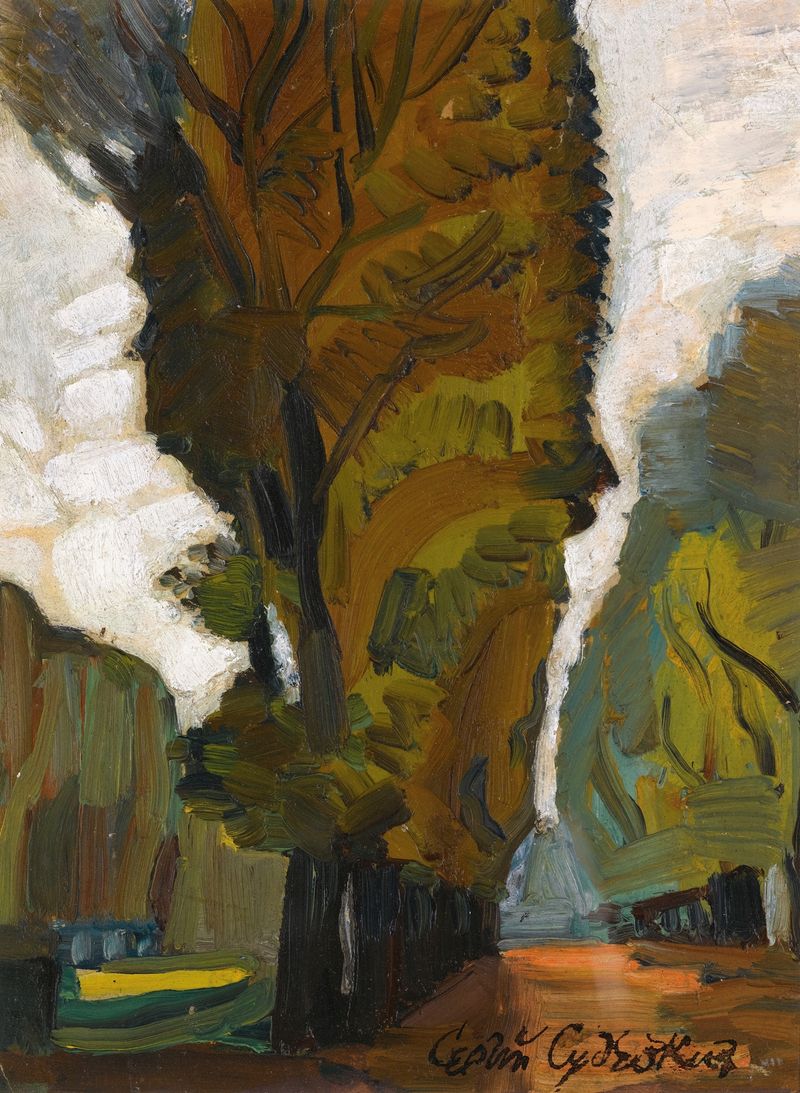
When did color learn to lie? In Landscape, a tapestry of hues both vibrant and muted invites us to question the truth of what we see, suggesting a world cloaked in shadow. Look to the foreground, where rich greens intertwine with deep browns, forming a lush yet ambiguous panorama. The light seems to dance across the canvas, illuminating certain areas while leaving others in a contemplative obscurity. Notice how the shadows stretch and twist, creating a sense of depth that draws the eye further into the scene, as if urging us to explore both the visible and the hidden. Beneath the surface vibrancy lies a profound tension—between light and shadow, presence and absence.
The interplay of these elements evokes an emotional resonance, hinting at themes of solitude and introspection. Each brushstroke carries with it the weight of nature's duality, where beauty coexists with the enigma of that which remains unseen, suggesting the artist's exploration of inner landscapes as much as the outer world. Created in a time when the avant-garde was beginning to flourish, Sudeikin's work emerged amid the ebb and flow of early 20th-century artistic experimentation. His innovative approach to color and form reflects a period of personal and cultural transformation, as he navigated the shifting tides of Russian art, mirroring both the chaos and beauty of his surroundings.