Landscape — History & Facts
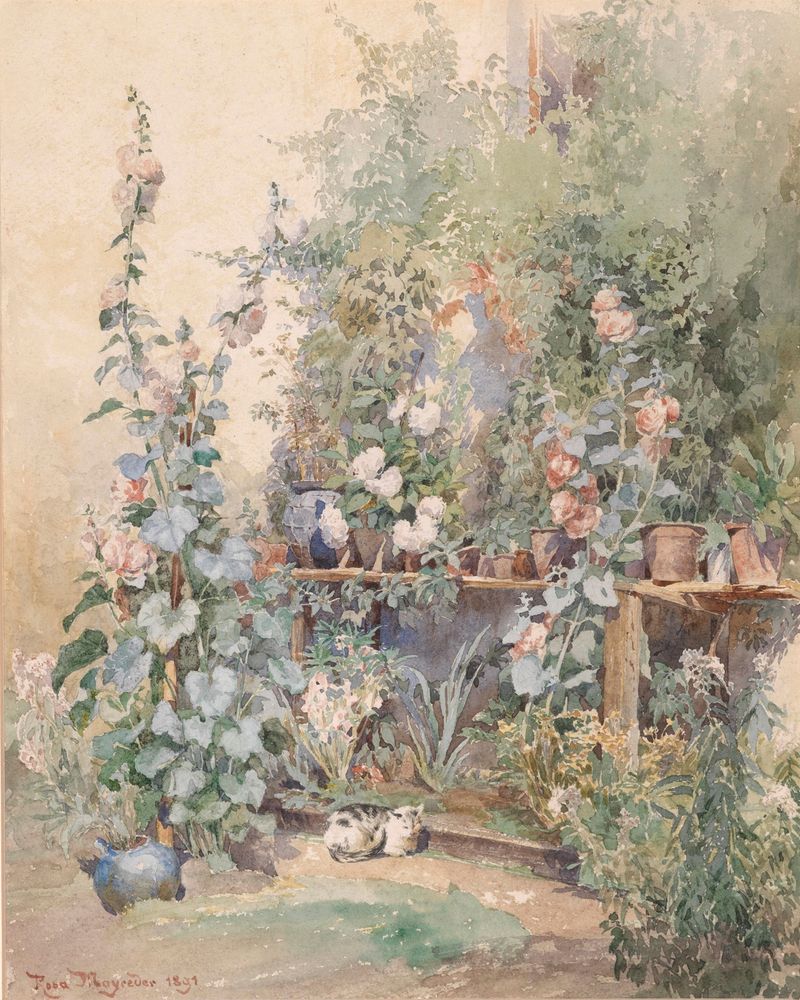
Is this a mirror — or a memory? The interplay of nature and introspection invites us to contemplate our own existence amidst the passage of time. Look to the left at the gentle undulations of the hills, where soft greens blend seamlessly into deeper shadows. The subtle brushstrokes evoke a sense of tranquility, while the delicate palette whispers of the fleeting moments that make up life. Notice how the light dances across the landscape, illuminating sections with a warmth that feels both inviting and ephemeral.
This interplay between light and shadow underscores the transitory nature of beauty. Beneath its serene surface, the painting embodies the tension between permanence and impermanence. The lush landscapes can be seen as both a celebration of life and a poignant reminder of its fragility. The distant horizon, shrouded in a hazy veil, hints at the unknown that lies beyond, an echo of the human experience.
Each brushstroke is a meditation on mortality, urging viewers to reflect on their own journey through the ephemeral moments of existence. During the time Rosa Mayreder created Landscape, she was immersed in the burgeoning art movements of the late 19th to early 20th centuries, a period marked by an exploration of identity and nature. Working in Vienna, she was influenced by the avant-garde circles that sought to redefine artistic expression. Mayreder's engagement with feminist ideas and natural themes in her oeuvre positioned her as a critical voice in a rapidly evolving artistic landscape, one that sought to capture the essence of human experience.