Landscape — History & Facts
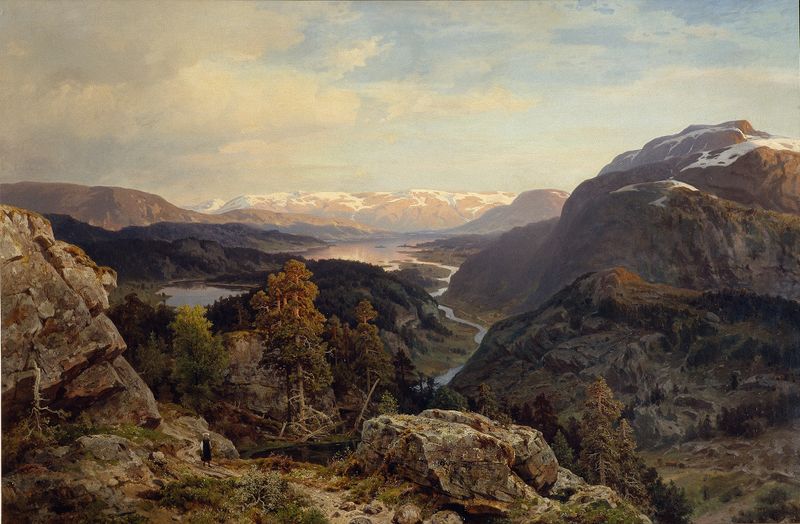
In the hushed stillness of a landscape, fear lurks in the shadows of the natural world, whispering to those who dare to look closely. Look to the bottom right corner, where the earth meets the horizon, a dark patch that seems to beckon the viewer. The muted greens and browns blend seamlessly, yet there is a disquieting tension in the brush strokes—each stroke a heartbeat, quickening as it rises towards the sky. Notice how the light plays tricks; the bright patches seem inviting, yet they are undercut by an ominous overcast that looms overhead, suggesting that beauty can mask trepidation. Hidden within the layers of paint lies a sense of foreboding.
The expansive sky, though breathtaking, feels suffocating, as the menacing clouds gather, ready to unleash their fury. The trees, sturdy yet fragile, stand as silent witnesses to the tension between the serene and the chaotic. This duality captures the essence of fear: it is both vast and intimate, a reminder that tranquility can shift into turmoil at any moment. In 1854, Morten Müller was navigating the shifting tides of Romanticism in Denmark, a movement that sought to capture the sublime beauty and terror of nature.
He painted during a time of personal and political uncertainty, with the Industrial Revolution beginning to reshape landscapes and lives. This backdrop informed his work, as he wrestled with the contradictions of a rapidly changing world, capturing not just the essence of a place, but the unease that lies beneath its surface.