Landscape — History & Facts
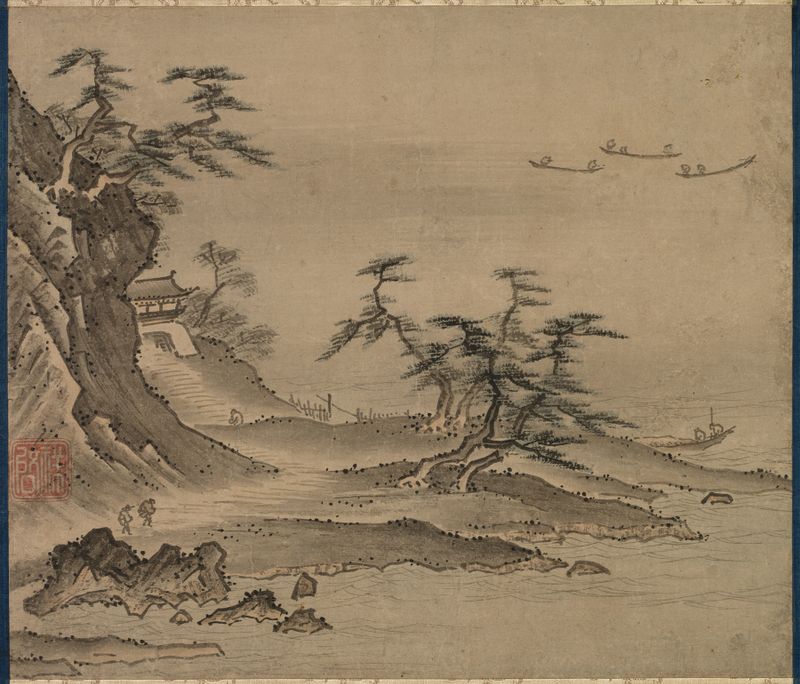
Can paint confess what words never could? In the stillness of ancient landscapes, the brush strokes of Kenkō Shōkei reveal the unspoken hopes nestled within nature's embrace. Look to the center of the canvas, where a delicate mountain range rises, shrouded in mist. The artist employs subtle washes of blue and green to create an atmosphere of tranquility, inviting the viewer to wander through this serene world. Notice how the light dances across the peaks, illuminating hidden valleys and casting gentle shadows that breathe life into the scene.
Each stroke is intentional, capturing not just the land but the essence of peace that permeates the air. The juxtaposition of the rugged mountains against the soft, flowing clouds speaks to the tension between strength and fragility. Hidden details, like the tiny figures admiring the landscape below, illustrate humanity’s smallness in the grand design of nature. This harmony reflects a deeper emotional truth: the connection between the earth and our aspirations, hinting that even amidst uncertainty, there is the promise of beauty and renewal. Created in the late 1400s to early 1500s, the work stands as a testament to Kenkō Shōkei’s mastery during a time when Japan was exploring its cultural identity through art.
The evolving aesthetics of the Muromachi period profoundly influenced him, as artists sought to blend the spiritual with the natural. As he painted this landscape, Shōkei was part of a broader movement, interpreting the world around him through the lens of simplicity and depth, capturing the delicate balance of hope and resilience.