Landscape — History & Facts
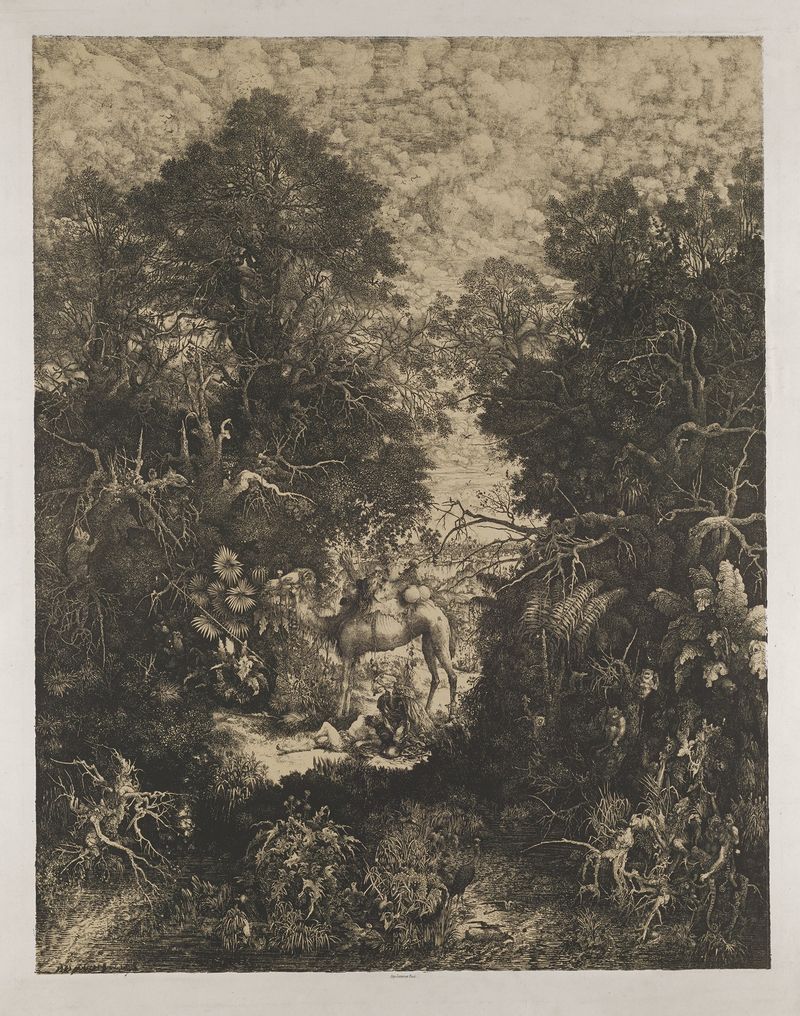
Who listens when art speaks of silence? In Landscape, the meticulous strokes whisper the story of obsession, inviting us to delve into the profound dialogue between nature and the artist’s soul. Look to the lower left corner, where the rugged terrain unfolds in a labyrinth of lines and textures, guiding your eye upward through the sweeping horizon. Notice how the interplay of light and shadow dances across the canvas, illuminating the lush greenery while casting darker shades upon the rocky outcrops. The artist employs a rich palette of greens and browns that breathe life into the composition, evoking an atmosphere both tranquil and foreboding.
Each brushstroke serves to connect the observer with the very heartbeat of the landscape, suggesting a yearning that transcends mere representation. Within this serene vista lies a tension between the known and the unknown, an exploration of nature's vastness that mirrors the artist's internal struggles. The meticulous detail reveals an obsessive devotion to capturing essence, yet hints at an unsettling solitude. The distant mountains, looming yet inviting, symbolize the insatiable drive for knowledge, while the winding path suggests a journey that may never reach fulfillment.
This duality evokes a sense of longing, compelling viewers to contemplate their own relationship with the natural world. Rodolphe Bresdin created Landscape in 1871 during a period of personal and artistic transformation. Living in France, he was deeply influenced by the Romantic movement and burgeoning Realism, resonating with the struggle to capture the beauty and complexity of the world. This work reflects his quest to express profound emotion through landscape, revealing how the artist’s own obsessions with nature and solitude informed the depth of his creations.