Landscape — History & Facts
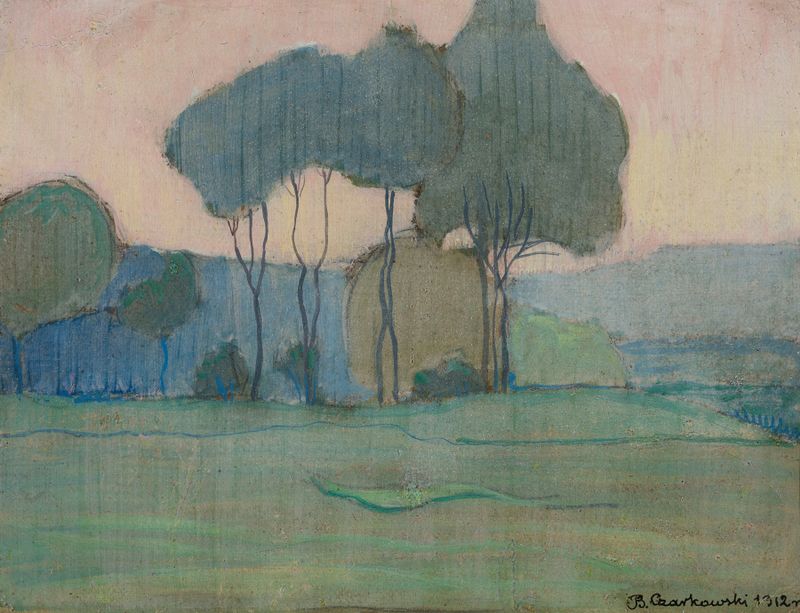
In Landscape, Bolesław Czarkowski captures the divine essence of nature in a moment that feels both eternal and fleeting. The tranquility of the scene invites reflection on the harmony and chaos that reside side by side in our world. Look closely at the horizon where the deep blues of the sky melt into the golden hues of the sun-kissed fields. Notice how the light dances across the textured grass, illuminating the wildflowers that dot the landscape with splashes of color.
Your gaze should journey down from the sky to the foreground, where the gentle undulations of the terrain are rendered with delicate brushstrokes, each revealing Czarkowski’s masterful command of color and emotion. Yet, amid the serene beauty, a quiet tension simmers beneath the surface. The stark contrast between the calm sky and the tumultuous shadows creeping over the landscape hints at the fragility of this moment. The wildflowers, vibrant yet ephemeral, echo the fleeting nature of life itself, while the sweeping lines of the hills suggest an infinite journey, a reminder of the divine cycle of creation and decay. In 1912, Czarkowski painted Landscape during a time of profound change in Europe, as modernity began to reshape artistic expression.
His life in Poland reflected both the tumult of national identity and a yearning for connection to the natural world. This work stands as a testament to his belief in the beauty of nature and the spirituality it embodies, echoing a period where artists were increasingly exploring the transcendental qualities of their surroundings.