
Landscape — History & Facts
In this haunting expanse, the weight of decay whispers truths long buried, inviting contemplation of what remains as life ebbs away. Begin your visual journey by focusing on the foreground, where muted tones of browns and grays intermingle, evoking a sense of desolation. The brushwork is both textured and fluid, suggesting the slow dissolution of once-vibrant life. Notice how the horizon, a thin line of faded greens, recedes into the distance, creating a tension between the tangible ground and the ethereal sky.
The light, diffused and melancholic, captures an atmosphere of solitude, offering no comfort but rather an invitation to reflect. Delving deeper, consider the juxtaposition of the vibrant colors that once inhabited this landscape against the desaturated palette that fills the canvas now. This transformation speaks to the inevitability of time, where nature’s beauty succumbs to the relentless passage of existence. Shadows linger like memories, hinting at lost vitality.
The sparse elements—gnarled trees and a distant, crumbling structure—evoke both nostalgia and the quiet grief of epochs fading into obscurity. Created between 1945 and 1950, this work emerged during a time of post-war rebuilding and introspection. The artist grappled with societal shifts and the scars left by conflict. As abstract expressionism began to rise, he explored themes of mortality and the interrelationship of life and decay, providing a counterpoint to the emerging modernist aesthetic that dominated his contemporaries.
More Artworks by Bob Brobbel
Browse all →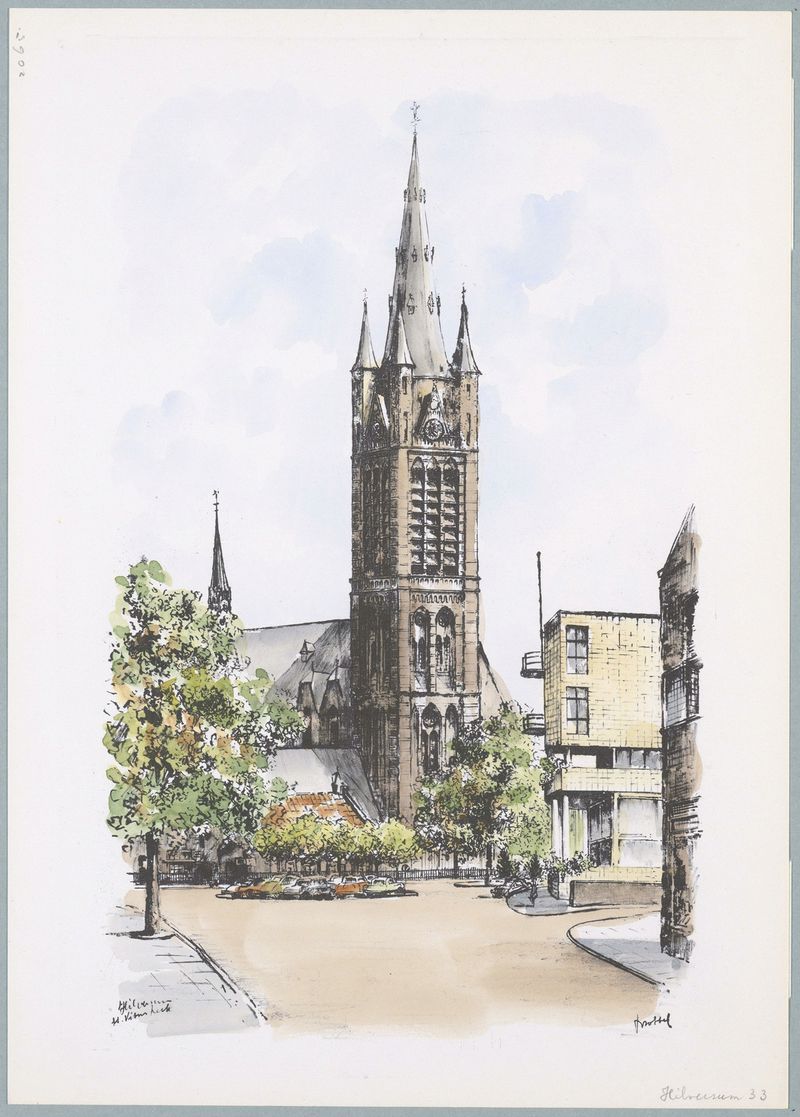
Sint Vitus kerk met hotel
Bob Brobbel
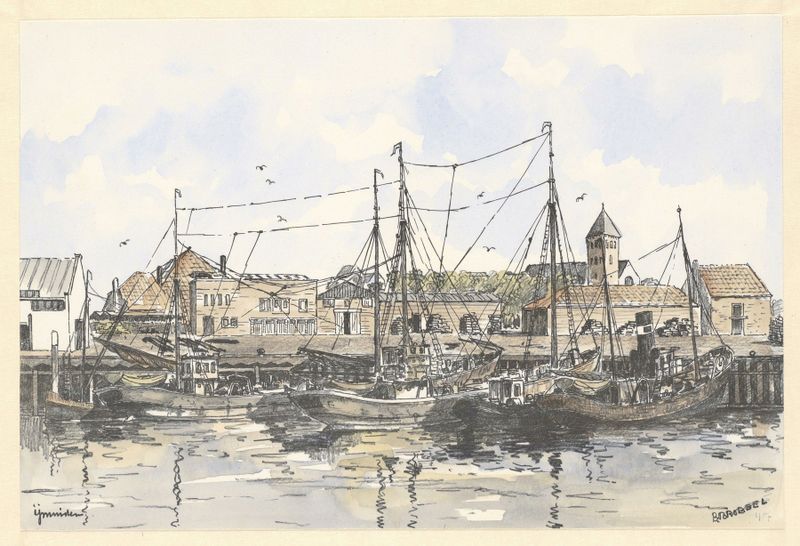
De haven van IJmuiden, met rechts op de achtergrond het Ned. Herv. kerkje (de in 1880 gebouwde kerk is in 1968 afgebroken)
Bob Brobbel

De enige in Noord-Holland bewaard gebleven standerdmolen
Bob Brobbel

Gezicht op Ouderkerk over de Amstel vanaf de Amstelzijde
Bob Brobbel

Ned. Herv. kerk
Bob Brobbel

De Kerkbrink met de oude Hervormde Kerk
Bob Brobbel

Kerk en omgeving
Bob Brobbel

De Kerkbrink met de later afgebrande oude Hervormde Kerk
Bob Brobbel
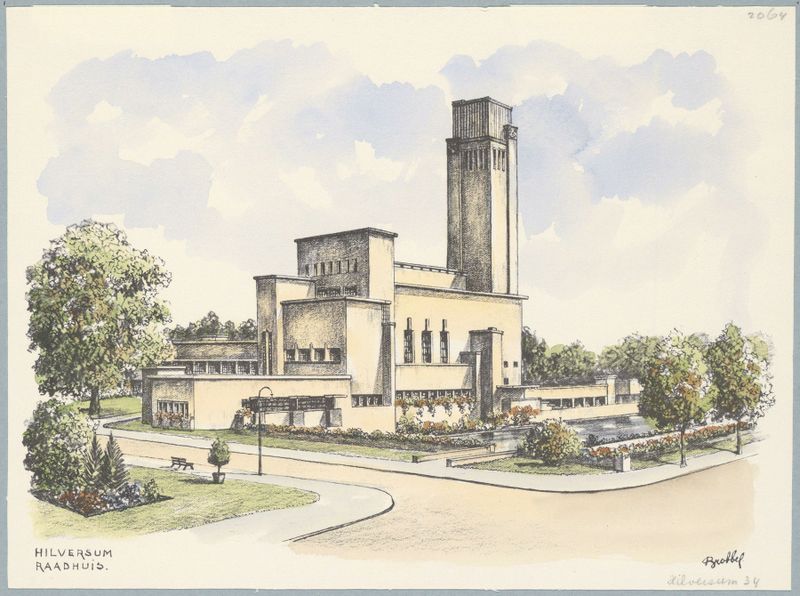
Gezicht op het Raadhuis van Hilversum
Bob Brobbel

St. Nicolaaskerk
Bob Brobbel





