Landscape — History & Facts
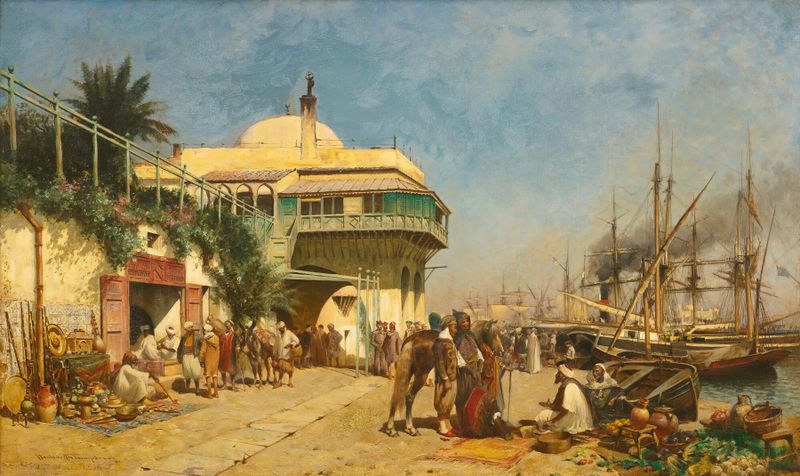
In the stillness of the landscape, where the horizon meets the earth, unspoken sorrows linger, and the weight of unprocessed emotions beckons our gaze. Begin by looking to the left, where gentle hills slope into a soft, muted green. The brushstrokes blend harmoniously, creating a sense of flowing motion, mimicking the quiet ripple of grief that swells within. Notice how the light filters through the clouds, casting a delicate glow on the landscape, evoking a bittersweet nostalgia that pervades the entire canvas.
The subtle play of light and shadow guides the viewer's eye across the composition, revealing hidden depths in its simplicity. As you explore further, delve into the contrasting elements—lush greens fade into deeper shadows, hinting at the complexities of loss that lie beneath the surface. The ambiguous sky, tinged with both light and gloom, acts as a mirror reflecting the duality of hope and despair. It is in these intricacies that we find the emotional core of the work, a landscape that speaks of solitude and the quiet resilience of nature amidst human grief. In 1877, the artist created this piece during a time when he was grappling with personal challenges alongside the evolving art world, which was shifting towards impressionism.
Working in England, Thompson emerged as a landscape painter who sought to capture the ephemeral beauty of nature while navigating his own emotional landscape. The painting encapsulates this journey, reflecting not only the external environment but also the interior world of its creator.