Landscape — History & Facts
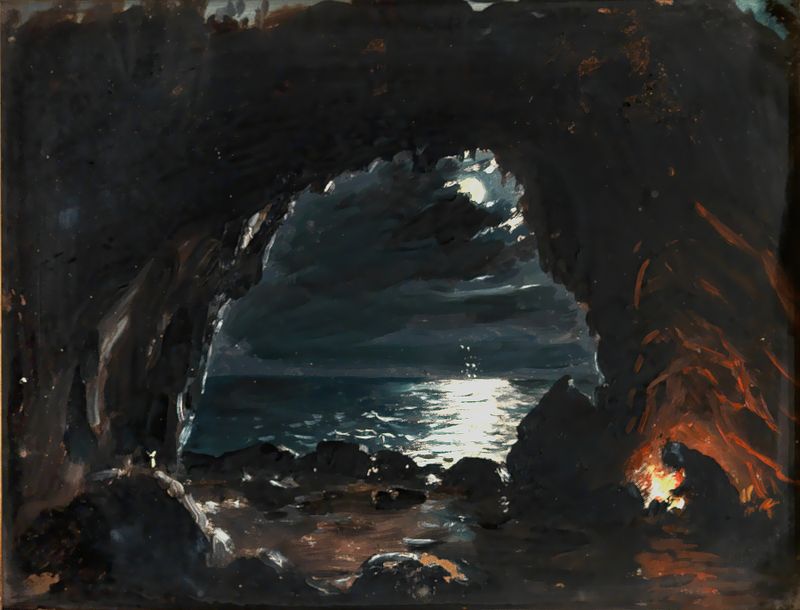
In this economy of color and form, a serene landscape unfurls, inviting the viewer into a world of tranquility. Look to the foreground where gentle undulations of hills cradle the eye, painted in soft greens and muted earth tones. The sky, an expansive canvas of cool blues interspersed with wispy, ethereal clouds, serves as a quiet backdrop. Notice the brushstrokes that flow seamlessly, conveying both movement and stillness, while the subtle interplay of light and shadow bathes the entire scene in a soft, golden hue, suggesting the quiet warmth of an early morning. Crucial details linger in the undercurrent of this work.
The interplay of different textures—smooth versus rugged—creates a dialogue between chaos and calm, while the horizon line, delicately placed, offers a sense of infinite possibility. Hidden within the palette is a hint of emotional tension, where vibrant colors speak to the joys of nature, balancing the more muted tones that evoke a sense of introspection, hinting at the complexities of human experience. At an undetermined time, John O'Brien Inman, a painter known for his intimate landscapes, sought to capture the serene beauty of nature. Active during a period when art movements were shifting towards more expressive forms, he remained steadfast, delving into the relationship between the natural world and the self.
In this work, the artist encapsulated not only his surroundings but also the evolving landscape of artistic expression during his lifetime.