Landscape — History & Facts
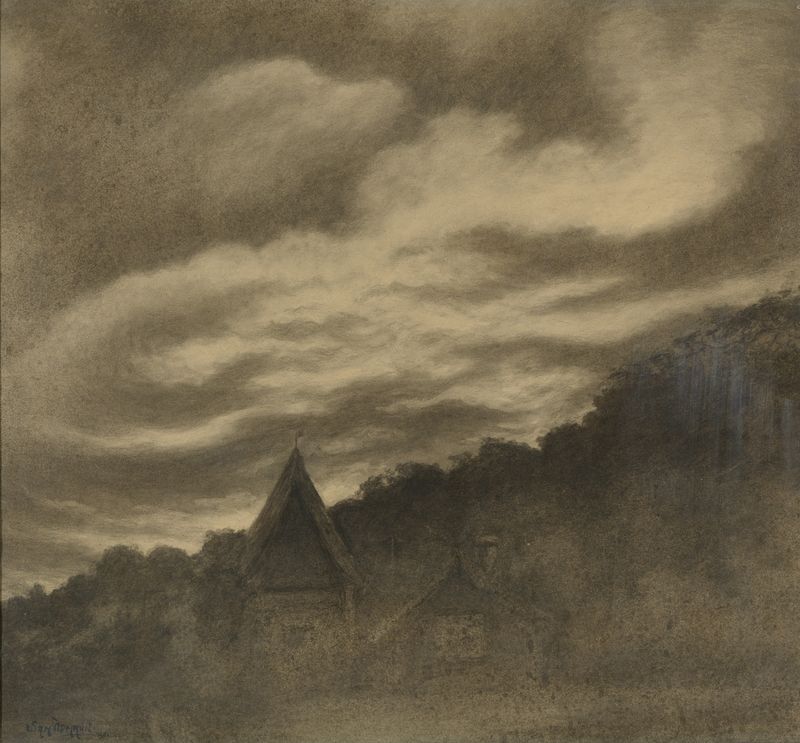
Can beauty exist without sorrow? In the quiet embrace of Landscape, the viewer is invited to ponder this profound question, as the rolling hills and muted tones whisper of longing and loss. Look to the foreground where delicate strokes of green and ochre dance across the canvas, creating a gentle undulation that draws your eyes towards the distant horizon. The trees, their leaves rendered with soft, almost melancholic hues, stand sentinel to an unseen narrative, while the sky above cradles a palette of grays and blues that evoke both tranquility and unease. The composition's balance is masterful; the horizon line creates a sense of space, yet the somber colors suggest an emotional weight that lingers just beneath the surface. In this artwork, the contrast between the lush landscape and the muted sky speaks to the duality of existence—the beauty of nature intertwined with an unshakeable sense of yearning.
The absence of human figures allows the viewer to project their own emotions onto the scene, evoking a personal connection that feels both intimate and distant. Each brushstroke carries the echo of nostalgia, transforming the serene landscape into a poignant reflection on impermanence and desire. Sam Ödmann painted Landscape in 1901 during a period marked by the tensions of modernity and the pull toward a more introspective, natural aesthetic in art. Working in Sweden, he was influenced by the Symbolist movement, focusing on emotional resonance rather than strict realism.
This era saw a shift in perceptions of nature, where it became a mirror for human feelings, encapsulating the struggles and beauty of life in a rapidly changing world.