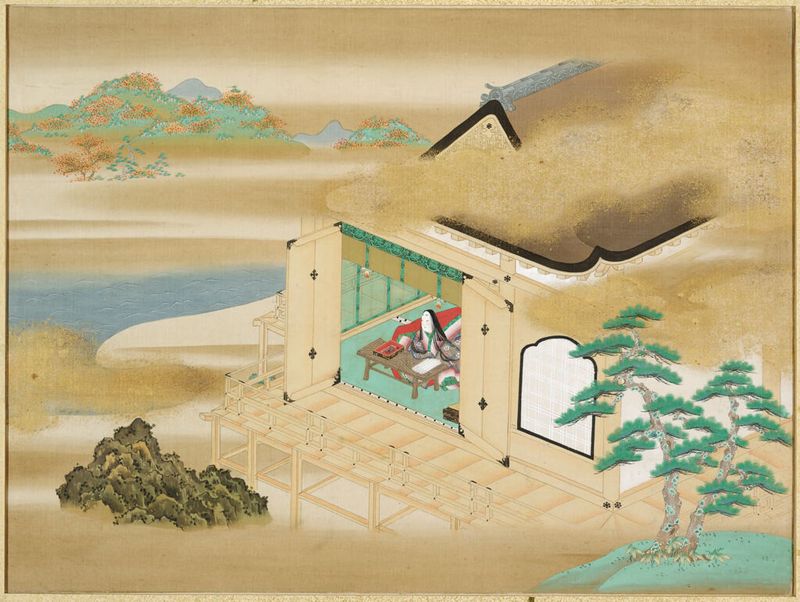
Landscape around Ishiyamadera and Lake Biwa (Finispiece to an album containing 54 illustrations and calligraphic excerpts from the Tale of Genji) — History & Facts
Did the painter know this moment would outlive them? In a world where fleeting beauty often escapes the grasp of memory, Tosa Mitsuoki's work invites us to ponder the weight of permanence against the backdrop of obsession. Look to the left at the finely detailed hills that cradle the serene Lake Biwa. Notice how the delicate brushstrokes contour the landscape, creating a rhythmic dance between mountains and water. The soft blues and greens intermingle with subtle hints of gold, each hue whispering the tranquility of the scene.
The meticulous detailing, particularly in the trees and distant structures, draws the eye inward, revealing layers of texture that enhance the serene yet dynamic quality of the composition. The painting speaks to the tension between nature and humanity, as the lake's placid waters reflect the tranquil sky, yet the presence of the structures hints at man's desire to claim a piece of this beauty. The interplay of light and shadow evokes a sense of longing, while the precise details capture the persistent obsession with beauty that transcends time. Here, the landscape becomes a canvas for introspection, revealing the duality of solace and desire in our relationship with the world. Created in the late 17th century during the Edo period, this work reflects the artist’s prominent position in a time marked by cultural flourishing in Japan.
Mitsuoki, a noted member of the Tosa school, specialized in intricate illustrations and calligraphy, and his efforts coincided with a burgeoning interest in literature, particularly the Tale of Genji. As he painted this landscape, he was not only chronicling nature but also capturing the essence of a society deeply engaged with artistry and storytelling.