Landscape at Skedevi — History & Facts
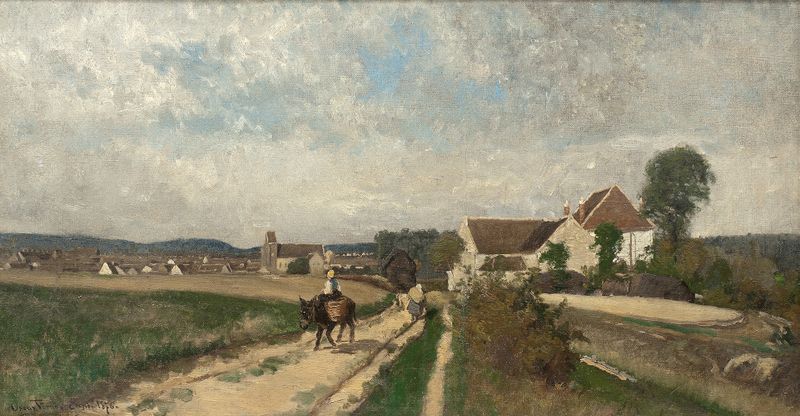
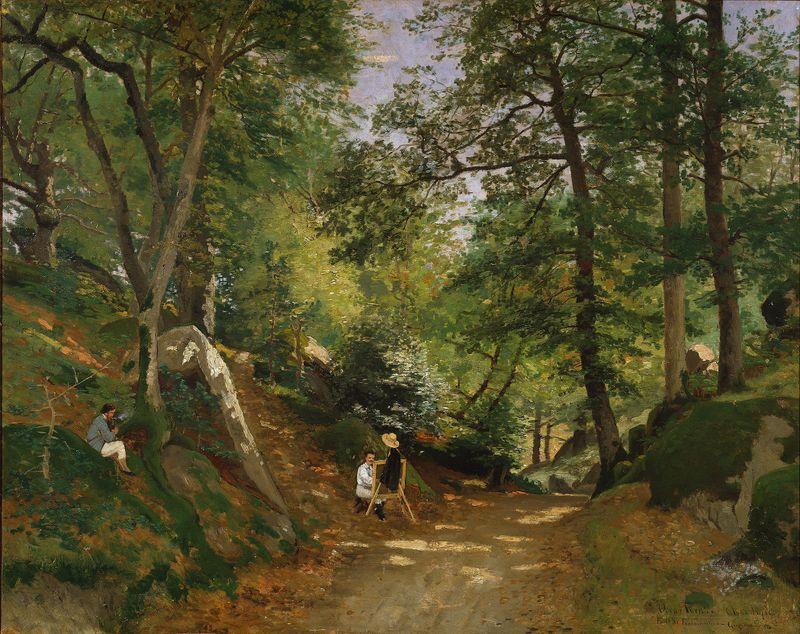
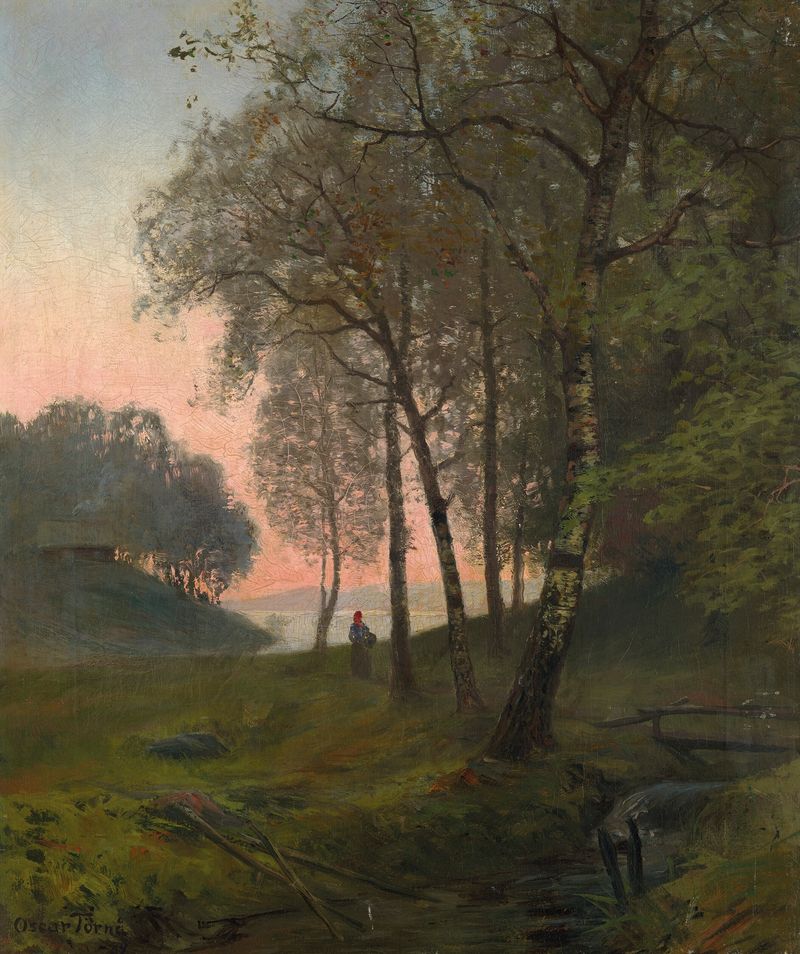
In Landscape at Skedevi, emotional yearning weaves through the verdant hills and gentle skies, inviting the viewer into a world both familiar and deeply felt. The tranquility of nature serves as a mirror for the soul's desires, reflecting an inner landscape that longs for peace and connection. Look to the foreground, where soft, undulating grasses sway like whispers caught in a gentle breeze. The artist's technique shines through the layered application of greens and browns, creating a lush tapestry that draws the eye across the canvas.
Notice how the light filters through the clouds, casting delicate shadows that dance across the fields, while the horizon bleeds into a warm embrace of orange and gold, suggesting the fleeting moments of dawn or dusk. The composition is grounded yet expansive, inviting contemplation within its serene confines. Beneath this serene exterior lies a tension between stillness and movement, as if the landscape itself breathes. The juxtaposition of the solid earth against the fluid sky evokes a yearning for transcendence and harmony.
The subtly rendered figures of trees, standing tall yet solitary, echo the human experience of isolation amidst beauty, urging the viewer to ponder their place within this vastness. Oscar Törnå painted Landscape at Skedevi in 1880, during a period marked by a growing interest in naturalism within the Swedish art scene. Living in a time when romanticism was fading, he sought to capture the essence of Sweden's countryside, reflecting both the beauty and the deep emotional currents of his era. As he worked in the rural landscapes he loved, Törnå embraced a style that merged realism with a personal interpretation of nature, ultimately crafting a scene that resonates with timeless longing.