Landscape at sunset — History & Facts
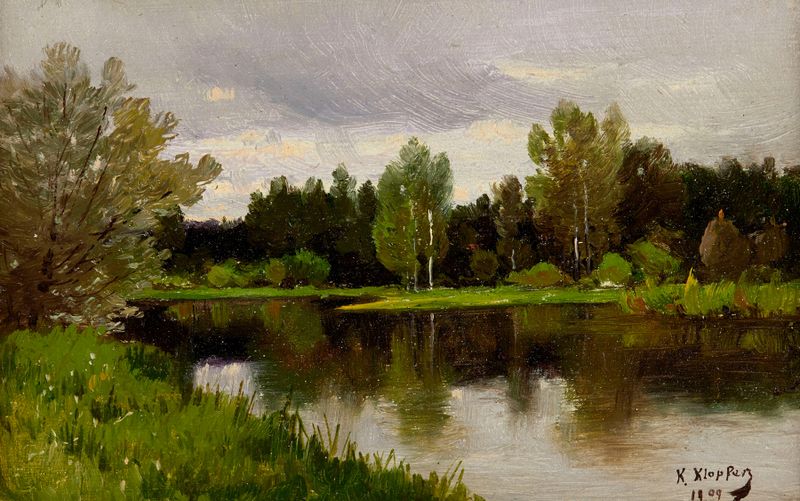
This delicate paradox resonates through the hues of twilight captured in this enchanting work, where innocence meets the edge of fleeting time. Look to the vibrant swathes of orange and pink that stretch across the sky, as they dissolve into the tranquil blues of impending night. Notice how the sun, a molten orb hanging at the horizon, casts a warm glow over the undulating hills. Each brushstroke is intentional, creating a harmonious balance between the luminous sky and the muted earth below, inviting the viewer to dwell in the moment before darkness fully asserts itself. In the distance, a solitary figure stands, silhouetted against the vivid backdrop; their presence imbues the scene with a sense of longing.
This figure embodies the essence of innocence, caught between the beauty of dusk and the unknown night that follows. The juxtaposition of glowing warmth and encroaching shadows evokes an emotional tension—how innocence can be both a blessing and a burden as moments of light inevitably fade. Klopfer painted this evocative landscape in 1909, during a period when the art world was full of experimentation and transitions. He was influenced by the atmospheric effects of Impressionism, yet his approach retained a unique intimacy, reflecting both personal and societal changes.
The burgeoning modern era added a layer of complexity to his work, as he navigated the balance between capturing natural beauty and the deeper narratives it could convey.