Landscape from Meudon — History & Facts
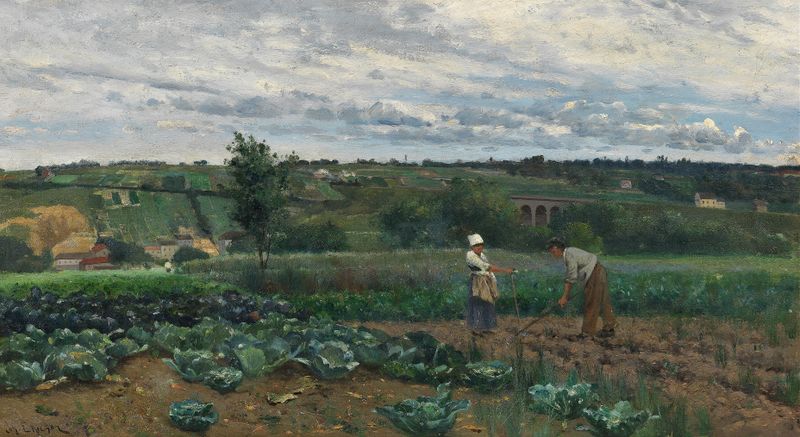
Who listens when art speaks of silence? In Landscape from Meudon, the quietude of nature becomes a resonant voice, echoing with the whispers of reflection. Look to the left at the gentle slopes of the hills, their muted greens and browns softly merging under the caress of a low-hanging sky. The artist employs delicate brush strokes that weave together the elements of earth and air, inviting your gaze to travel through the expanse. Notice how the light seems to filter through the clouds, casting an ethereal glow on the distant landscape, creating depth and inviting contemplation. Yet, beyond the serene surface lies a poignant interplay between solitude and connection.
The solitary tree, standing firm against the backdrop of the vastness, symbolizes resilience in isolation. The interplay of light and shadow not only accentuates the physical forms but also reflects the emotional landscape of longing and introspection, encouraging viewers to ponder their own place within this tranquil yet compelling scene. In 1883, Johan Ericson painted this work during a transformative period in both his life and the art world. Living in France, he was immersed in the Impressionist movement, which emphasized capturing fleeting moments of light and atmosphere.
This painting exemplifies his embrace of those ideals while also revealing a personal quest for stillness amid the chaotic world around him.