Landscape in spring — History & Facts
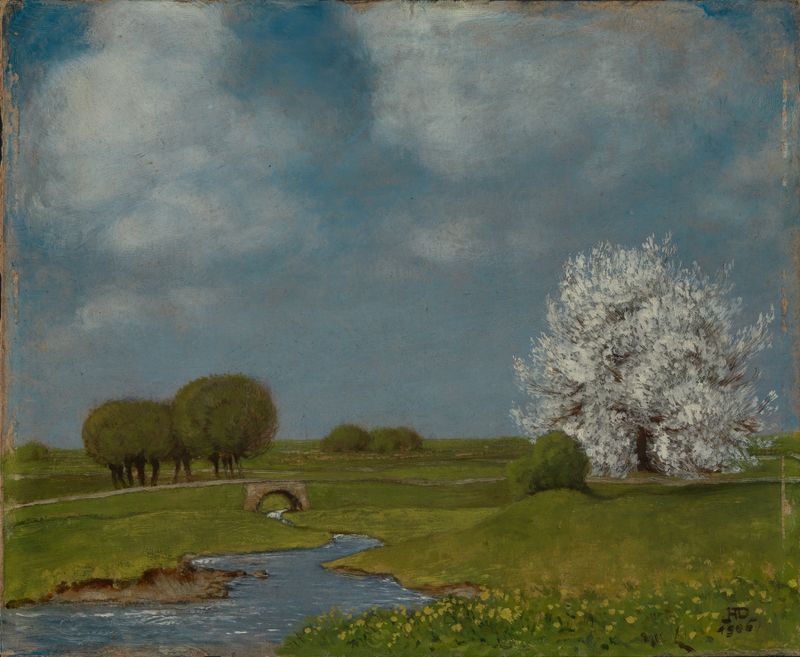
In the hands of Hermann Dumler, beauty is a rhythmic dance between chaos and harmony. His Landscape in Spring captures the moment nature awakens, a reminder that every season holds its own poetry. Look to the foreground, where the lush greens and vibrant blossoms burst forth with life. The brushstrokes are deft, creating a textured tapestry that draws the viewer in.
Notice how the light filters through the trees, dappling the ground with golden warmth, contrasting with the cool blues of the distant hills. The composition invites you to traverse the scene, with winding paths leading your gaze deeper into the landscape, evoking a sense of exploration and wonder. Delve into the interplay of color; the vivid reds and yellows clash and meld into a vivid symphony. This tension illustrates not just the beauty of spring, but the underlying struggle for renewal amid nature’s cyclical existence.
Each stroke conveys a pulse, a heartbeat, capturing the fleeting essence of the season. The delicate balance between vibrancy and tranquility encapsulates the paradox of life itself, reminding us of growth borne from the remnants of winter. In 1910, while creating this work, Dumler was immersed in a burgeoning art scene that sought to express emotion and beauty through bold colors and textures. Living in Germany, he was influenced by the transition of the Impressionist movement, shaping his technique and perspective.
This period marked a time of significant experimentation and change in the art world, echoing the very renewal depicted in Landscape in Spring.