Landscape In The Ticino — History & Facts
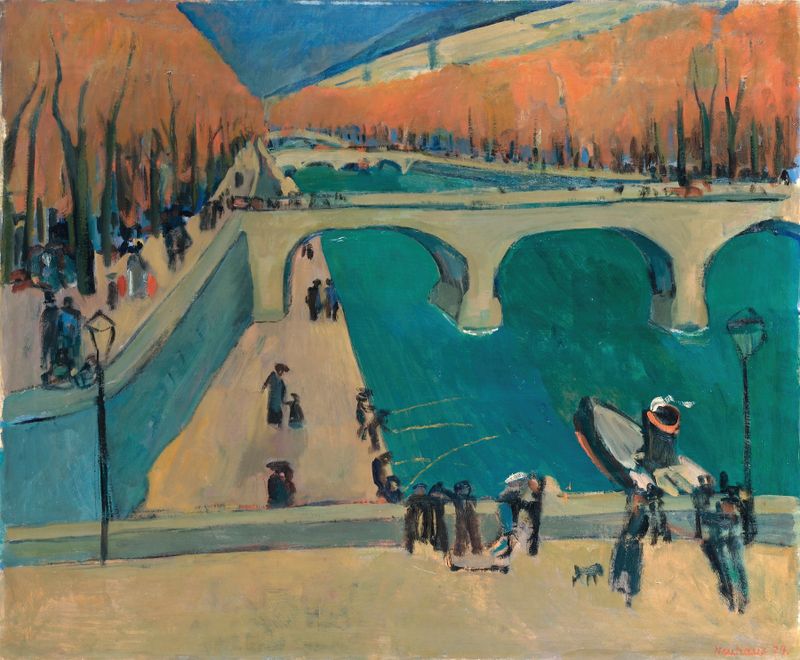
Who listens when art speaks of silence? In Landscape In The Ticino, the stillness of the scene invites contemplation, beckoning viewers to uncover the delicate balance between chaos and tranquility. Look to the left at the sweeping green hills, their soft curves giving way to a rich tapestry of browns and golds. Notice how the light gently bathes the landscape, illuminating patches of wildflowers that seem to dance amid the shadows. The interplay of muted hues creates a sense of serenity, while the textured brushstrokes evoke the fierce beauty of nature, where chaos lurks just beneath the surface. Yet, it is in the quiet corners of the composition where deeper meanings unfold.
The contrast between the vibrant foreground and the darker, more turbulent sky hints at the duality of existence—an eternal struggle between peace and turmoil. Each stroke resonates with emotional tension, inviting the viewer to ponder their own experience of chaos within the calm. Here lies a profound reflection on the transient nature of life, as if the landscape itself holds secrets of both serenity and instability. Werner Neuhaus painted this piece in 1925 while living in Switzerland, a time when Europe grappled with the aftermath of World War I.
The art world was shifting, moving towards modernism and abstraction, yet Neuhaus chose to celebrate the natural beauty and emotional depth of his surroundings. This work captures not only the essence of the Ticino region but also the artist's contemplation of the human condition amid a rapidly changing world.