Landscape – rivulet bank — History & Facts
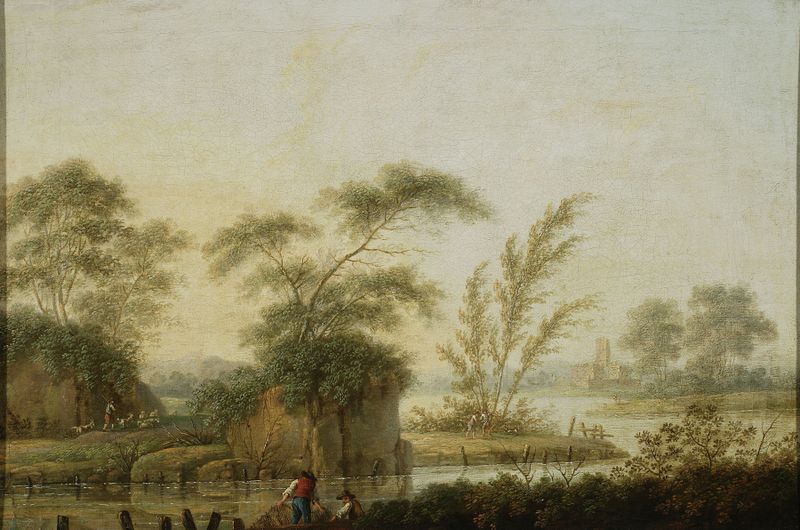
In the stillness of a landscape, one can sense the weight of solitude that permeates the air, a poignant reminder of our place within the vastness of nature. Look to the left at the gentle curvature of the rivulet bank, where the water glimmers like broken glass under an unseen sun. The artist’s brushstrokes create a harmonious blend of greens and browns, merging the earth and its reflection in tranquil waters. The soft, muted colors evoke a sense of calm, yet there is a subtle tension within the scene, as shadows loom over the water’s edge, hinting at unseen depths and emotions waiting to surface. Notice the delicate interplay between light and shadow, which accentuates the feeling of isolation.
The lone tree on the horizon stands as a sentinel over the landscape, its branches reaching out yet never quite touching the water. This visual contrast of solidity against the fluidity of the rivulet speaks to the emotional struggles of attachment and separation, inviting viewers to reflect on their own experiences of loneliness. In 1768, Jan Ścisło painted this piece during a time when landscapes were evolving in the realm of art, shifting from mere backdrops to poignant explorations of emotion. Living in Poland, where a burgeoning appreciation for natural beauty was emerging, he captured the essence of solitude that resonates beyond mere aesthetics.
This work encapsulates a moment in his artistic journey, reflecting the broader transitions occurring in European art at the time.