Landscape Vista (Brandywine Valley) — History & Facts
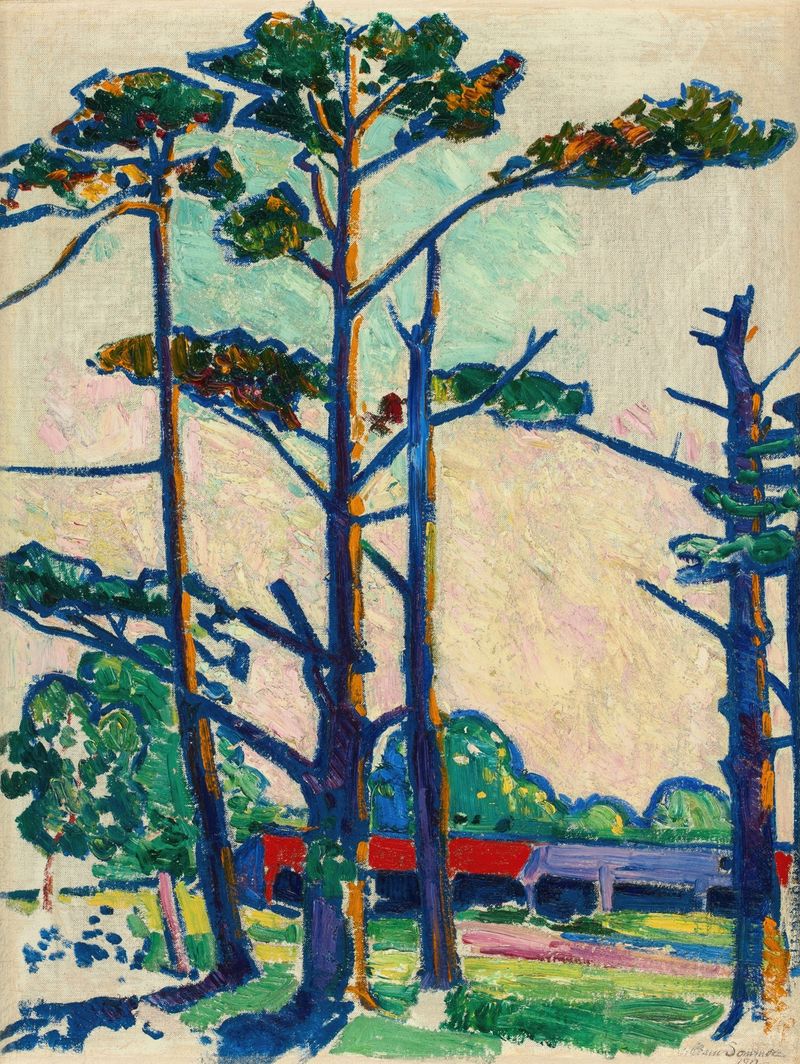
In the radiant hues of nature, a deeper truth often lies beneath the surface, waiting to be unearthed. Look to the left of Landscape Vista (Brandywine Valley, where a tapestry of verdant greens and subtle earth tones draws your eye toward the rolling hills. The sun spills warmth over the landscape, bathing the scene in a soft, divine light, illuminating the wildflowers that dance at the edges. Notice how the artist employs a loose brushstroke, creating an almost ethereal quality, as if the very air vibrates with life and movement.
This composition captures the essence of tranquility, beckoning the viewer to breathe in the beauty of a world untainted by chaos. Yet, there lies a tension within this idyllic setting. The juxtaposition of light and shadow reveals the passage of time, suggesting that even these serene moments are transient. The darker undertones hint at the artist's awareness of the world beyond the canvas—an unspoken acknowledgment of the turmoil that lurked in the backdrop of 1917.
This duality of beauty and melancholy invites reflection, encouraging the viewer to ponder the connection between divine landscapes and the human experience. During the years of 1917-18, William Sommer painted in the Brandywine Valley, a region steeped in artistic legacy. At this time, the world was engulfed in the chaos of World War I, yet Sommer sought solace in the natural beauty surrounding him. While the global art scene was shifting towards modernism, he remained rooted in his impressionistic style, finding comfort and inspiration in the landscapes of his youth, capturing a moment of peace amidst the surrounding discord.