Landscape with a cart — History & Facts
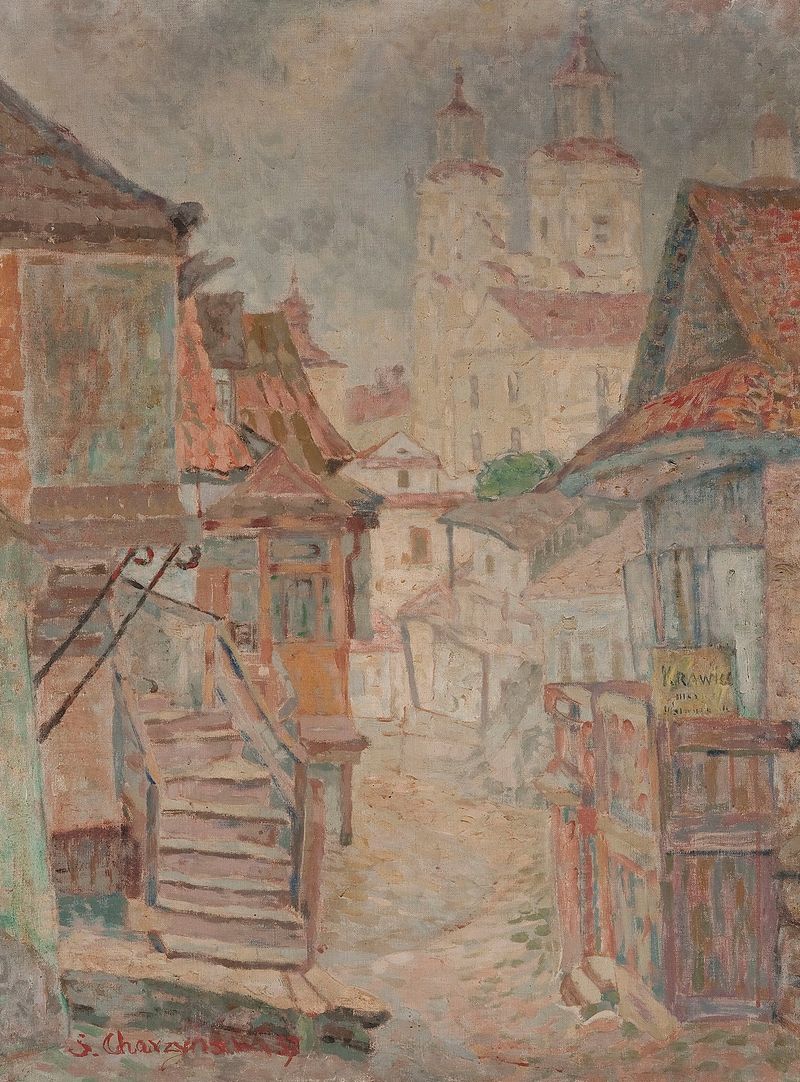
What if beauty was never meant to be finished? In this moment suspended in time, the viewer is invited to contemplate the transience of existence and the cycle of nature. Look to the foreground, where a rustic cart rests beneath a sprawling sky. The earthy tones of the land beneath it contrast sharply with the vibrant blues and whites of the clouds above, suggesting an interplay between the mundane and the sublime. The delicate brushwork captures the textural quality of the gravel road, leading the eye toward the horizon, where nature and man-made structures meld seamlessly. As you delve deeper, notice the shadows cast by the cart; they hint at stories untold, the labor that once accompanied its journey.
The subtle variations in light create a sense of time passing—a constant reminder that what we see is but a moment captured, forever changing. The cart, though still, represents movement, echoing the memories and struggles of those who traversed this path, merging human endeavor with the rhythm of the earth. Stanisław Charzyński painted this landscape during a period of personal exploration, likely in the early 20th century. At this time in Poland, artists were increasingly drawn to the natural world, seeking refuge from the chaos of modernity.
The work reflects a growing interest in the relationship between humanity and nature, capturing a moment that speaks to both beauty and impermanence in an ever-evolving landscape.