Landscape with a Classical Structure — History & Facts
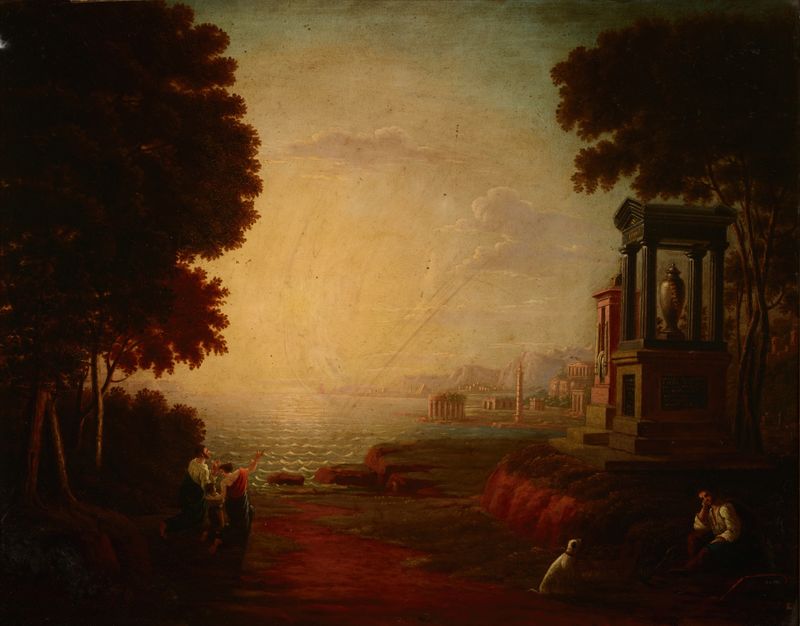
Is this a mirror — or a memory? The stillness of the landscape cloaks the viewer in a serene silence, inviting a moment of contemplation that feels both personal and universal. Focus on the gentle interplay between the classical structure and the natural elements surrounding it. Notice how the light falls upon the weathered stone, casting soft shadows that dance across the grass, urging your eyes to travel towards the horizon. The muted palette draws you deeper into the scene, where the delicate greens and browns create a harmony that echoes the tranquility of a forgotten place. Yet, beneath the calm facade lies a tension between nature and man.
The classical structure stands firm, a testament to human ambition and the passage of time, while nature encroaches gently, reclaiming its territory. This juxtaposition prompts reflection on impermanence, suggesting a narrative of beauty that transcends time, beckoning the viewer to ponder both nostalgia and loss. In 1821, Wolański found himself at a pivotal moment in his career, painting in a Europe grappling with the aftermath of the Napoleonic Wars. The flourishing Romantic movement deeply influenced him, lending a sense of emotional depth to his landscapes.
As he captured the essence of rural beauty, he also addressed the fragility of civilization, creating a work that resonates with profound introspection amidst a changing world.