Landscape with a hill — History & Facts
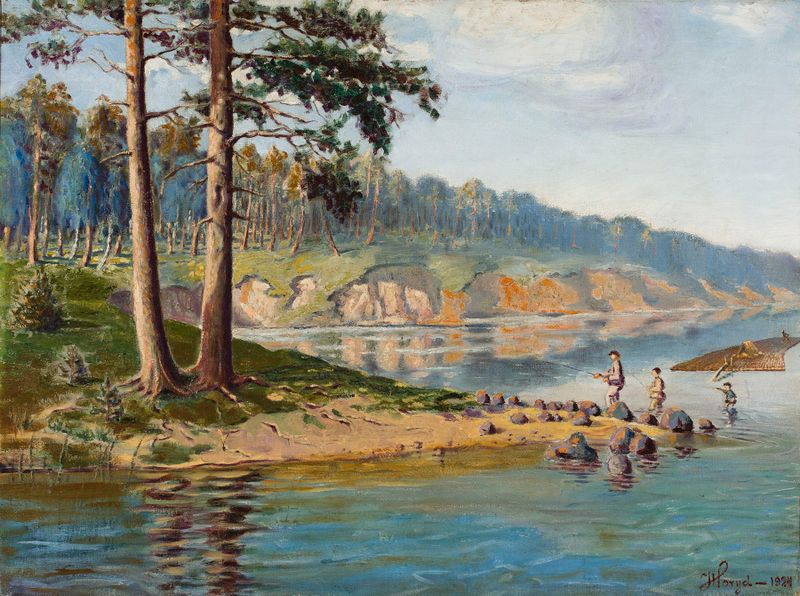
In Landscape with a Hill, the essence of light breathes through the canvas, illuminating not just the scenery but the very soul of its creation. Look to the foreground where vibrant greens and deep ochres intermingle, the texture so palpable that one could almost feel the cool earth beneath their fingers. As your gaze ascends, notice the soft curve of the hill, bathed in a gentle golden hue, inviting you to explore its undulating slopes. The sky above, a wash of cerulean with wisps of clouds, adds a serene backdrop that contrasts with the dynamic movement of the landscape below.
The masterful use of light and shadow plays a crucial role, guiding the viewer’s eye and imbuing the scene with a sense of depth and tranquility. Beneath the surface, this landscape conveys a dialogue between stability and transience. The solid hill, a testament to permanence, contrasts with the ephemeral quality of light, suggesting the passage of time and the cycles of nature. In the interplay of colors, hints of warmth and coolness coexist, evoking the emotional complexity of nostalgia and hope.
One can almost hear whispers of the lives that might have traversed this terrain, their stories woven into the very fibers of the land. Created in 1925, this work emerged during a period of exploration and innovation in the art world. Józef Horyd painted in Poland, a time when artists were beginning to break away from traditional forms, embracing more expressive styles. The post-World War I environment was one of reflection and recuperation, influencing Horyd’s approach to capturing the essence of his homeland's landscapes amidst a rapidly changing Europe.