Landscape with a Wayside Shrine — History & Facts
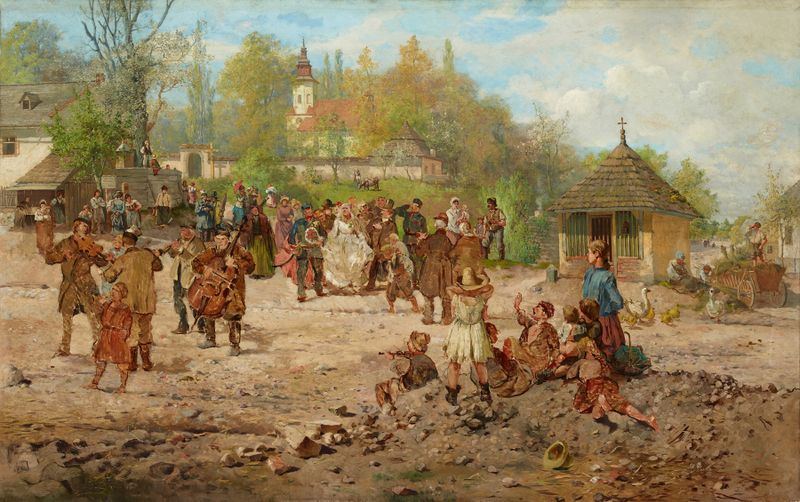
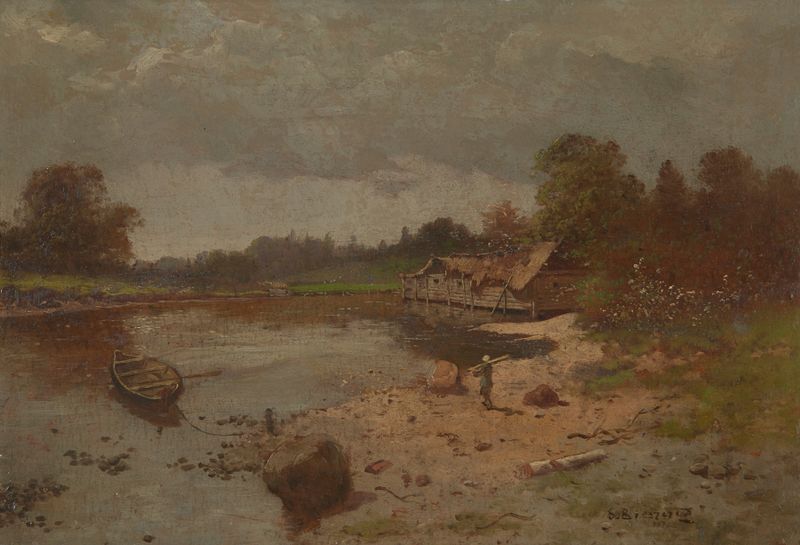
Can paint confess what words never could? The quietude of decay lingers in the air, whispering stories of time and solitude, echoing in the heart of every viewer. Focus on the left side where the wayside shrine stands, a fragile monument weathered by the passage of years. Its wooden structure, dappled with age, is embraced by carefree vines, curling gracefully in shades of green, juxtaposed against the earthy browns of the dirt path. The sunlight filters through wispy clouds, casting a gentle glow that illuminates the tiny chapel, inviting contemplation.
Notice how the horizon melts into a soft blend of blues and golds, where sky meets earth. The artist captures the tension between reverence and neglect, a poignant reminder of impermanence. The shrine, symbolizing faith, battles the relentless grip of nature's reclamation, suggesting that even the most steadfast beliefs may succumb to time. The scattered wildflowers at its base evoke fleeting beauty, reflecting life's transitory moments and inviting introspection on our own legacies. Created in 1880, this work emerged during a period when the artist was exploring the depths of Polish rural landscapes, seeking to document their fading essence amidst an evolving society.
Bieszczad was part of an era marked by nationalism and a burgeoning interest in naturalism, keenly observing the relationship between human constructs and the untamed environment around them.