Landscape with Animals — History & Facts
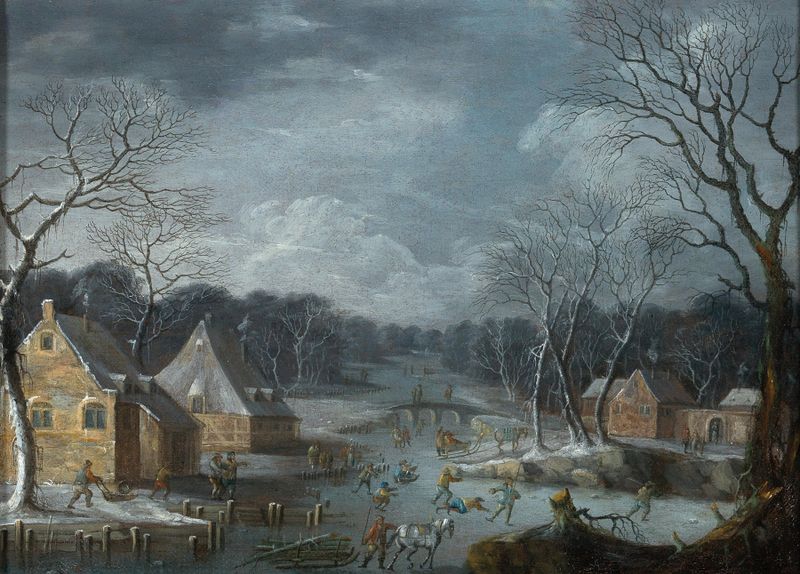
In a world where nature thrives in vibrant hues, decay lurks just beyond the edges, whispering its quiet truths. Focus on the foreground, where the animals blend seamlessly with the lush landscape. Observe the rich greens and browns, brushed with soft strokes that suggest life, yet hint at an underlying fragility. The way light dances upon the foliage draws the eye, inviting you to explore the details of each creature, their forms delicate and precarious, embodying a fleeting existence that is both beautiful and haunting. Amid the idyllic scene, there are subtle contrasts at play.
Notice the vibrant colors of the foliage that echo life, yet above the animals, darker, more muted tones creep in, whispering of the inevitable cycle of decay. The juxtaposition of joy and sorrow, life and death, hangs heavily in the atmosphere, revealing the tension between nature’s splendor and its inherent transience. Each brushstroke carries the weight of time, reminding us that beneath the surface of beauty lies an unrelenting truth. Robert Griffier painted this scene during a time when landscapes were evolving, reflecting both the grandeur and vulnerability of nature.
Active around the late 17th century, his work became part of a larger dialogue within the Dutch Golden Age, where artists began to express a deeper emotional connection to the environment. This period was marked by a growing awareness of the fragility of life, an awareness that Griffier masterfully encapsulated in his portrayal of both the captivating and the decaying.