Landscape with Castle Ruins — History & Facts
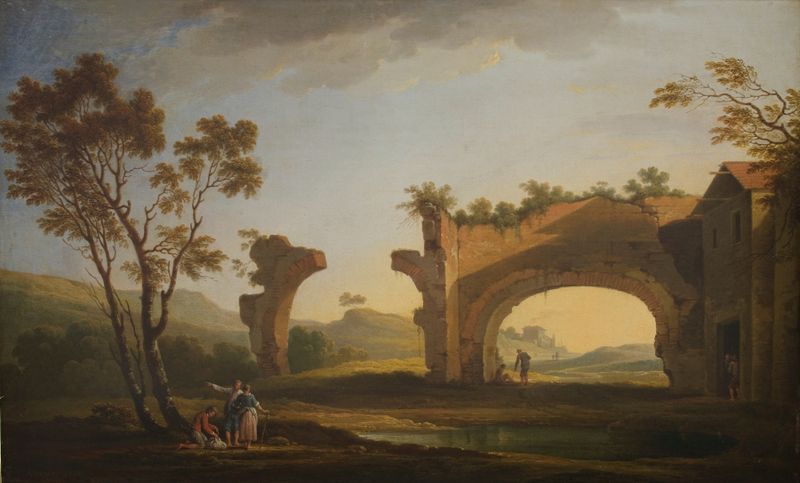
Could beauty survive in a century of chaos? This question echoes through the silent ruins depicted in the artwork, a poignant reflection on the passage of time and the fragility of human constructs. Look to the background where the crumbling castle sits atop a distant hill, its weathered stones absorbing the overcast light. The foreground bursts with rich greens and browns, showcasing Harper's meticulous attention to detail in the foliage. The blend of dark clouds above casts an ethereal glow on the landscape, creating a dichotomy between the vibrant earth below and the ominous sky above.
The painter’s brushwork captures the tension of decay and resilience, inviting viewers to linger over the intricate textures of moss-covered rocks and winding paths. As the eye wanders, subtle contrasts emerge, revealing underlying themes of nostalgia and loss. The castle, once a symbol of strength and authority, now stands as a mere echo of its past glory. The encroaching nature around it suggests a reclamation, an inevitable madness where beauty intertwines with ruin.
Each brushstroke communicates the emotional weight of history, urging the viewer to consider the stories of those who once inhabited this space and the shadows of chaos that linger in its wake. In 1765, Harper created this landscape during a period marked by artistic exploration and upheaval in Europe. The Age of Enlightenment was in full swing, prompting artists to challenge traditional views and delve deeper into the human experience. Straddling the line between romanticism and realism, he reflects a world grappling with change amid the serene yet haunting remnants of the past.