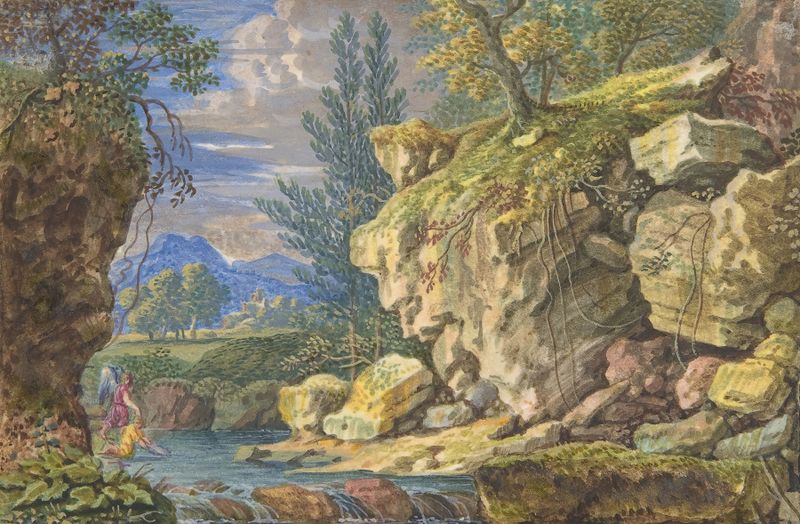
Landscape with Cows in a Brook — History & Facts
In the hushed embrace of nature, light dances upon serene waters, illuminating the fleeting moments of life captured within the confines of a frame. This quiet reverie speaks to the heart of existence, where every shadow and glimmer tells a story of connection, peace, and the passage of time. Look closely at the shimmering brook that meanders through the center of the composition, where the delicate play of sunlight reflects off the water’s surface. The cows, both placid and present, create a focal point on the right, their forms softened by the surrounding greenery.
Notice how the warm earth tones contrast with the cool hues of the water, inviting the viewer to wander deeper into this harmonious landscape. The artist's brushwork brings texture to the foliage and fluidity to the water, crafting a tranquil yet vibrant tableau. Hidden within this pastoral scene lies a poignant exploration of coexistence and the balance between man and nature. The cows represent both sustenance and serenity, embodying the duality of dependence and freedom.
The gentle curves of the landscape echo the rhythms of daily life, while the careful depiction of light serves as a reminder of time’s inexorable flow, reflecting the fleeting nature of beauty and existence itself. Felix Meyer painted this work in 1698, amidst a period of significant artistic transition in Europe. At the time, the Baroque style was evolving, paving the way for new expressions of realism and sentiment in art. Living in the Netherlands, Meyer was influenced by the natural landscapes and pastoral themes that defined the era, using his canvas to bridge the gap between the bucolic and the sublime.