
Landscape with Falconer — History & Facts
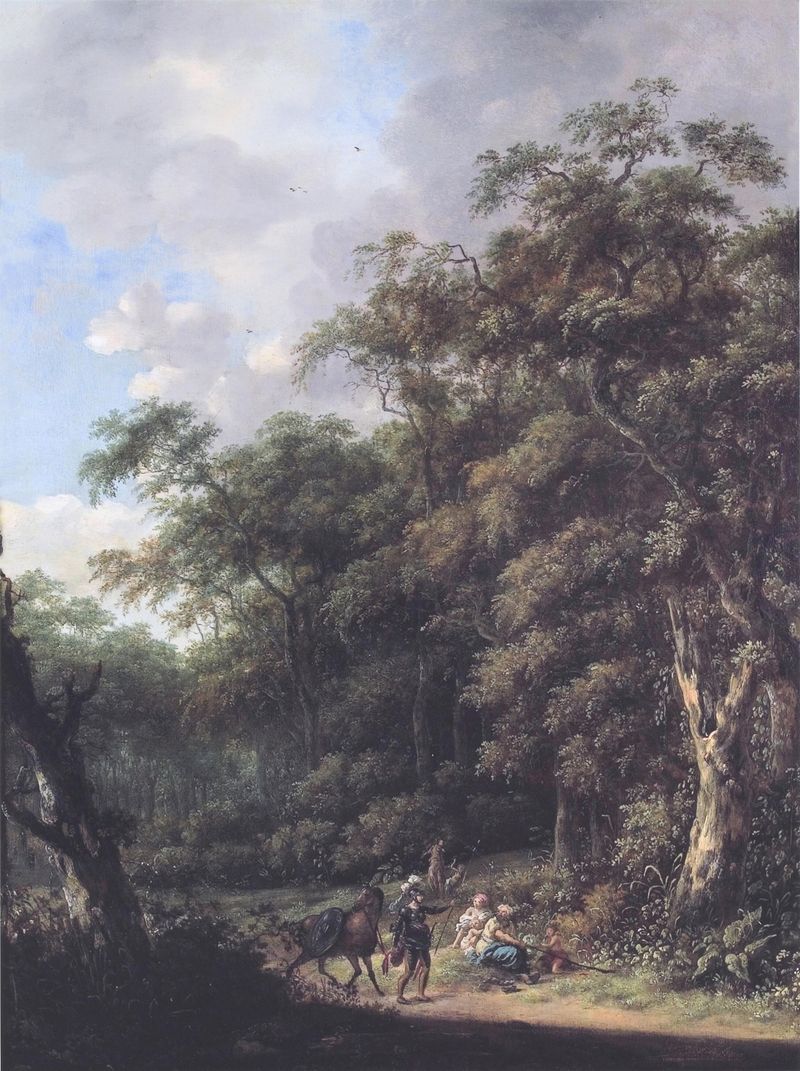
In a realm where silence blankets the landscape, movement breathes life into stillness. Look to the left at the falconer, a figure poised against a backdrop of lush greens and earthy browns. His attire, composed of muted tones, allows him to blend seamlessly into the natural splendor surrounding him. Notice how the gentle strokes capture the feathered falcon as it perches gracefully on his arm, its wings subtly ruffled by a soft breeze.
The play of light dancing across the scene gives a sense of time suspended, as if nature holds its breath in expectation. Yet, it is in the juxtaposition of the falconer’s stillness against the hint of motion in the falcon that deeper meaning arises. This contrast speaks to the tension between control and freedom, mastery and instinct. The expansive landscape invites contemplation, suggesting that life unfolds in myriad directions, even as one moment is captured.
Moreover, the distant horizon hints at adventures yet to come, whispering of possibilities that stretch beyond the canvas. Created between 1650 and 1681, this work emerges from a period of profound artistic exploration in the Netherlands. Roelof Jansz. van Vries was influenced by the Baroque movement, where realism intertwined with emotional depth.
During this time, the artist navigated personal challenges, yet he remained dedicated to painting landscapes that resonate with both beauty and narrative, bridging the gap between viewer and scenery.
More Artworks by Roelof Jansz. van Vries
Browse all →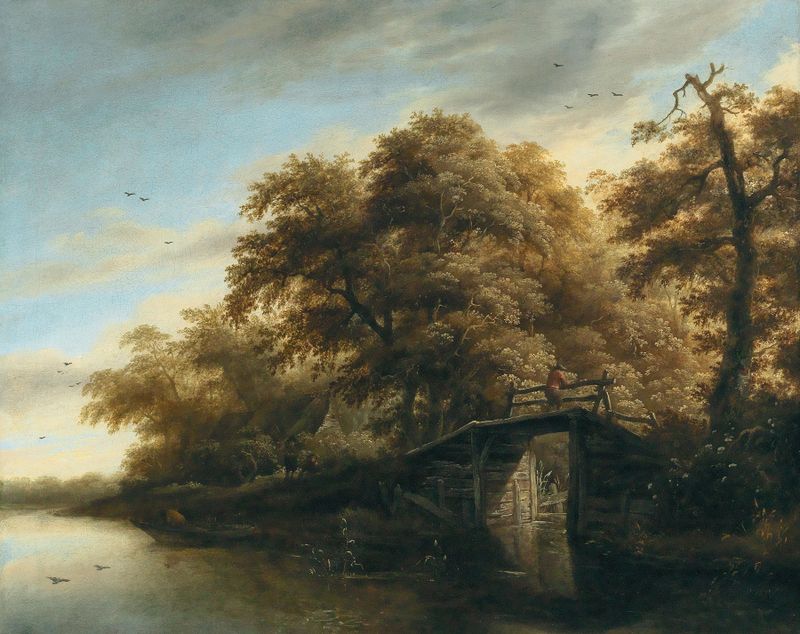
A river landscape with a fisherman on a bridge
Roelof Jansz. van Vries

Three Figures Passing Along A Road Before A Cottage; Two Figures Passing Along A Road Before A Cottage
Roelof Jansz. van Vries

Landscape with a Tower
Roelof Jansz. van Vries
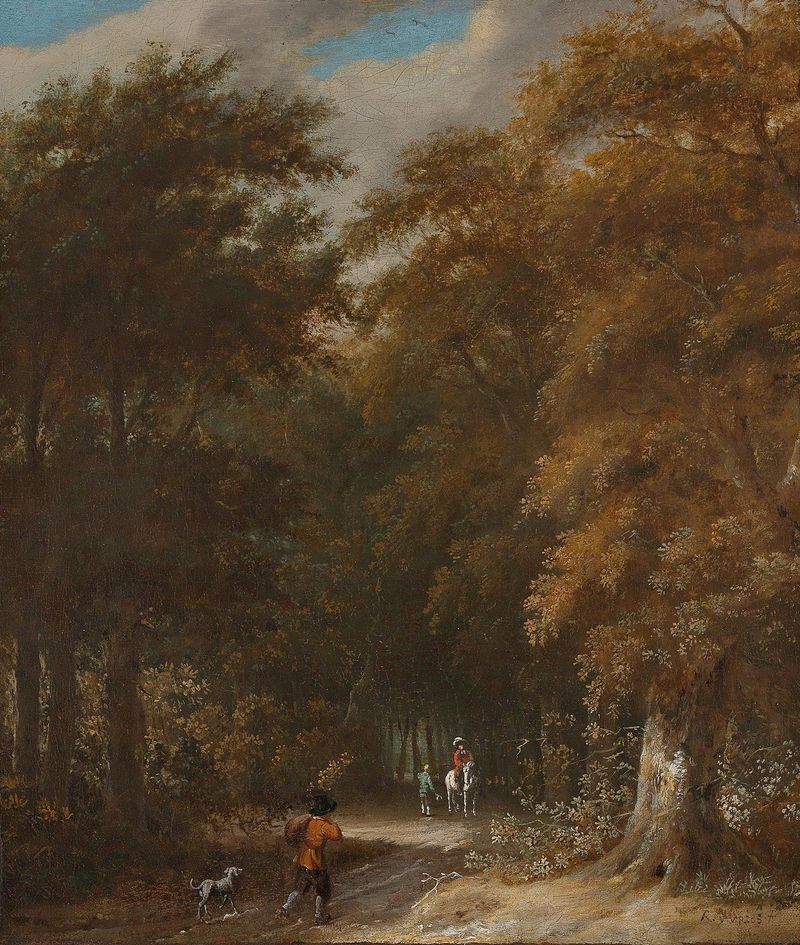
A forest landscape with a traveller and a rider on a white horse
Roelof Jansz. van Vries
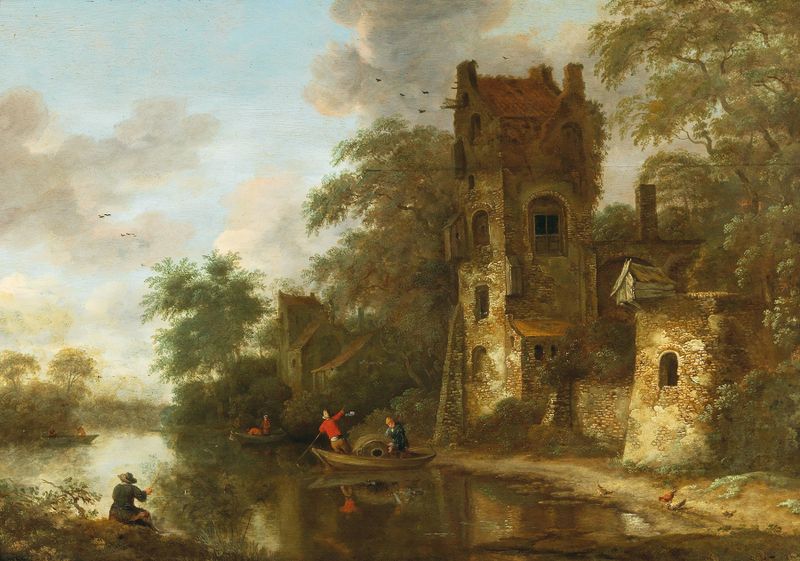
A landscape with a ruin on the bank of a river
Roelof Jansz. van Vries

Several Peasant Huts in a Woods
Roelof Jansz. van Vries
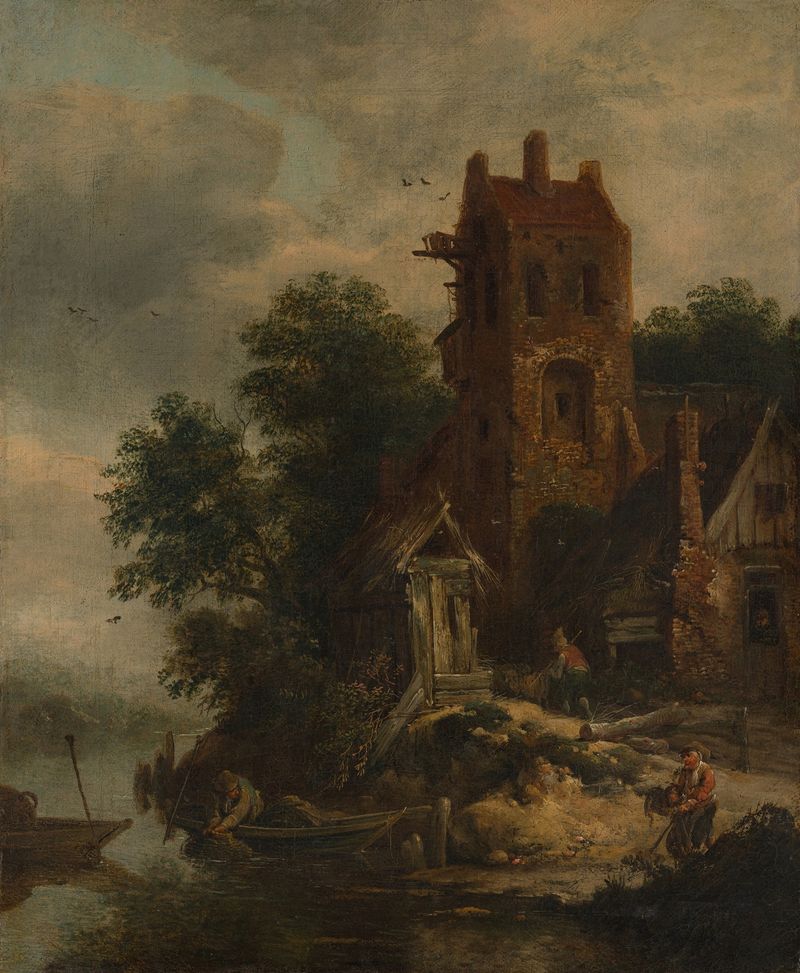
The Pigeon House
Roelof Jansz. van Vries
Boslandschap met Erminia bij de herders
Roelof Jansz. van Vries

Landscape with Farms
Roelof Jansz. van Vries

Landscape With Hunter
Roelof Jansz. van Vries





