Landscape with figures — History & Facts
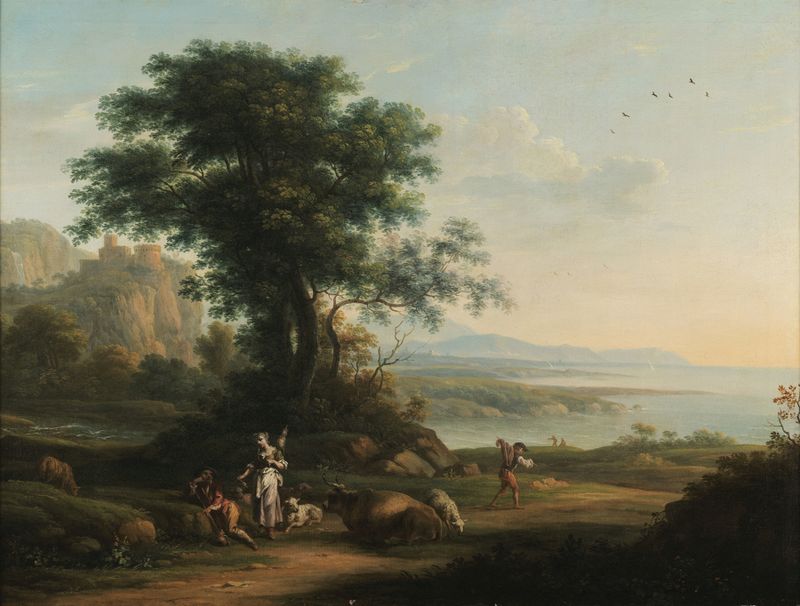
Can beauty exist without sorrow? In the delicate embrace of light and shadow, Landscape with figures invites us to explore this poignant question through its serene yet melancholic composition. Look to the foreground and notice the figures, subtly blending into the landscape, as if nature has cradled them in its arms. The soft hues of green and brown contrast with the gentle blue of the sky, creating a harmonious palette that draws the eye. Notice how the light falls upon the figures, illuminating their faces with a gentle glow, yet casting elongated shadows that whisper of an unseen weight they carry.
The arrangement of trees and rolling hills leads the viewer into a narrative, inviting contemplation within the tranquil scene. Within this apparent tranquility lies a deeper emotional tension. The figures, though depicted in peaceful coexistence with their surroundings, convey a sense of longing or nostalgia, hinting at lives shaped by loss. The shadows they cast stretch out almost as if reaching for something just beyond their grasp, evoking the pain of unattainable desires.
This contrast between beauty and grief is masterfully rendered, suggesting that the landscape itself bears witness to their silence and sorrow. Vittorio Amedeo Cignaroli created this work between 1750 and 1800, during a time when the Rococo style was giving way to neoclassicism. Living in a period marked by political upheaval and personal loss, the artist infused his landscapes with emotional depth. His approach to blending figures seamlessly into the natural world reflects a shift toward exploring humanity's connection with nature, while simultaneously revealing the fragility of beauty in the face of grief and longing.