Landscape with Figures on Mountain Rocks — History & Facts
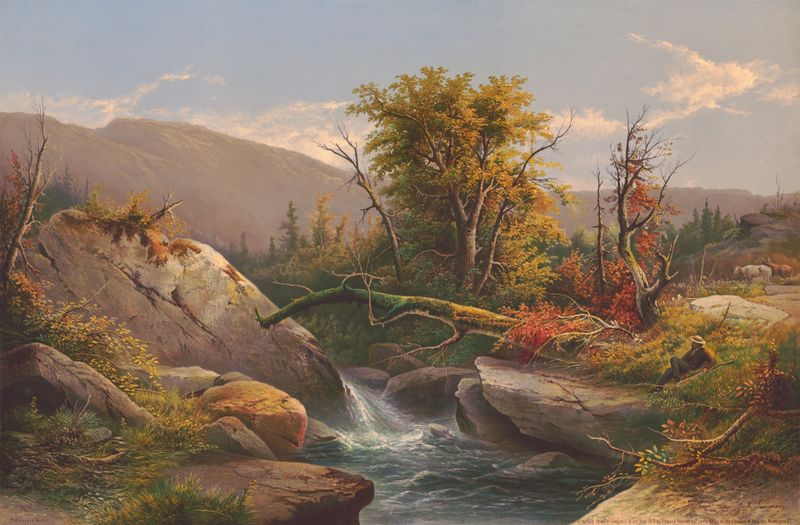
In the quiet rhythm of nature, we seek moments that lift us beyond the mundane, inviting us into a realm of transcendence. Look to the center, where the figures stand, almost like sentinels against the sweeping vista. They are small yet commanding, their poses radiating a sense of awe as they gaze into the expanse beyond. Notice how the light cascades over the rugged mountain rocks, highlighting the textures in greens and browns that evoke both strength and fragility.
The soft clouds above, painted in gentle whites and muted blues, contrast starkly with the earthiness below, suggesting a conversation between land and sky. Delve deeper into the contrasts presented by the artist. The figures, seemingly dwarfed by their surroundings, embody humanity’s quest for meaning amidst the grandeur of nature. The juxtaposition of vibrant life against the stark solidity of the rock evokes not just a physical journey, but an emotional one, as if the souls are reaching for epiphanies tucked away in the folds of the mountains.
Every brushstroke carries the weight of reflection, hinting at the interconnectedness of existence and the silent hopes tethered to the earth. Created around 1889, this piece emerged during a period of significant change in art, as realism melded with impressionism in Europe. At this time, Sommer was exploring how to depict the sublime qualities of nature while still engaging with the human experience, reflecting the societal shifts occurring in a rapidly industrializing world. His work captures a moment where art and life converge, inviting viewers to step into a timeless dialogue.